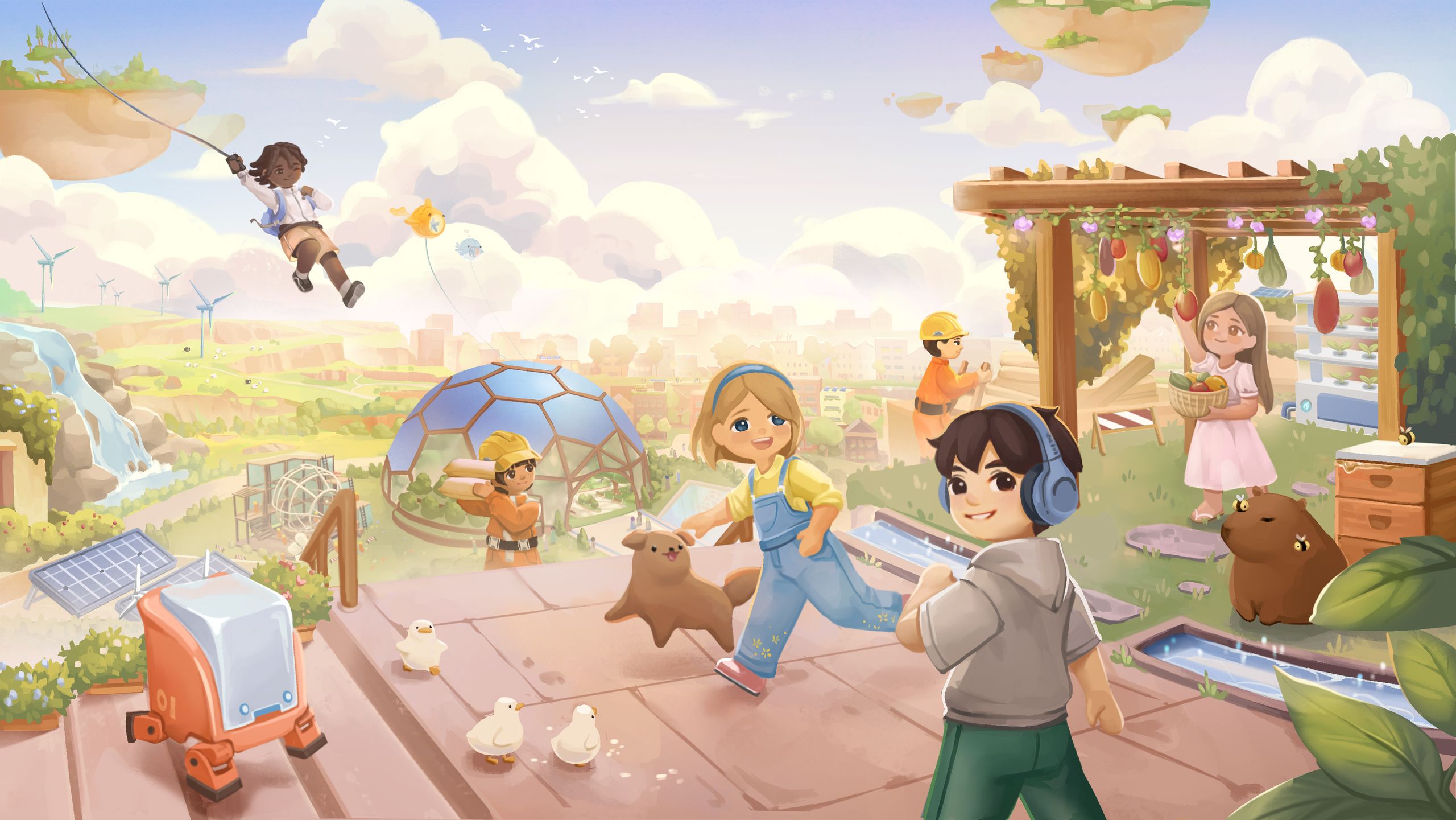


I went into Ruffy and the Riverside expecting something light, a cozy indie platformer with a gimmick and some cute characters. What I got was one of the most mechanically inventive 3D platformers I’ve played in years. Don’t let the art style or the chirpy mascot fool you; beneath the surface is a smartly layered, puzzle-heavy platformer that dares you to think creatively. It’s not perfect. The camera needs work, the dialogue needs editing, and not every puzzle lands. But when it works (and it usually does), it’s sharp, satisfying, and surprisingly deep. I’ve played more platformers than I can count, from Mario Odyssey to A Hat in Time, and Ruffy earns its place alongside the better ones.
A Mechanic That Redefines the Genre
The central idea behind Ruffy and the Riverside is brilliantly simple: you can copy the properties of surfaces in the world, lava, vines, water, bounce pads, you name it, and paste them elsewhere. This SWAP mechanic redefines how you interact with the environment. This isn’t just set dressing. You’ll constantly be scanning your surroundings: What can I turn into a climbable wall? Can I burn that blockade with lava? Could I paste a bounce texture onto this ramp and launch over the gap? And here’s the kicker: it lets you be clever. You’re not forced into a single solution. In several situations, I solved puzzles in ways I’m pretty sure weren’t “intended,” and the game didn’t punish me for it. That’s good design. It encourages experimentation without making you feel like you’re breaking the system.

Platforming That Feels Good Until It Doesn’t
Ruffy’s core movement is solid. His jump arc feels right, his glider is responsive, and traversal generally has a satisfying rhythm. The addition of Pip, your bee companion, adds verticality and flavor. Grinding on hay bales across the hub world? Genuinely fun. But the experience isn’t always smooth. The biggest issue is the camera. In tight platforming areas or enclosed spaces, it doesn’t keep up. You’ll clip through walls, lose track of Ruffy mid-jump, or get forced into awkward angles. These moments don’t wreck the game, but they add friction, especially later on when platforming gets more technical. Another small gripe: some of the game’s collision boxes feel off. There were a few spots where I should have made a jump, only to slip off due to a weird edge or an invisible wall. For a game this precise, those details matter.

Puzzles That Reward Lateral Thinking
This is where Ruffy really shines. The puzzle design demands observation and creative problem-solving. You’re rarely handed solutions; you earn them by noticing patterns, trying weird swaps, and thinking spatially. One early puzzle had me use water to grow plants, then swap their texture onto a vertical wall to create a climbable path. Later, I had to combine bounce textures, timed switches, and environmental symbols to reach a hidden gem. It’s the kind of layered logic that feels earned not scripted. Not every puzzle is a hit. Some lean too heavily on pattern matching, or assume you’ve spotted a detail that blends too well into the scenery.

A World That Feels Alive, But a Little Too Chatty
The hub world of Riverside is packed with secrets, collectibles, characters, and side quests. There’s a sense of density and purpose to its design that I appreciated. Each area feels handcrafted rather than procedurally stuffed with busywork. That said, the game has a dialogue problem. Nearly every character talks too much. There’s charm in the writing, especially in characters like Sir Eddler or the solemn crow, but the verbosity often kills pacing. I get it, you want to flesh out your world. But when I’m just trying to swap a surface or start a puzzle, I don’t need five screens of text about someone’s backstory. Trim the fat, and these characters would pop more. As it stands, I found myself mashing through dialogue boxes way more than I should in a game that’s supposed to be about exploration and experimentation.

Structurally Smart, With a Satisfying Flow
The game balances its open hub and linear levels well. The hub gives you freedom to explore, collect, and mess with mechanics. The linear levels tighten up the focus and ramp up the challenge. That alternation keeps the pacing fresh. If you’re an experienced player, you’ll appreciate how much optional content there is. Legendary gems, pattern puzzles, sketch pieces, and grave decorations, it’s all there for those who like digging deep. And while not every collectible is meaningful (coins lose value too fast), the secrets and side quests that matter do offer worthwhile payoff.

Music, Audio, and Polish
The soundtrack leans into mellow lo-fi beats, hip-hop influences, and ambient tunes that never grate. It’s not a standout on its own, but it complements the world nicely and never overstays its welcome. Sound effects are clean and functional. The SWAP tool has satisfying audio cues that reinforce its utility. Nothing revolutionary here, but nothing jarring either. Performance-wise, I had no major issues on PC. A few bugs, checkpoint glitches, and a rare stuck animation, but nothing game-breaking. The devs are clearly listening to feedback, and the patches so far have addressed core complaints like camera sensitivity and collision problems.

Real Talk
Ruffy and the Riverside could have easily been a forgettable nostalgia trip: cute visuals, light puzzles, and a harmless story. Instead, it surprises. It respects the player’s intelligence, introduces a mechanic that hasn’t been done to death, and builds a world that feels like it’s actually worth exploring.
FINAL SCORE: 80/100
Ruffy and the Riverside Review
Ruffy and the Riverside ReviewThe Good
- Copy/paste environmental traits to solve puzzles.
- 7 regions, lots of secrets, 10+ hours of content.
- Playful dialogue, likable characters.
The Bad
- Basic enemies, dull bosses.
- Too much collecting and dialogue gating.
- Ladders and platforming can feel off at times.