

I’ve been playing point-and-clicks since floppy disks were king from Monkey Island to Gemini Rue, from Broken Sword to Thimbleweed Park. I’ve seen the genre stretch, stagnate, and snap back with indie revival after revival. So when I fired up The Drifter, I didn’t expect it to surprise me. But it did, and in all the right ways. This isn’t a nostalgia trip. It’s a tight, moody, and surprisingly sharp entry that reminds me why I fell in love with the genre to begin with and where it can still go when developers don’t just imitate, but build on what came before.
What Hooked Me: The Premise
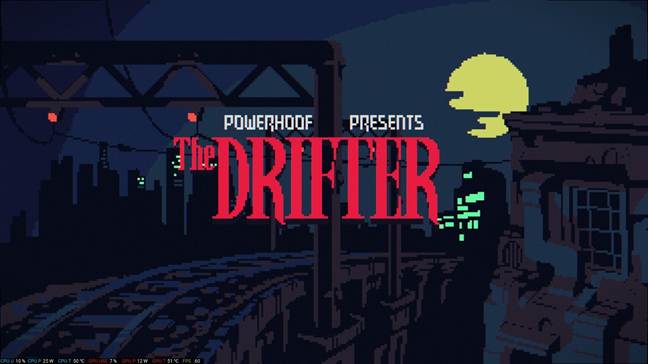
You play as Mick Carter, a drifter returning home for a funeral until things go sideways fast. A murder, a mysterious revival, some corporate spooks, and a terrifying near-death loop later, and suddenly you’re wrapped up in something way bigger than you. It’s pulpy, fast-paced, and leans into that gritty ’70s Aussie horror/sci-fi tone with zero apologies. Think Carpenter meets Crichton, filtered through grimy pixel art and backed by a synth-heavy score that had me leaning forward the whole time.
But here’s the key: none of this feels forced. The world is grimy and low-budget in the best way, and the plot, while full of wild twists, never loses its emotional core. Mick isn’t some blank cipher; he’s a guy who’s confused, pissed off, and genuinely trying to understand what the hell just happened. I was with him from minute one.
Presentation That Gets It Right
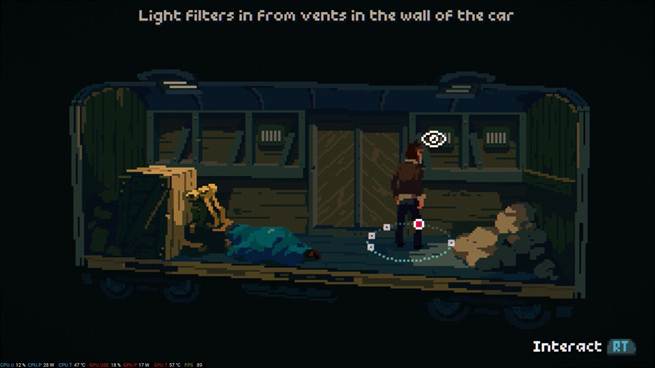
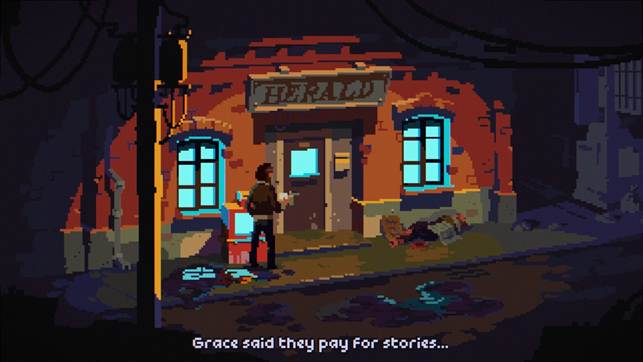
Let’s talk visuals. I’m a sucker for detailed pixel art, and The Drifter delivers. The animations are slick, the environments feel lived-in, and there’s real personality in every background and idle movement. But what really elevates it is the atmosphere. The devs nailed the mood. Rainy streets, creepy labs, and waterlogged tunnels feel oppressive. The lighting is used smartly. The UI is minimal but responsive. It doesn’t clutter your view or slow you down. It trusts you to pay attention.
The voice acting? Legitimately impressive. Adrian Vaughn (who some might recognize from Sunless Skies) nails Mick’s dry, rough-around-the-edges tone. No cheesy delivery here, just a guy who’s in over his head and barely holding it together. Supporting characters hit the mark too. No one’s reading lines off a script here; it feels lived-in, like you’re eavesdropping on people mid-crisis.
Gameplay That Respects Your Time
Look, I’ve wrestled with enough moon logic puzzles to last a lifetime. I’ve combined rubber chickens with pulleys, and I’ve screamed at door codes hidden in poem stanzas. I love the genre, but I’ve also suffered for it. The Drifter doesn’t do that. Puzzles are streamlined, context-driven, and grounded. They make sense in the world and fit Mick’s character. Need to escape a sinking car? You’re not digging around for obscure tools; you’re thinking fast, using what’s at hand, and relying on observation. It’s not easy, but it’s fair. And then there’s the death mechanic. This is where the game really flexes. When Mick dies (and trust me, he will), time rewinds to just before it happens. But instead of just retrying, he remembers it. He reacts. It becomes part of the story. I’ve never seen a point-and-click use death this effectively. It’s not just a mechanic; it’s a narrative tool. And it works.
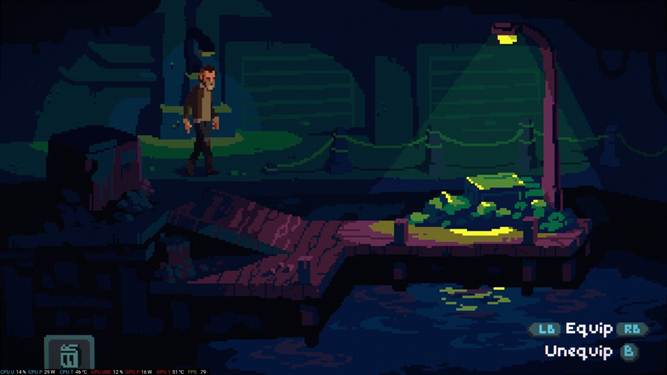
Controls are tight whether you’re on mouse or controller. I tried both, and the radial interaction wheel on the controller actually felt natural, which is rare for this genre. It even plays great on Steam Deck. This is a modern point-and-click in every sense; it’s not tethered to the past.
Storytelling With Teeth
Where most modern adventure games coast on nostalgia, The Drifter throws you into the deep end and lets you claw your way out. There’s no hand-holding. It trusts you to connect the dots, pick up on environmental clues, and follow the mystery. The pacing is lean, no filler. There’s setup, escalation, payoff. You end the chapter with more questions than answers, but not in a frustrating way in the I need the rest of this game right now way.
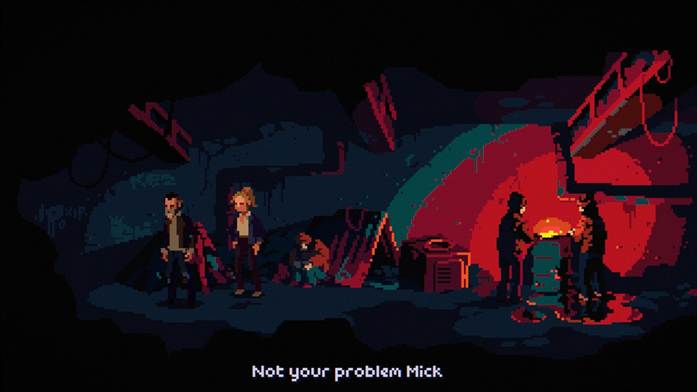
Mick’s voiceovers during certain moments, especially post-death, reminded me of classic noir monologues, but with a sci-fi twist. He’s not a hero. He’s barely staying afloat. That kind of flawed protagonist, one who reacts like a real person would, adds weight to everything. You’re not solving puzzles for the sake of it; you’re trying to survive something much bigger than you.
Real Talk
I’ve played a lot of point-and-clicks. Some innovate, some imitate. The Drifter does both, but with intent. It honors the classics while carving out its own identity. It doesn’t waste your time with obtuse puzzles or bloated dialogue. It delivers a tightly constructed mystery, grounded in human fear, and pushes it through sci-fi terror and gritty realism. Is it perfect? No. But it’s smart. It’s polished. And it’s interesting something I can’t say about half the games trying to cash in on ‘retro’ adventure nostalgia.
FINAL SCORE: 86/100
The Drifter
The DrifterThe Good
- Strong voice acting & writing
- Stylish pixel art & animations
- Tense, fast-paced story moments
The Bad
- No hint system — easy to get stuck
- Some trial-and-error gameplay
- Story dips into cliché near the end