





I’ve been hooked on movement games since the early days of Mirror’s Edge, but few have grabbed me quite like Rooftops & Alleys. After spending hours vaulting, flipping, and falling through its concrete playgrounds, I’ve come to see it as more than just an indie parkour sim. It’s a test of patience and precision, and if you’re willing to push through the rough edges, it rewards you with moments of raw, unscripted brilliance. This game doesn’t care about your K/D ratio. It doesn’t handhold. There are no power-ups or scripted set pieces. It’s just you, your momentum, and the endless pursuit of a perfect line.

No Story, No Problem
Let’s get this out of the way: there’s no narrative. No missions, characters, or cutscenes. When you load in, you’re dropped into an urban sprawl with six maps and one objective move. And that’s the point. Rooftops & Alleys isn’t trying to be a story-driven experience. It strips away everything but the movement. Something is refreshing about that. It’s like stepping into an empty skatepark at sunrise. No noise. No pressure. Just the freedom to explore, fail, and try again. If you’re someone who needs context to stay motivated, this might feel hollow. But for me, it was liberating. Every run is your own story, a silent loop of trial, error, and tiny victories.
The Movement: Brutal, Beautiful, Addictive
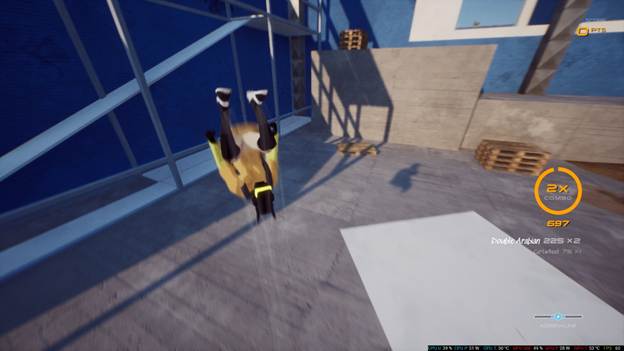
The first hour was rough. I was fumbling basic vaults, mistiming wall runs, and repeatedly diving headfirst into pavement. But that frustration slowly transformed into fascination. There’s a reason experienced players compare this to learning a musical instrument; you don’t “beat” the game, you practice it. The movement system is momentum-based and mostly animation-free, meaning you’re not waiting on canned sequences to finish. Your timing and positioning matter more than any stat or button mash. Everything from a basic wall run to a full trick combo depends on you chaining mechanics in just the right rhythm. Wall flips into vaults into bar swings into dives, it’s all possible. But it’s also possible to mistime a single crouch input and lose your whole line. That’s what makes landing a clean combo so satisfying. It’s not automated. It’s earned. There’s also a surprising amount of expressiveness in how you move. Some players go for speed. Others for style. Trick Battles and multiplayer show just how diverse this game can be when players start carving out their own identities through motion.
The Maps: Not Many, But Deep
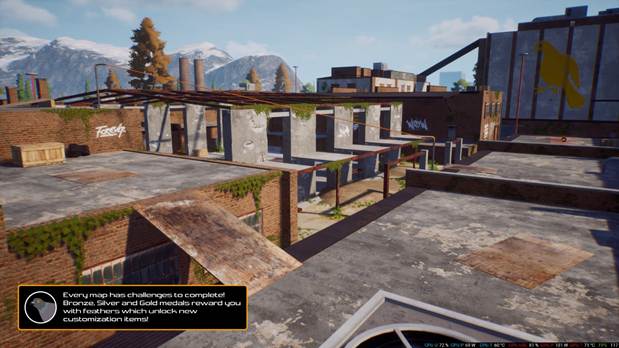
At launch, there are six maps, each dense, vertical, and loaded with potential routes. The design is tight, intentional, and clearly built by someone who understands movement flow. Some maps are better suited for time trials, with open loops and clear finish lines. Others encourage you to slow down and explore alternate paths for trick chaining. I’ve replayed the same 30-second run hundreds of times just to find the smoothest, cleanest arc from ledge to ledge.
Yes, the content is limited. No, that didn’t stop me from sinking hours into it. These maps are like skateparks—you get out of them what you put in. Once you know the layout, your focus shifts from “where do I go?” to “how well can I move through this space?” Would I like more environments? Absolutely. But even now, the existing maps still feel fresh, because your relationship to them changes as you improve.
Game Modes: Focused and Skill-Based
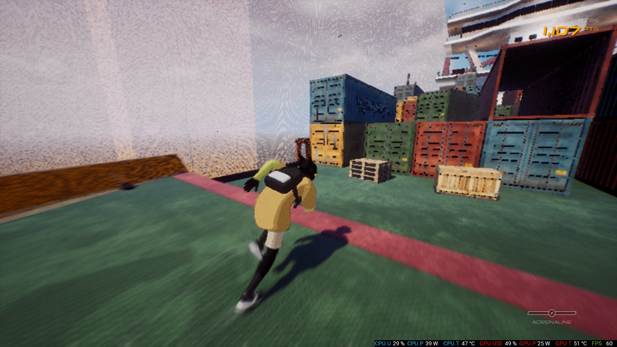
The game keeps things simple. Time Trials challenge you to complete courses as fast as possible. Trick Challenges test your ability to perform stylish moves in specific areas. Then there’s Freerun, an open mode that lets you do whatever you want. But the real magic happens in multiplayer. Trick Battles, Tag, and Capture the Flag turn movement into strategy. In Trick Battles, you’re trying to chain the flashiest moves for high scores. In Tag, it becomes a chase across rooftops, where speed and precision matter more than pure reaction time. There’s no combat. No abilities. Just skill. And that makes each match a refreshing change from the chaos of modern online games. Multiplayer also has that “skatepark vibe” I mentioned earlier. People gather. They try tricks. They show off. There’s very little toxicity. It feels like a niche community of players who actually care about the game and respect the grind it takes to improve.
Style Over Stats
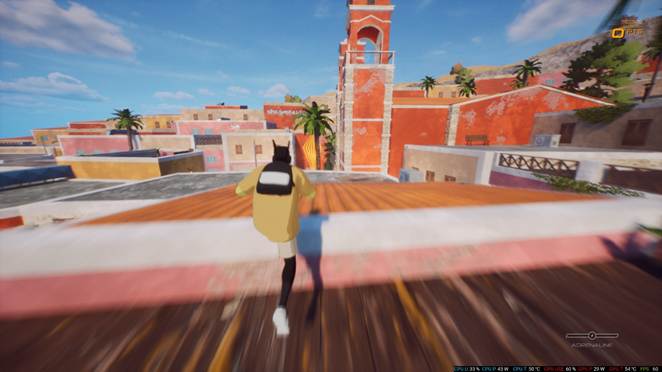
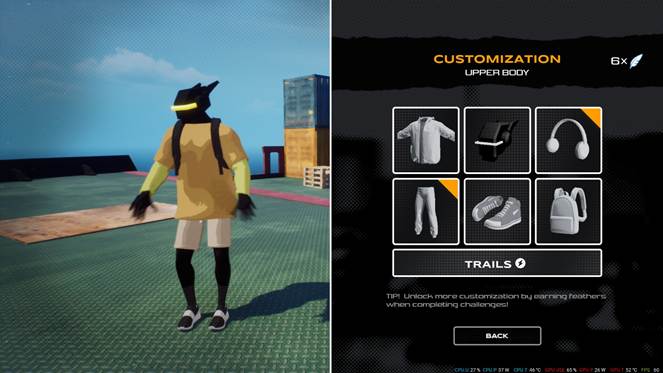
Progression is cosmetic only. You collect feathers through gameplay, and they unlock outfits and skins for your character and your companion pigeon. There’s no stat system. No gear upgrades. And no microtransactions. It’s a pure, skill-driven experience. Some might find the lack of progression demotivating, but I think it keeps the game focused. The only thing that improves is you. That said, the cosmetics are fun and surprisingly varied. Hoodies, pants, shoes, even masks, and pigeon skins. You can build a look that reflects your style, whether you’re a trickster or a speed demon.
Small but Mighty
The developer has been incredibly active, regularly patching bugs, tweaking physics, and adding community-requested features. For a solo developer, the pace is impressive. The community is still small but dedicated. Most multiplayer lobbies are filled with players who’ve clearly spent time mastering the mechanics. You’ll start recognizing names. You’ll pick up techniques just by watching others. And the vibe is generally positive; everyone’s there to learn and show off.
Real Talk
Rooftops & Alleys is a rare thing: a movement-focused game that respects your time and skill. It doesn’t try to be flashy. It doesn’t try to be easy. It just asks one question—how far can you push yourself? For players who love Mirror’s Edge, Skate, or Titanfall 2 for their movement systems, this is a must-play. It won’t be for everyone. It’s light on traditional-style content and tough to learn. But if you click with the movement, you’ll find yourself chasing that next perfect run for hours. This is a game built for the few who love the grind. And if you’re one of them, it delivers in spades.
FINAL SCORE: 80/100
Rooftops & Alleys Review
Rooftops & Alleys ReviewThe Good
- Responsive, momentum-based mechanics offer tons of control and freedom.
- Encourages mastery and personal progression
- Trick Battles and Tag modes add variety and replayability
The Bad
- Only six maps and ~48 challenges at launch
- Minor physics glitches and inconsistent vault triggers
- Functional but flat aesthetic lacks immersion