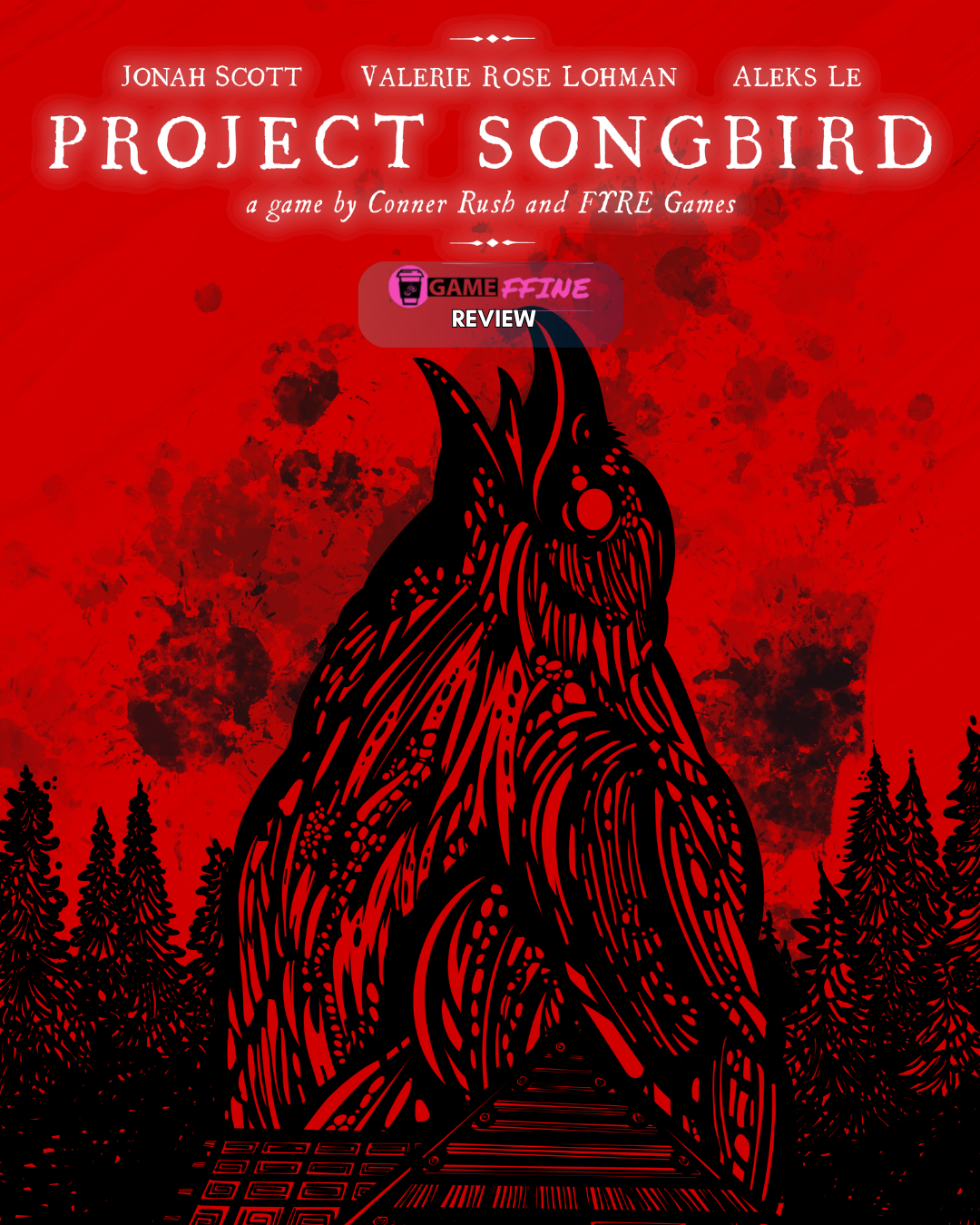



Project Songbird– this title feels like a follow-up story expansion to Cyberpunk 2077’s Phantom Liberty expansion, but it’s not. But on that note, I would really love to see one even if the chances of that happening are next to zero.
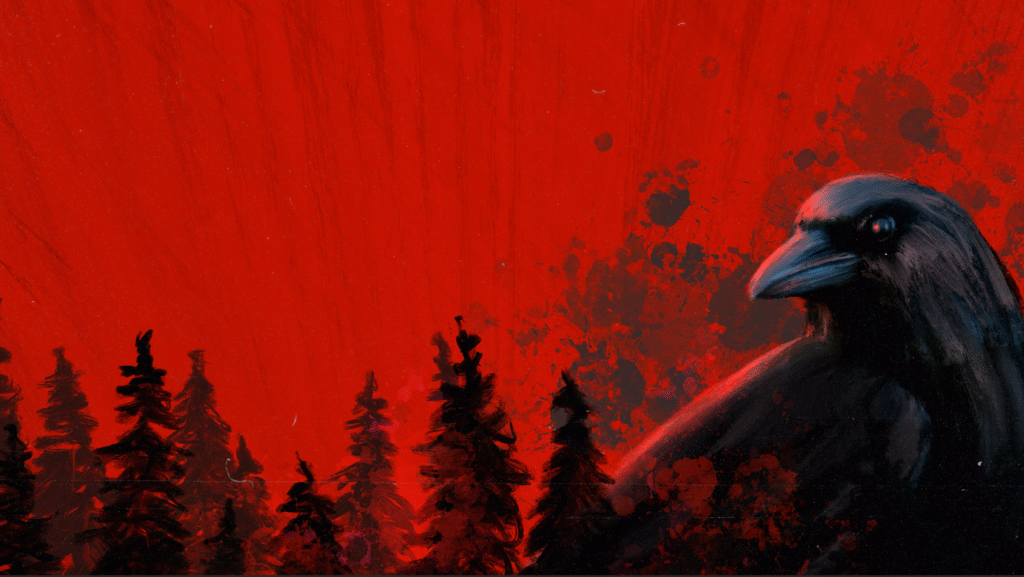
Sorry for the detour—back to Project Songbird. It feels like an intimate passion project, offering a hauntingly beautiful atmosphere and a raw, heartfelt narrative, yet its gameplay stumbles like a guitar string pulled too tight. In the end, it’s a stunning postcard from a place you never truly get to visit.
Project Songbird is a cinematic, first-person psychological horror game developed by FYRE Games and Conner Rush, released on March 26, 2026. It is available on PlayStation 5, Xbox Series X|S, and PC (Steam)
A Musician, a Cabin, and Something Wrong in the Trees
Before you even enter the menu, Project Songbird tells you the developer’s name. Then the loading screen tells you again. Then the main menu credits remind you. Then a mid-game cutscene makes sure you haven’t forgotten. By hour two, you half-expect a skywriter to spell it out above the Appalachian treetops. We get it. It was made by somebody.
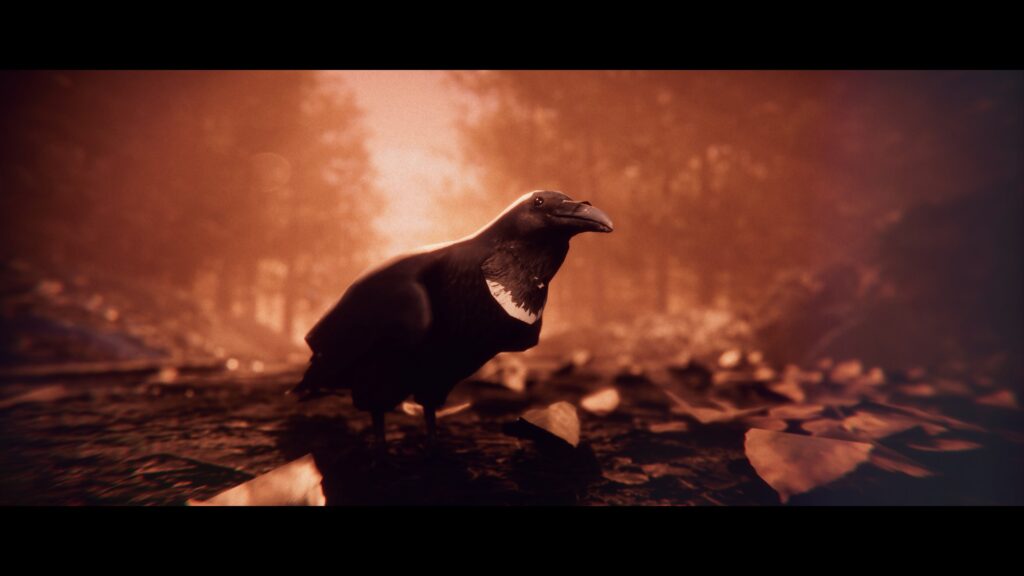
Strip away the plug, and you find a genuinely interesting premise. You play as Dakota, a career musician frozen by creative block and grief, retreating to a remote log cabin in the Appalachians to record a new album. It is a setup with real emotional potential—and the game’s narrative, visual design, and voice acting all honour that potential. The problem is that somebody also decided to make it a survival horror game that falters in gameplay aspects, and that decision quietly unravels everything else around it.
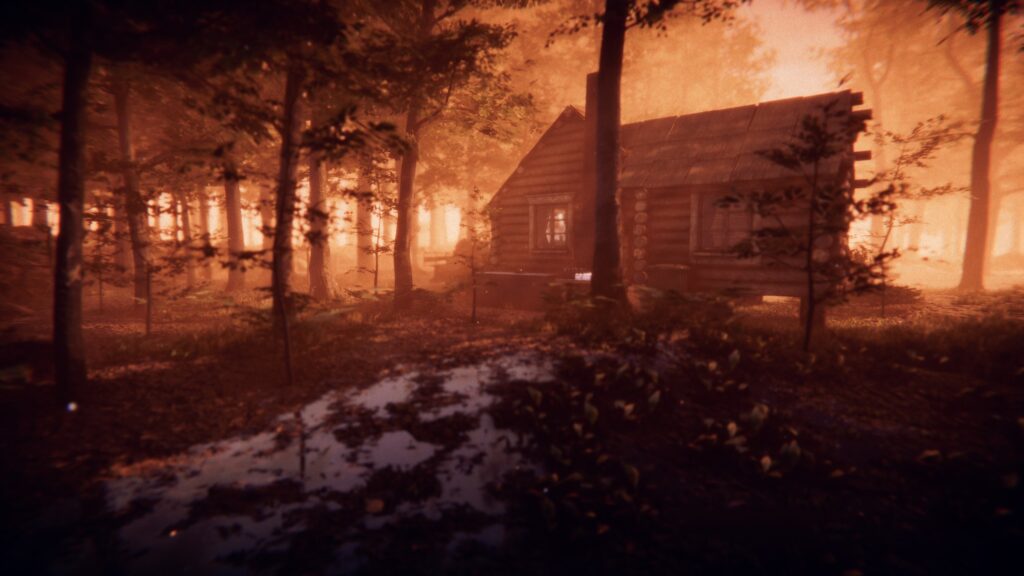
FYRE Games’ earlier titles revealed a developer steadily finding a confident voice in atmospheric indie horror. Project Songbird is their most ambitious effort yet — and while the narrative hits most of its intended marks, the gameplay’s lofty aspirations are undermined by uneven execution. But there is one thing I definitely respect about this game -that this is not a game trying to be a product. It is a game trying to be a conversation.
Trauma Tuned Like a Leitmotif
The narrative of Project Songbird is deceptively simple on the surface. A tortured artist, an isolated cabin, a growing sense that something is wrong in these woods. But Rush is not interested in the surface. The game is really about the weight of grief, the pressure that external expectation puts on internal creativity, and the specific horror of losing your voice — not your literal one, but the one that made you who you are.
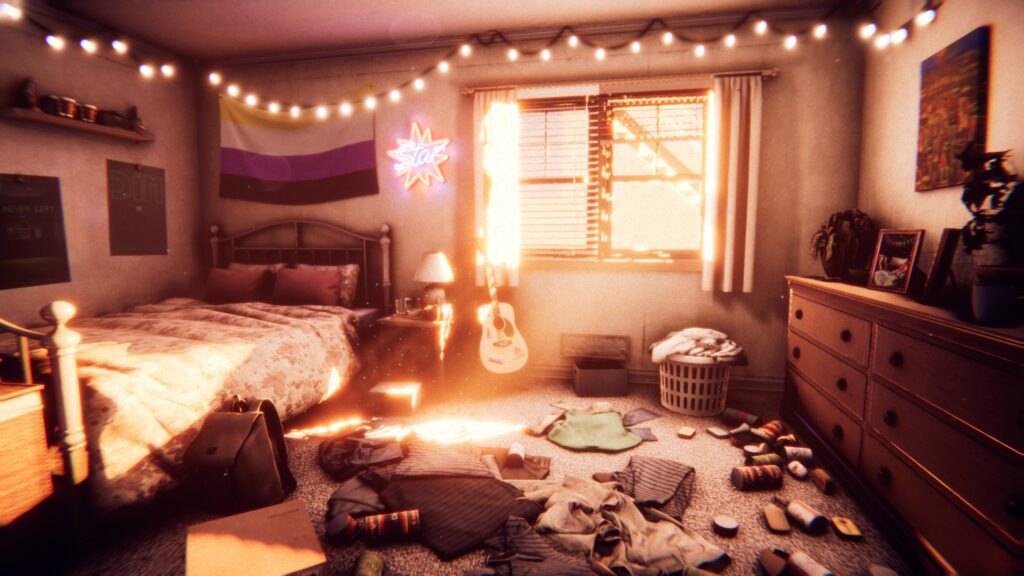
Dakota is written with surprising nuance. The opening, while being excruciatingly slow and possibly losing half of its audience on its way, is clever precisely because it refuses to hold your hand. You wake from a recurring nightmare, find a voicemail adding pressure rather than comfort, and the game quietly nudges you to make yourself a cup of coffee before you do anything else. It is a small thing, but it makes Dakota feel lived-in rather than manufactured.
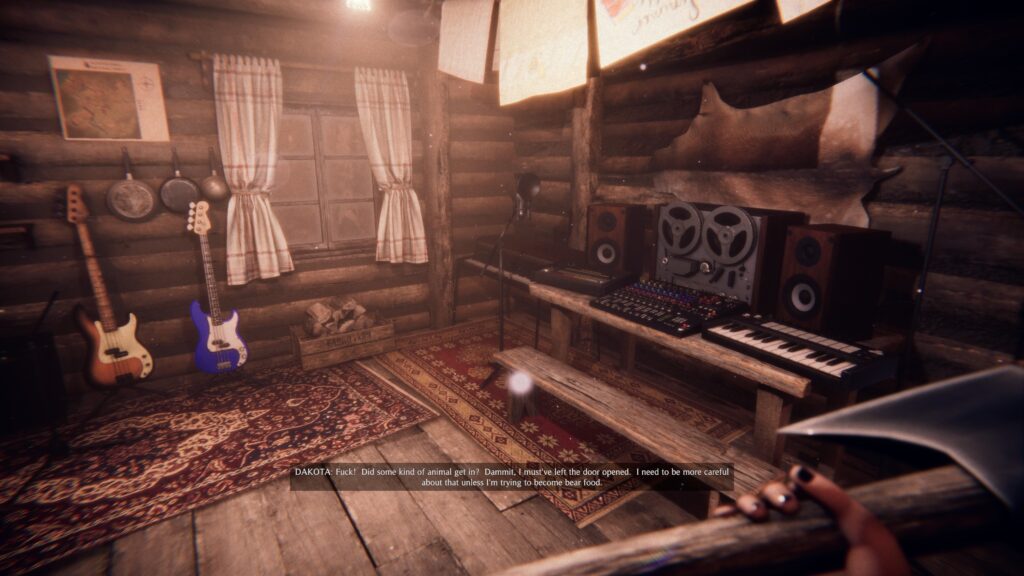
As the days progress in the cabin, the nights fracture into surreal nightmare sequences accessed through a recurring red door. Each journey through that door pulls Dakota—and you—deeper into distorted environments where memory bleeds into hallucination and the architecture itself becomes an expression of psychological unravelling. These moments are where the game is at its most visually daring and emotionally raw. Whether they land will depend on how much you connect with Dakota’s specific pain, but for anyone who has ever experienced the particular numbness of creative grief or the anxiety of imposter syndrome, the game reaches out and puts its hand on your shoulder in a way that very few games ever manage.
Where the Wings Get Clipped
Let us start with what might be the single most baffling design decision in a horror game this year: using ammunition to open locks. Not a key. Not a puzzle solution. Bullets. The same bullets you desperately need for the two — count them, two — enemy types in the entire game. It is the kind of resource management that makes you wonder if anyone playtested it, because the only logical response is to stop fighting entirely and just run everywhere. Congratulations, your survival horror is now a brisk nature walk with occasional hiding.
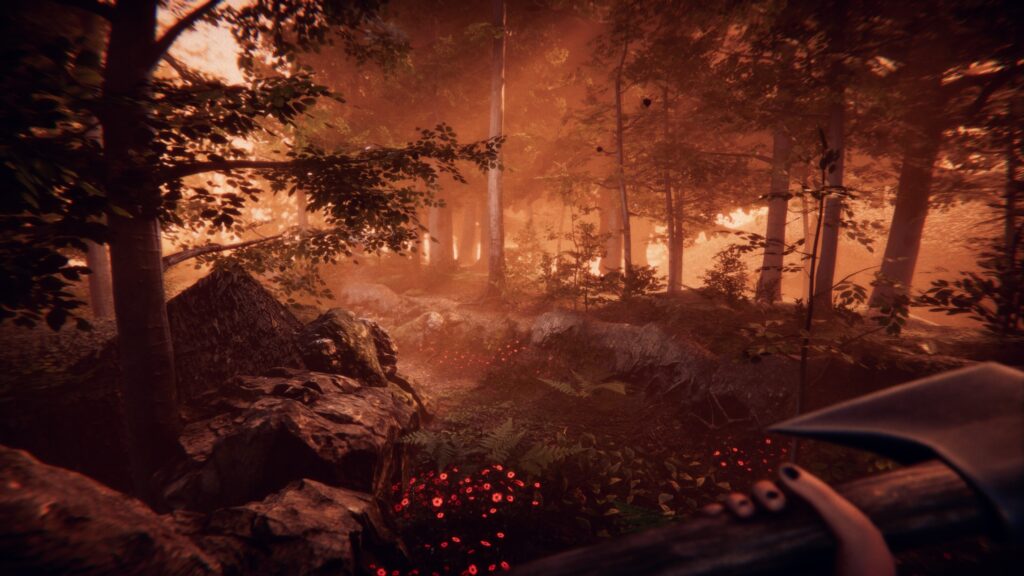
The axe, your melee fallback, breaks after practically every encounter. Repairing it costs resources you would far rather put toward actual firearms. So you don’t repair it. So you don’t use it. So what is it doing in the game? The optimal strategy reveals itself within the first hour: hoard absolutely everything, avoid every fight, and wait until Act 3, where a fully upgraded rifle lets you one-shot enemies with contemptuous ease. There is no middle ground. The progression system either starves you or trivializes the game, with nothing interesting in between.
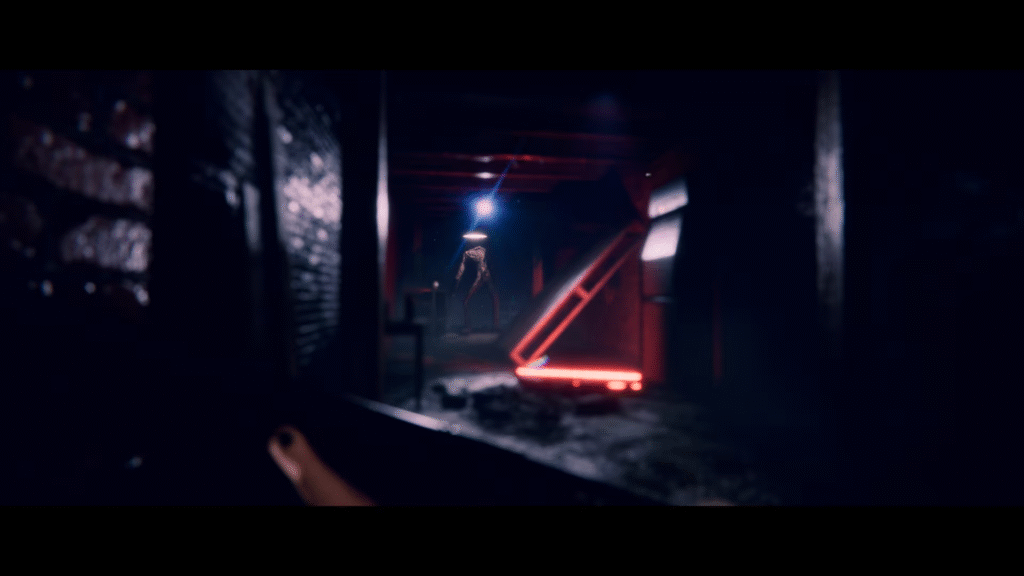
The enemy variety—or total lack of it—deserves its own paragraph. Two enemy types. Two. For the entire runtime. One of them is the now-exhausted “don’t look away, or it moves” mannequin mechanic, which was unsettling the first time a game did it, genuinely scary the second time, and has now been copy-pasted into indie horror so many times it registers as background noise. The mannequins here do not attack. They stand there, staring, going precisely nowhere. Even if you ignore them completely, nothing happens. It is horror theater with no consequences—decoration dressed up as tension.
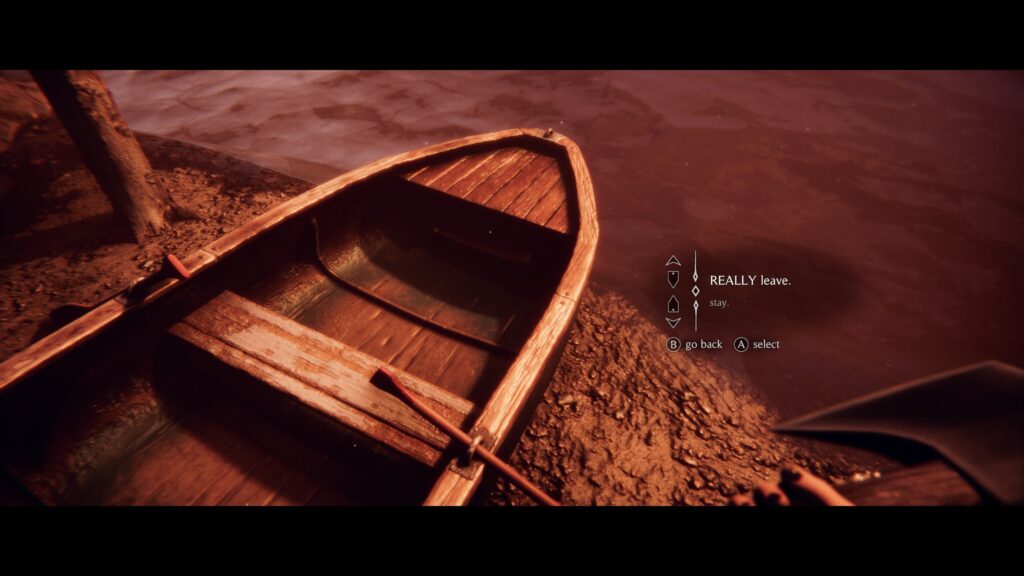
And tension, broadly, never arrives. Batteries for your flashlight are everywhere, defusing the darkness before it has a chance to build. The camera flash lights up rooms so thoroughly that anything resembling suspense evaporates. Enemy AI reacts so inconsistently — threatening in one moment, completely oblivious in the next — that stealth encounters feel more like a lottery than a skill test. You cannot craft supplies, so when you do run out, the only play is avoidance. The “survival” in survival horror has packed its bags and left the building.
Over the past few days, the game has received numerous patches, each almost requiring a full redownload. Today, I even got a one-on-one feedback screen from the creator saying, “Hey, it’s me again, and I’d like you to rate your experience so far. ” I really appreciate the effort being put in, and I have a positive outlook for the game’s future, which might end up feeling entirely different from how it was at launch.
Real Talk
Project Song does a great job at delivering an atmospheric narrative, which is deeply personal and emotionally resonant. But it falters due to its uneven gameplay design choices, frustrating combat system, and excruciatingly slow opening hours that take up a significant portion of its short yet impactful campaign.
FINAL SCORE: 65/100
Project Songbird
Project SongbirdThe Good
- Narrative
- Atmospheric Exploration
- Indie Vinyl Soundtrack
- Nightmare Sequences
- Regional Pricing
The Bad
- Clunky Combat and Tools
- Enemy AI and Design
- Opening Sequence