



April does something to me every year. It has this strange power to crack things open — seasons change, older feelings resurface, and something in the air insists that you feel things more acutely than you normally allow yourself to. This year, I found myself rewatching Your Lie in April — for the second time after 4 years— while simultaneously sinking every spare hour I had into Pragmata. It wasn’t planned. It was just one of those rare collisions of art that happen when the calendar lines up with the right emotional frequency.
I finished Pragmata. Every sector. Every collectable. Every costume for Diana and Hugh. Every bingo board. Every Training Sim mission. Thirty-plus hours, 86% of achievements cleared, and I am still not done — currently threading my way toward the True Ending. And I’ll be honest: I did not expect Capcom, the house of Resident Evil and Devil May Cry, to deliver something that would sit next to Your Lie in April in the same April of my life and not feel wildly out of place. But here we are.
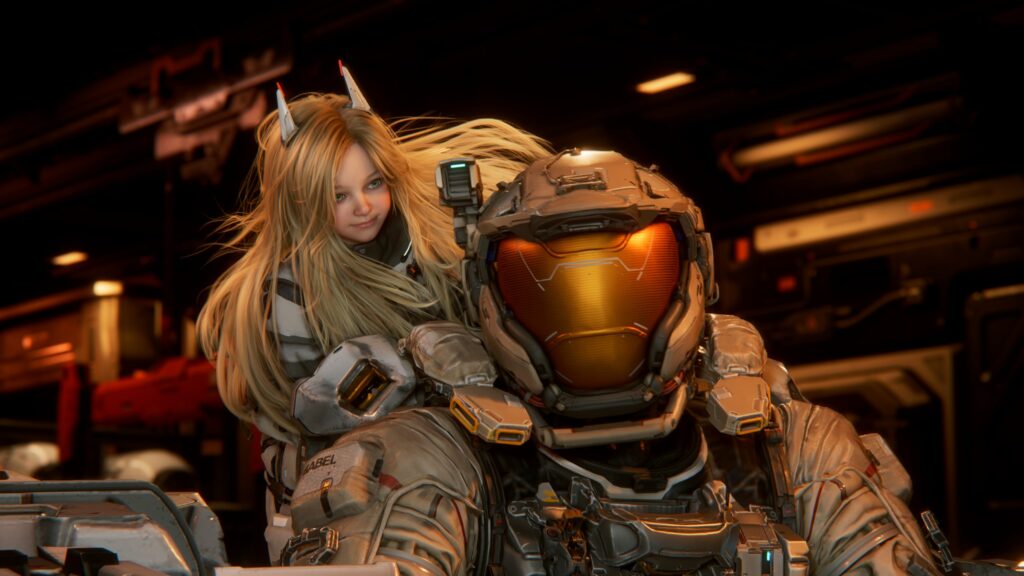
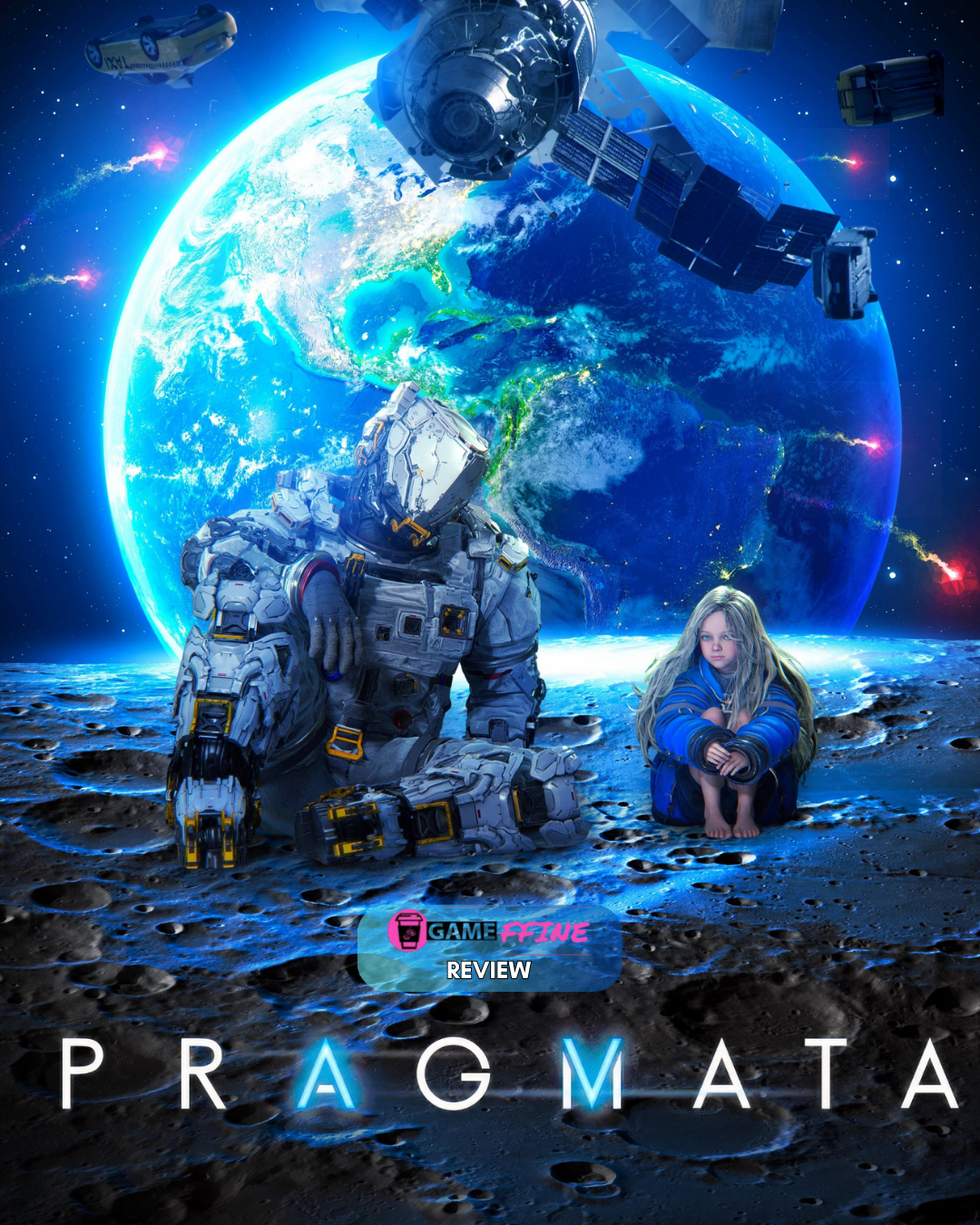
Pragmata is a futuristic sci-fi action-adventure game from Capcom that pairs a heavy-armoured spacefarer, Hugh, with an enigmatic android girl named D-I-0336-7, aka Diana. Released on April 17, 2026, the game challenges players to escape a desolate, AI-controlled lunar research station by blending high-octane shooting with unique real-time hacking mechanics. It is now available on PlayStation 5, Xbox Series X/S, PC, and Nintendo Switch 2.
Dad Space, On The Moon with a Miracle
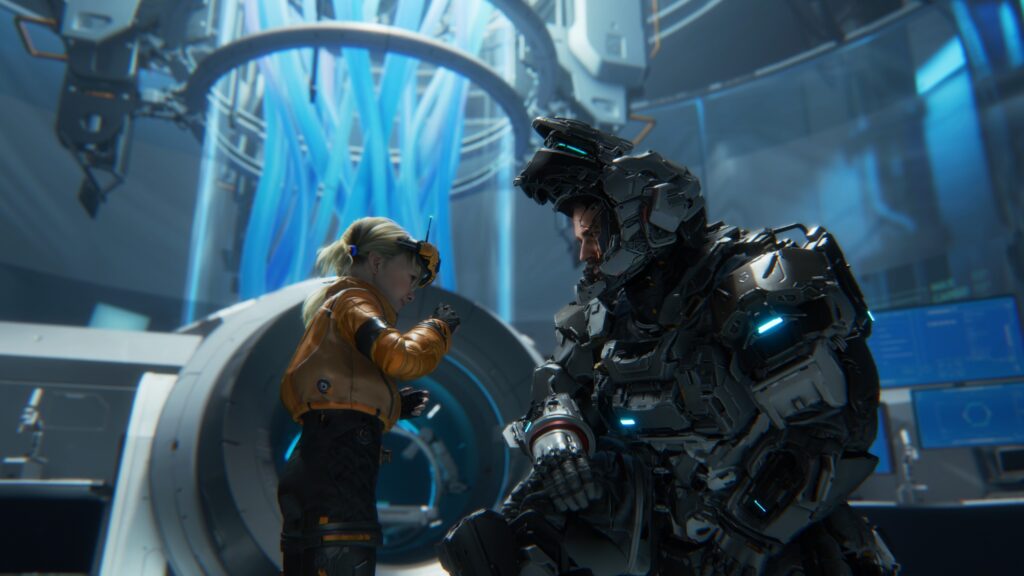
Let’s get the obvious comparison out of the way: Yes, Pragmata shares some narrative bones with Dead Space and System Shock. You’re a spacefarer commissioned to perform some maintenance work at a Lunar facility. After an out-of-the-blue Moon Quake, you’re stuck in the same facility where its central AI IDUS turned violently against you. You try defending yourself with your handy grip gun against the AI bots, but it doesn’t do shit. The rest of the crew is dead, leaving you as the sole survivor. You are outnumbered, weak, and now death seems imminent. But then you meet her—a state-of-the-art AI who looks like a little girl, a Pragmata named D-I-0336-7. She hacks the machines, makes them vulnerable, giving you or in this case, Hugh, a second chance at the odds of surviving this dystopian nightmare.
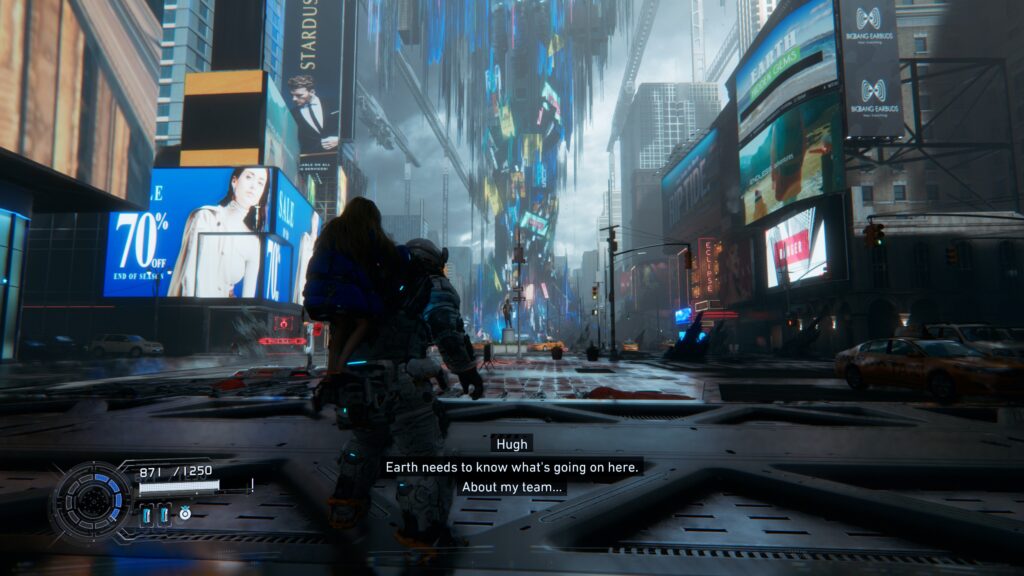
The environmental storytelling is pristine and haunting—scattered traces of the facility’s vanished inhabitants, half-realized replicas of human civilization, splayed across the lunar surface like a 3D printer that forgot what it was trying to say. If Dead Space was survival horror drenched in loneliness, Pragmata is its warmer, stranger sibling — call it Dad Space, if you will, because Hugh Williams is absolutely that slightly-sarcastic, deeply-kind, would-die-for-you energy that sits squarely in peak dad mode.
And while we’re on the subject — can we take a moment to appreciate what Capcom has done this year? We are not even halfway through 2026, and they have already delivered three bangers that each scratch a completely different itch. Resident Evil Requiem was part mom-simulator: Grace becoming Emily’s eyes and shield, a protectiveness that runs deeper than any survival horror mechanic should be capable of. Monster Hunter Stories 3 is probably the most adorable pet simulator ever wrapped inside a legitimately great JRPG — the kind of game that makes you feel guilty for upgrading your Monstie because they look so happy just being your friend. And then Pragmata. Dad Space. Dad Simulator. Hugh Williams, peak dad energy, would absolutely die for this kid without making a speech about it. Three games. Three completely distinct emotional registers. One studio. Capcom is simply cooking right now, and I will not hear otherwise.
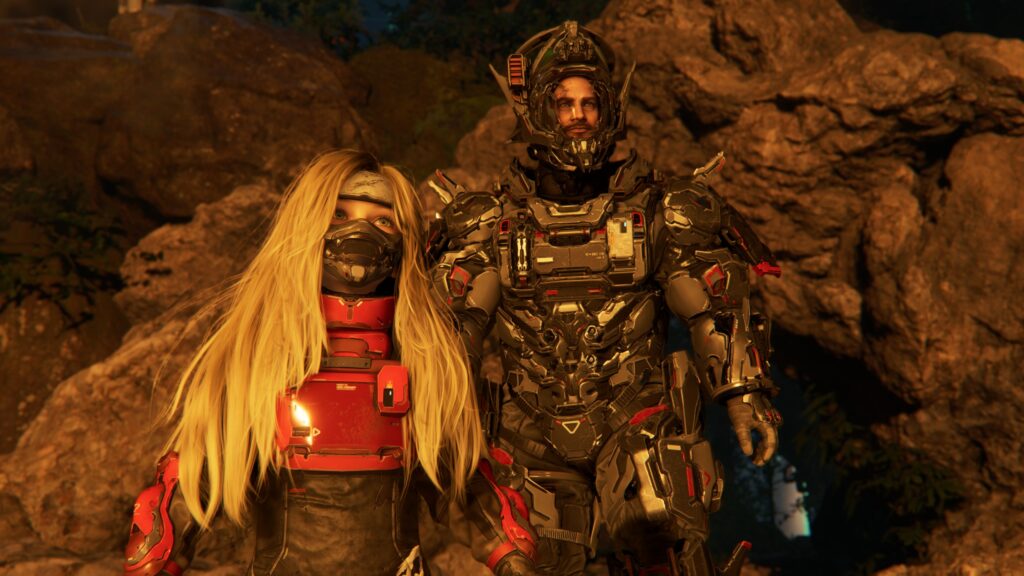
But here’s what Pragmata does that Dead Space never quite managed: it gives you something worth surviving for. Isaac Clarke was running from horror. Hugh is running toward something. And that something is Diana. The dynamic between Hugh and Diana is unlike anything I have experienced in a video game, and no, it’s not the same as The Last of Us, as Hugh is not someone who has caged himself from others like Joel. He understands Diana from the get-go, explaining the smallest of things and breaking them down into their simplest form possible, from sandcastles to water-guns or even hide-and-seek at the shelter. It doesn’t feel manufactured. It feels earned, moment by tiny moment, in ways that other games could spend entire cutscene budgets failing to replicate.
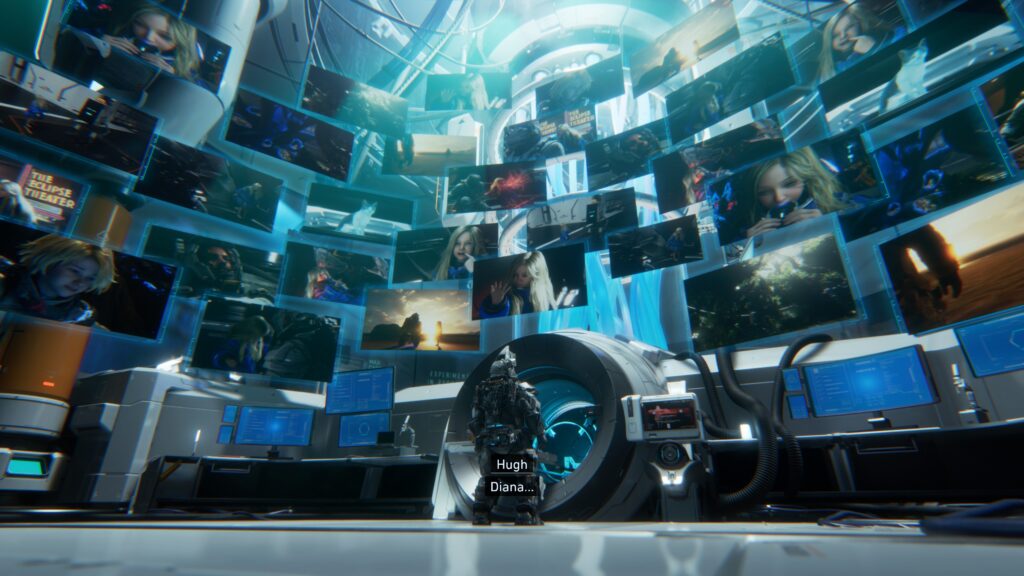
The relationship between these two — a grizzled spaceman and a young android girl navigating a moon base that wants them dead — is the entire heart of this game. Director Cho Yonghee (who, delightfully, was on the art team for NieR: Automata, and it shows absolutely everywhere) has built something that functions less like a character dynamic and more like a slow miracle unfolding in front of you.
The Kind of AI I Actually Want in 2026
We are living through what feels like the age of AI maximalism — generative models everywhere, AI slop in every corner of the internet, and a general exhaustion with the whole concept. And then Pragmata drops Diana into the conversation and resets the entire discourse.
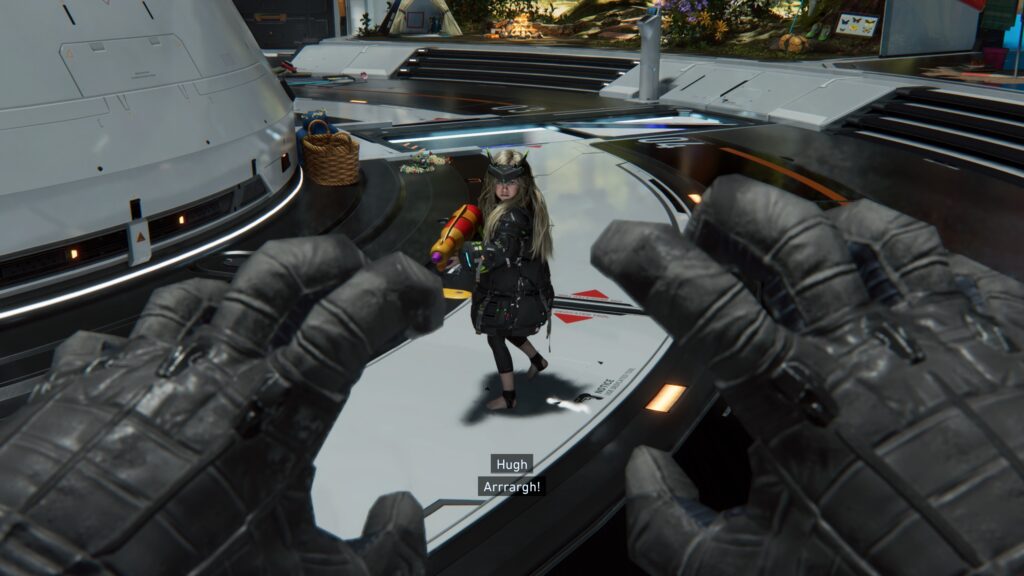
Diana doesn’t feel like artificial intelligence. She feels like a genuine curiosity wearing a robot’s face. The REM toys scattered across the lunar facility — and the way Diana reacts to each one she discovers — is some of the finest environmental character writing I’ve encountered this generation. Watch her face when she finds a new one. Those high fives. The sheer, unguarded delight in them. The hide-and-seek mini-game that should by all accounts be a throwaway distraction, but instead made me put the controller down for a moment because I was grinning like an idiot.
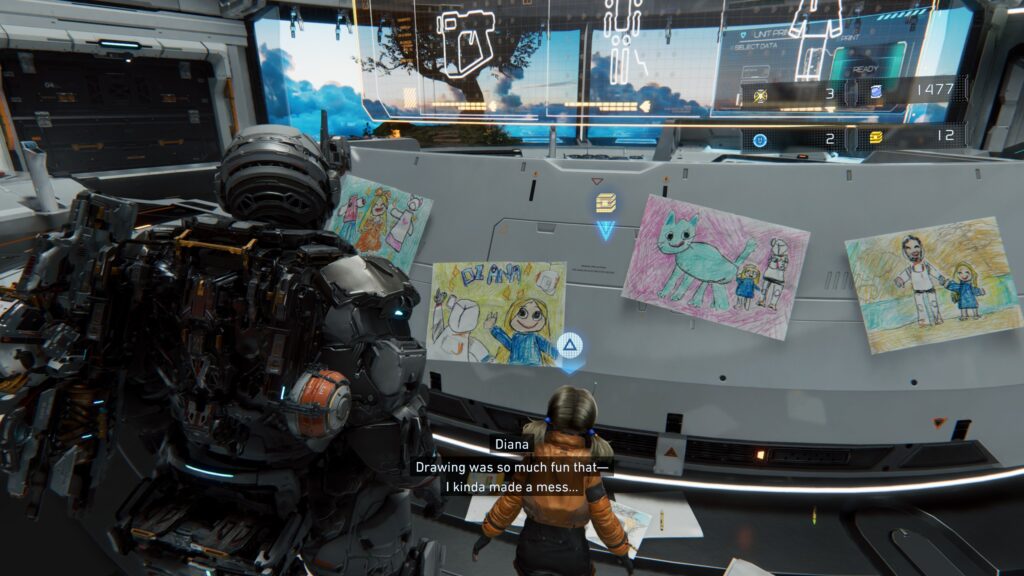
And the drawings. Oh, the drawings. The adorable, slightly wonky drawings that Diana produces — they belong in a frame. They belong on a refrigerator door. They communicate something about Diana’s interior life that no amount of cutscene dialogue could have accomplished. This is the vision of AI that I want in 2026: not a tool optimized for productivity, but a presence that makes the world feel a little larger and warmer because it exists in it.
Voice actress Grace Saif deserves enormous credit here. Diana walks a deliberate line into the uncanny valley — Capcom’s team animated her without child actors, relying instead on Capcom staff themselves, and there is something genuinely otherworldly about the result. She looks human. She moves in ways that are almost human. And that gap — that precise, calibrated gap — is where all the magic lives.
Hack First, Ask Questions Later
None of the emotional storytelling would land if the game weren’t brilliantly fun to play. Fortunately, Pragmata’s combat system is one of the most uniquely satisfying things Capcom has designed in the last decade — and I say this as someone who considers the RE4 Remake a high watermark for third-person action.
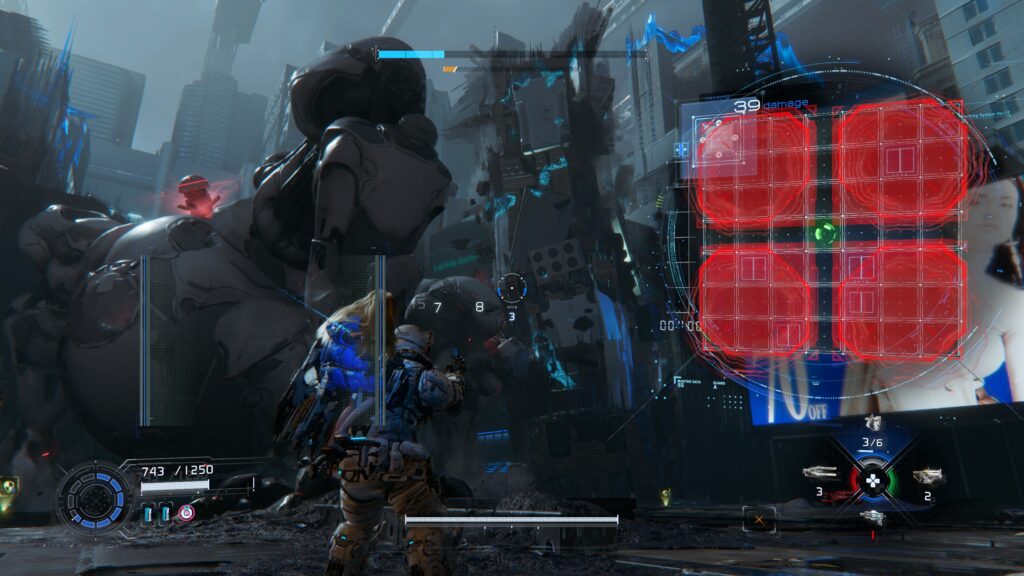
The core loop is deceptively simple to understand and genuinely difficult to master: Hugh shoots, Diana hacks. Simultaneously. You are controlling both sides of a single brain at once — managing Hugh’s positioning, evasion, and gunplay with your left hand while navigating Diana’s hacking matrix with the right. It’s patting your head and rubbing your stomach, except both actions are deeply satisfying, and the rewards for pulling them off cleanly are explosive. The moment it clicks — and it does click, unmistakably — is one of the best “aha” moments I’ve had with a controller in years.
The weapons escalate beautifully. What starts as a fairly modest sidearm blossoms into an arsenal that rewards both creative thinking and careful upgrade investment. I maxed out every weapon, pushed the suit upgrades to their ceiling, and still found encounters that demanded I think rather than simply shoot. The Riot Blaster — a broad, grenade-adjacent tactical weapon — became my closest companion by the end, partly because of how it interacted with the hack system in ways the game never explicitly telegraphed but quietly rewarded.
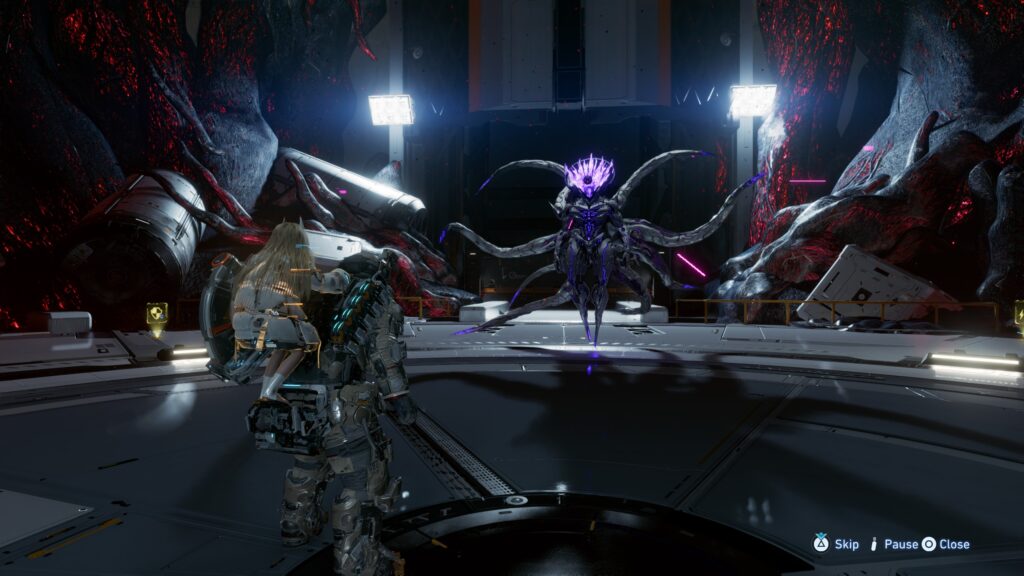
The boss fights feel ripped straight from DOOM’s most theatrical moments — enormous, spectacular, visually maximalist encounters that demand you internalize a rhythm before the arena lets you go.
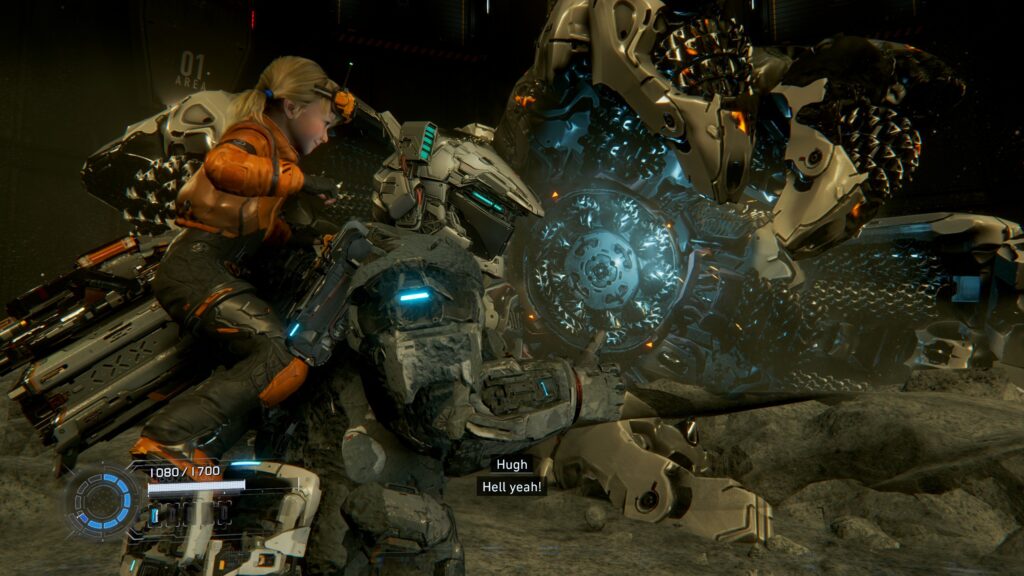
Capcom has always been good at boss design — that is table stakes at this point — but the Pragmata bosses carry a specific energy that reminded me of id Software at their most unhinged. They are massive. They are loud. They have the spectacular visual language of Stellar Blade at its most cinematic — striking imagery, enormous scale, the kind of frames you want to pause just to stare at. And they reward mastery in the most satisfying way: not by making you memorize patterns until the fun drains out, but by gradually revealing their logic until the moment you crack them feels like your victory rather than the game handing you a trophy.
Lunar Visuals That Almost Stole My Soul
Let’s talk about how this game looks, because it demands to be talked about. Pragmata is, without qualification, one of the best-looking games of this generation. The art direction — clean, grounded, NASA-plausible sci-fi interspersed with the deeply wrong geometry of an AI-hallucinated cityscape — is genuinely extraordinary. Taxis sinking into lunar floors. Buses extruding from walls at impossible angles. A Manhattan that doesn’t quite know it’s wrong. Capcom’s human developers painstakingly hand-crafted every distortion, and the result is something that sits in your memory long after you’ve put the controller down.
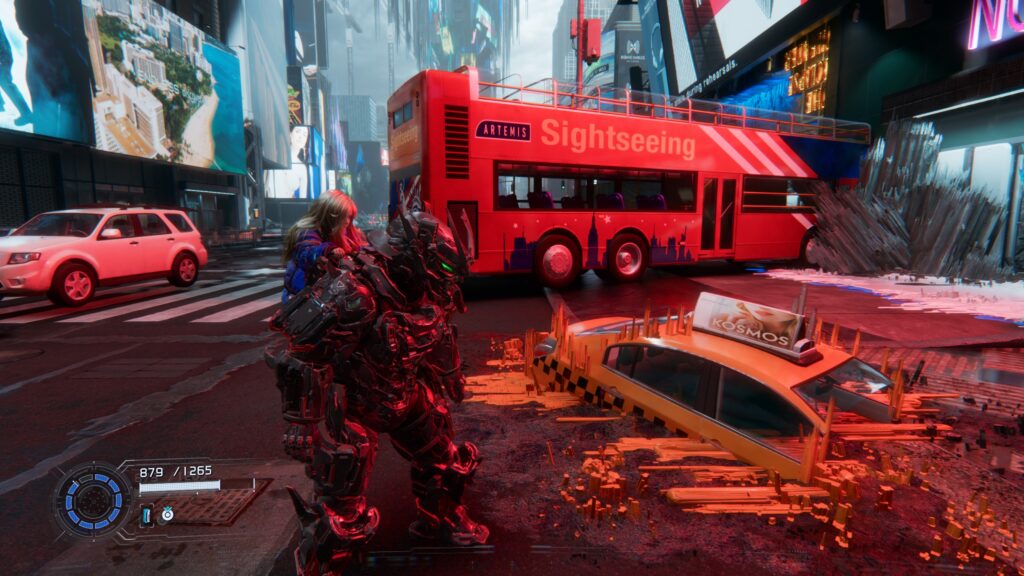
On my desktop with an RTX 5070, I was running between 110 and 144 fps in High RT mode at 1440p, and the game is absolutely gorgeous at those numbers. The lunar interiors have a precise, clinical beauty to them. Diana’s facial animations during emotional beats — genuinely impressive, cutscene-quality stuff during gameplay itself — hold up under close scrutiny in a way that few games manage.
But here’s my one real gripe — a genuine frustration rather than a cosmetic quibble: High RT mode has a noticeable artifacting problem. It’s not as bad as Crimson Desert’s high RT setting, but still quite noticeable. Running around the facility at those frame rates, you catch the edges, the shimmering, the places where the rendering pipeline isn’t quite cleaning up after itself. It’s not game-breaking, but when you know what the game looks like in Path Tracing mode, it grates.
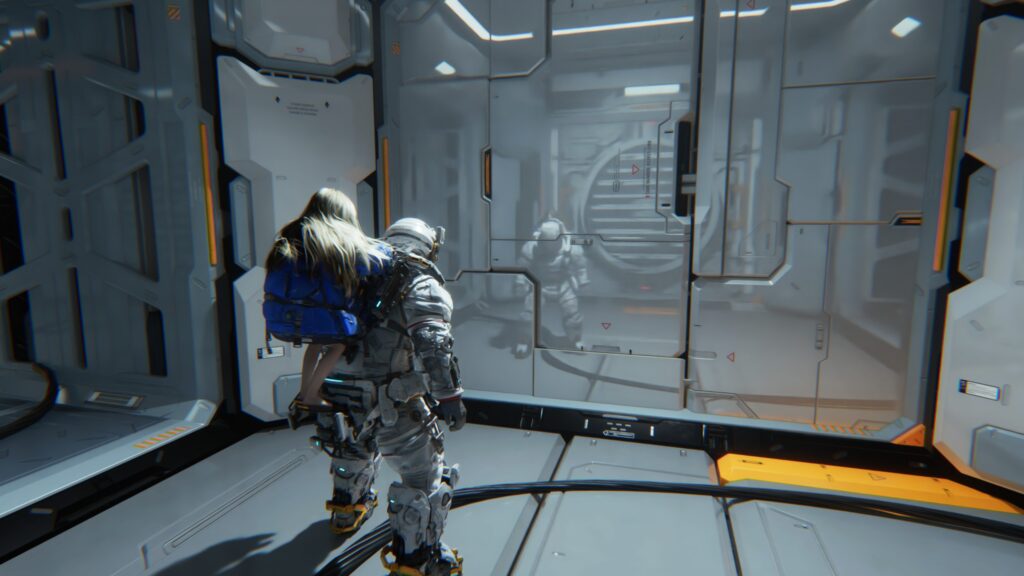
Because Path Tracing? Path Tracing is sublime. The lighting transforms. Shadows behave like actual light. The lunar facility goes from gorgeous to borderline oppressive in the best possible way. The only catch is that enabling PT slashes your frame rate by roughly 60% — a dramatic tax that suddenly makes your 120fps machine feel considerably more mortal. Frame generation can fix this issue with a small yet noticeable input lag. And the cruelest part? Ray Reconstruction — the DLSS feature that dramatically cleans up the PT image — is locked exclusively behind Path Tracing mode. It should be available in High RT as well. Hopefully, this will be patched in a future update.
Real Talk
Pragmata is one of the boldest and most innovative third-person shooters ever made. Hugh and Diana are the kind of duo that other games will spend the next several years trying to replicate and mostly failing to. Its unique gunplay is unlike anything I’ve seen since the last decade. And Diana — curious, warm, slightly uncanny, and completely unforgettable — is the kind of AI I want in 2026. Not a chatbot. Not a content engine. A presence. A companion. Something that makes the cold, hostile, beautiful lunar silence feel survivable. It is one of the finest games of this generation. It is essential. Do not miss it.
FINAL SCORE: 100/100
Pragmata
PragmataThe Good
- Hugh and Diana's dynamic is the most genuine character relationship this generation
- Dual shoot-and-hack combat is uniquely satisfying and rewards mastery
- Diana's small moments: REM toys, high fives, drawings are extraordinary character writing
- DOOM-scale boss encounters with Stellar Blade-level visual drama
- Exceptional art direction: grounded sci-fi meets AI-hallucinated uncanny valley
- Post-game content is generous, meaningful, and never feels like filler
The Bad
- High RT mode carries noticeable artifacting that PT mode eliminates
- Ray Reconstruction locked behind Path Tracing