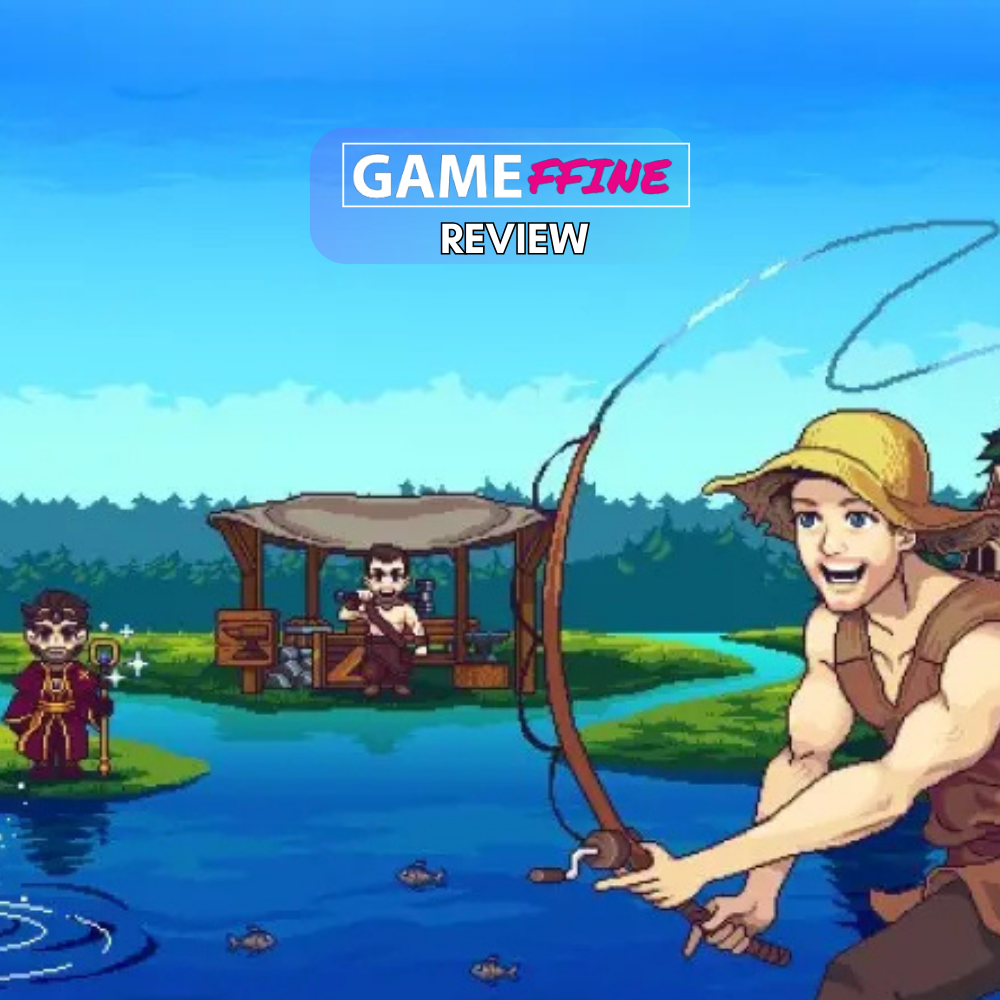




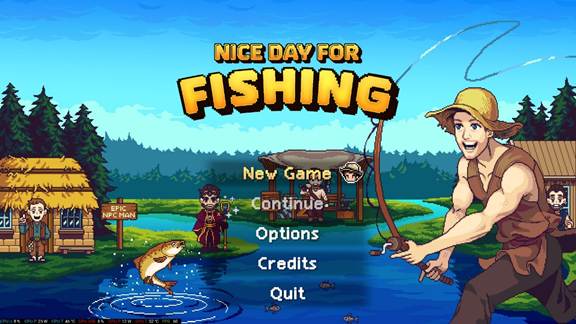
The first time I heard Baelin say, “Nice day for fishin’,” I laughed, shook my head, and walked on. He was background noise in the grand world of RPGs, just another villager programmed to loop a single line until you stopped caring. So when I sat down to play a full game about him, I expected a quick novelty at best, a long-running joke stretched to breaking point at worst. But then I cast my first line. The water rippled, the tension built, and suddenly I was locked in a tug-of-war with a fish that fought harder than half the enemies I’d faced in “serious” RPGs. Something clicked in that moment: this wasn’t just a joke. This was a game with heart, humor, and more depth than anyone could’ve predicted. By the time I returned to Honeywood with my first proper catch, I wasn’t smirking at the absurdity anymore; I was invested. And that’s the magic of Nice Day for Fishing. It takes a background NPC and spins his one line into a full-blown adventure that’s far funnier, cozier, and more rewarding than it has any right to be.
The World & Story
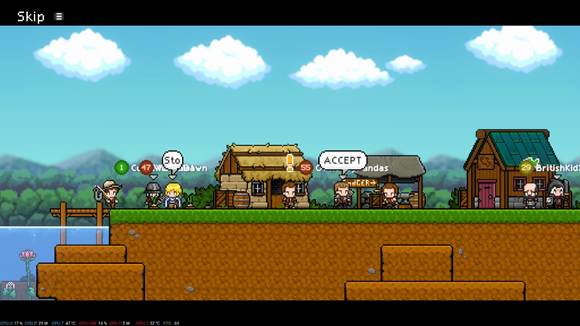
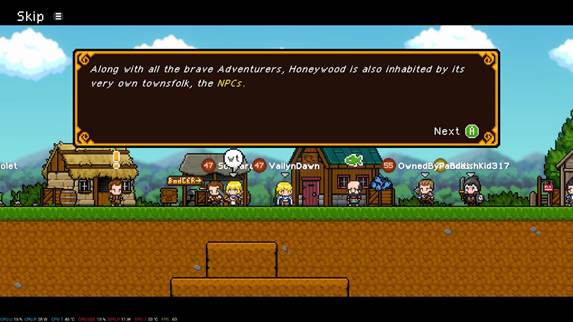
Azerim isn’t a sprawling world, but it’s packed with character. From lush forests to eerie shipwrecks, every location feels handcrafted, like someone took great care to make each corner memorable. The heart of it all is Honeywood, the town you’ll see grow as you help Baelin and the community rebuild. Watching it flourish as new faces arrive and new buildings pop up creates a sense of ownership that ties you to the world. The story doesn’t try to be epic, and that’s part of its charm. Baelin is no chosen one. He’s a man who just wants to fish, yet through sheer luck (and a lot of stubborn optimism), he winds up saving the day. The humor is playful, poking fun at RPG tropes without being mean-spirited. If you know Viva La Dirt League, you’ll smile at all the cameos and references; if you don’t, you’ll still get a quirky fantasy story with plenty of laughs and surprisingly sweet moments.
The Fishing & Combat Loop
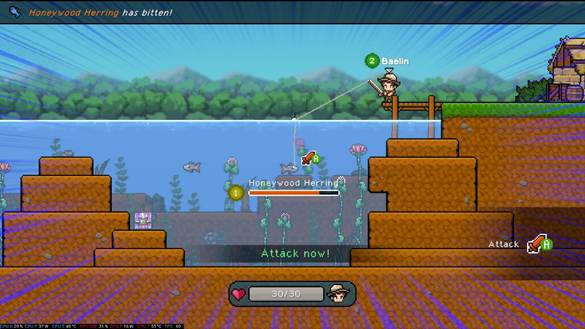
Fishing here is the star of the show, and it’s nothing like the background minigames we’re used to. Every bite throws you into a duel. The fish tugs, you parry. You strike, it fights back. Spells and abilities add layers to the brawl, turning what could’ve been a one-note mechanic into the game’s main thrill. It starts simply, a small tug here, a quick swing there. But the deeper you go, the more the fish evolve into proper foes. Some lunge wildly, some defend against your strikes, and others test your timing until your hands ache. There’s a satisfaction to finally reeling in a beast that gave you three failed attempts beforehand. It’s the kind of loop that tempts you into “just one more cast” until you realize hours have passed.
Progression & Exploration
What keeps the loop fresh is the way progress ties to exploration. Upgrading your rod and line doesn’t just make things easier; it literally expands the world. That magnet hook you buy? Suddenly, you’re fishing for treasure out of shipwrecks. That drill attachment? Now, rocky caves aren’t off-limits. It is a clever way to keep progression meaningful while rewarding curiosity. Exploration itself feels rewarding even though the maps aren’t massive. Each region has its own theme and personality, from coral reefs glowing with strange life to dark caverns that feel hostile and claustrophobic. As you push into these areas, you’ll find new species of fish, harder challenges, and loot that feeds back into the upgrade cycle. And then there’s Honeywood, the town that grows alongside you. Each time you return, it feels more alive. Villagers you meet along the way move in shops, expand, and little details shift to reflect your progress. It adds a cozy layer of investment, like watching your own little RPG diorama come to life.
Visuals & Sound
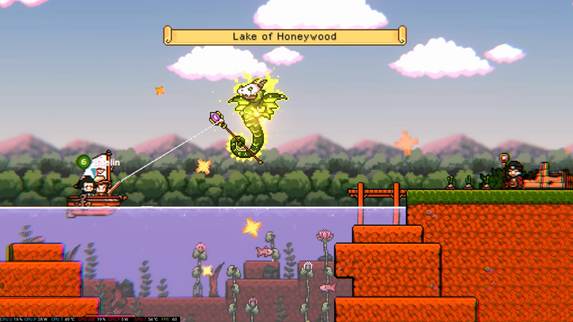
The game leans hard on pixel art, and it works beautifully. Every area pops with color, every fish feels distinct, and the little animations, Baelin reeling in a stubborn catch, villagers bustling around town, give the world personality. The environments may not be vast, but they’re detailed enough that I often stopped just to take them in. The soundtrack is equally strong. The music shifts with your environment, wrapping you in cozy melodies that set the perfect tone whether you’re wandering through town or battling a leviathan beneath the waves. It’s the kind of score that sneaks into your head even after you’ve stepped away from the game. If there’s a weak link, it’s the NPC “voices.” They’re presented as quirky, sped-up gibberish meant to mimic speech, and while it’s funny at first, it quickly gets grating. After a while, I turned the volume down to preserve the otherwise warm and inviting soundscape.
Where It Stumbles
As much as I enjoyed the game, it isn’t flawless. The biggest hurdle is repetition. At its core, you’re still casting, fighting, upgrading, and repeating. The game does a good job of dressing that loop up with new areas and mechanics, but after a dozen hours, the rhythm starts to feel familiar. Controls can also get frustrating. Some fights boil down to frantic button-mashing, which works but doesn’t always feel satisfying. Parrying, too, can be hit-or-miss in terms of responsiveness. It never ruined the fun for me, but there were times I wished the system felt a little more polished or offered customizable input options. Accessibility is another area where the game shows its limits. Flashing visuals and harsh lighting effects could make it tough for some players, and the settings menu is barebones. A few extra toggles would go a long way toward making it more welcoming.
Real Talk
At the end of the day, Nice Day for Fishing surprised me in the best way. What I expected to be a novelty turned out to be a game I kept coming back to because it struck that rare balance between cozy and engaging. The humor keeps things light, the mechanics have enough bite to keep you hooked, and the presentation ties it all together with charm.
FINAL SCORE: 84/100
Nice Day for Fishing
Nice Day for FishingThe Good
- Relaxing, slow-paced gameplay
- Simple mechanics, easy to pick up
- Quirky, unexpected twists keep it interesting
The Bad
- Can feel repetitive after a while
- Limited replay value