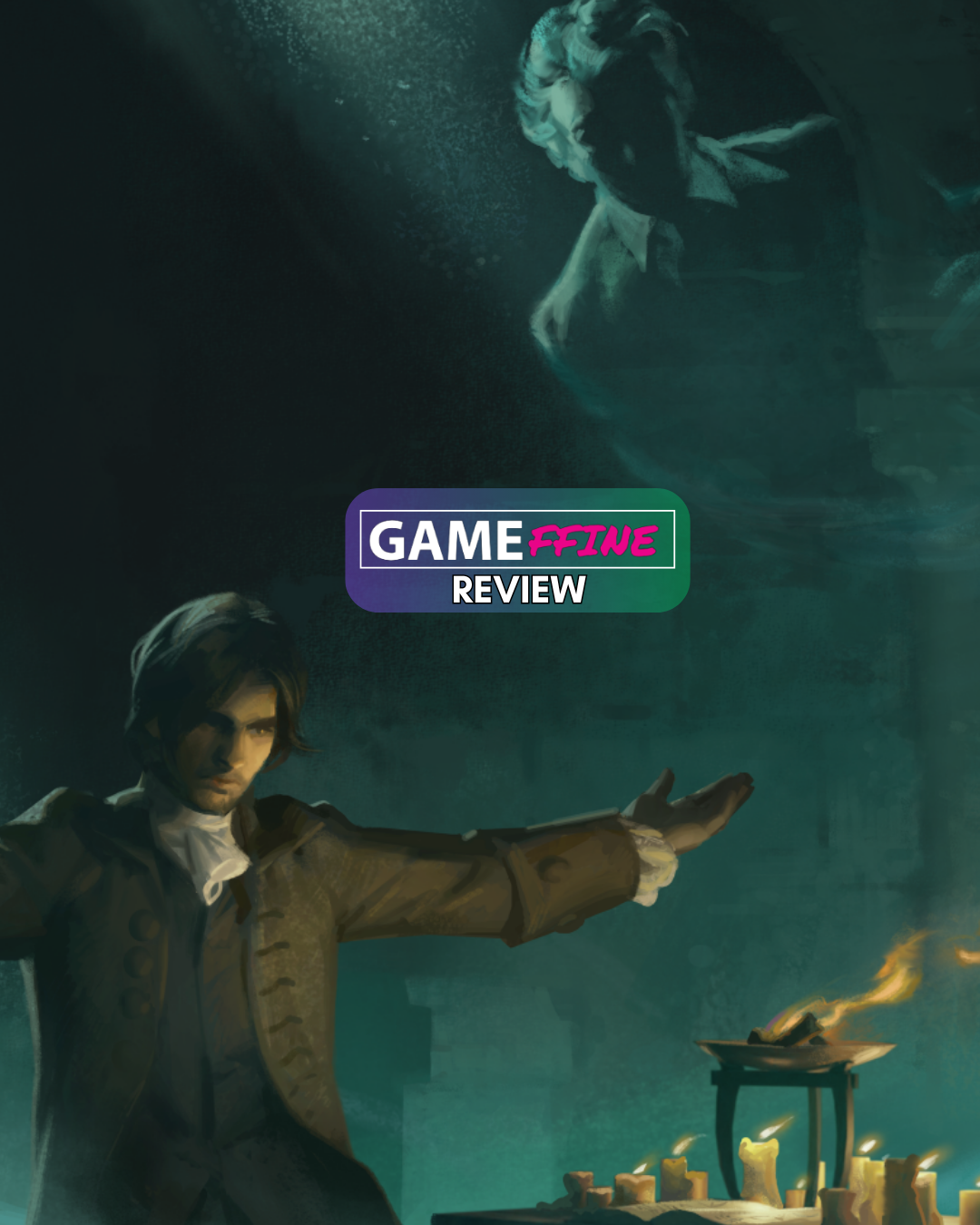




The Necromancer is a player favorite in RPGs that allow the usage of such a class. Commanding your skeletal army to cleave through hordes of hell in Diablo 2 or dabble in the dark art of corpse-raising in the steampunk world of Arcanum. Everyone wants to play as a necromancer, but no one asks how is the necromancer. This is the question Psychic Software’s labor of love, The Necromancer’s Tale, seeks to answer. In this story-driven CRPG heavily inspired by Disco Elysium, you’ll put on the Vaboots of the last member of the prestigious Van Elstrik bloodline and discover the allure and dangers of the darkest of arts.
Curiosity Empowered the Cat
The Necromancer’s Tale is a narrative-laden CRPG. But unlike Disco Elysium, it also features handcrafted combat scenarios that can’t be avoided. The main focus is still on the writing side of things, and the main mode of progression is through dialogues, of which there are a few hundred thousand lines. Through its 20-hour story, the fine folks at Psychic Software delve deep into the less-explored psyche of a necromancer. While part of the game will let the player experience the power fantasy of being a dark mage, it places heavy emphasis on the moral and psychological toil of wielding such taboo powers.
The story centers around young master/Miss Van Elstrik, who is sent away from home at a young age, as is custom with noble families. Similar to one of my favorite narrative-RPGs, The Life and Suffering of Sir Brante, you get to determine the starting stats and background of our troubled hero through an interactive storyboard sequence. Decades later, young Van Elstrik returns home due to his father’s untimely death. What starts out as a gripping murder mystery soon devolves into a pursuit of forbidden knowledge, power, and moral dilemmas.
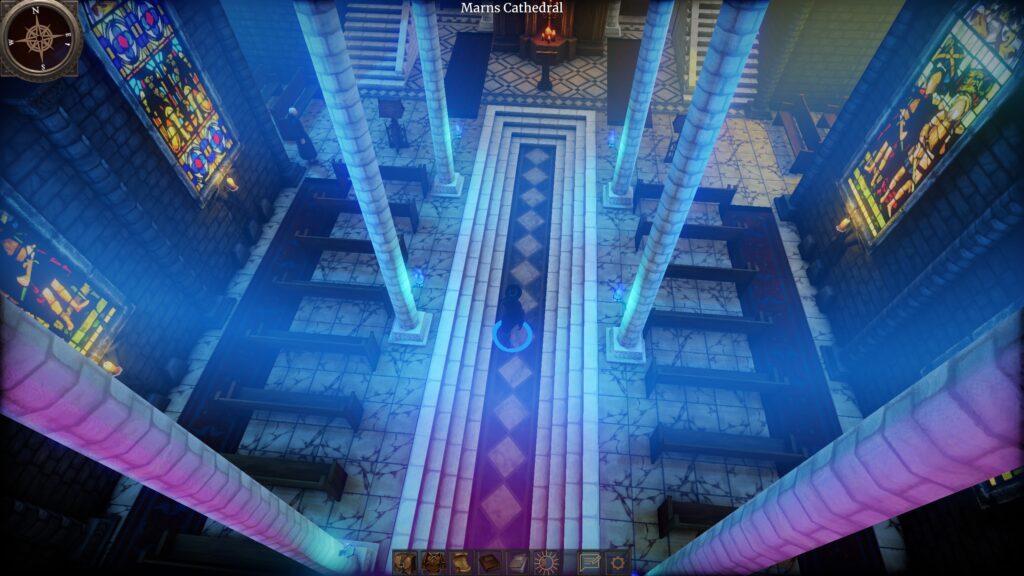
By far, the best aspect of The Necromancer’s Tale is its narrative. From its interesting alt-history setting to character motivations and major story beats, the narrative sustains an aura of mystery and dread from start to finish. The story unravels at a very slow pace (even for an RPG) and takes some time to get to the more fun parts. The majority of the story revolves around decoding an ancient tome and the hero’s thirst for knowledge. Watching my Van Elstrik go from a naive aristocrat to a master of horror was an absolute feast. You can technically stave off the allure of necromancy, but where’s the fun in that? I had a blast playing as a scheming viper who stooped to nothing for power. I sacrificed my friends, family, and a caring lover, and may have doomed the world in my pursuit.
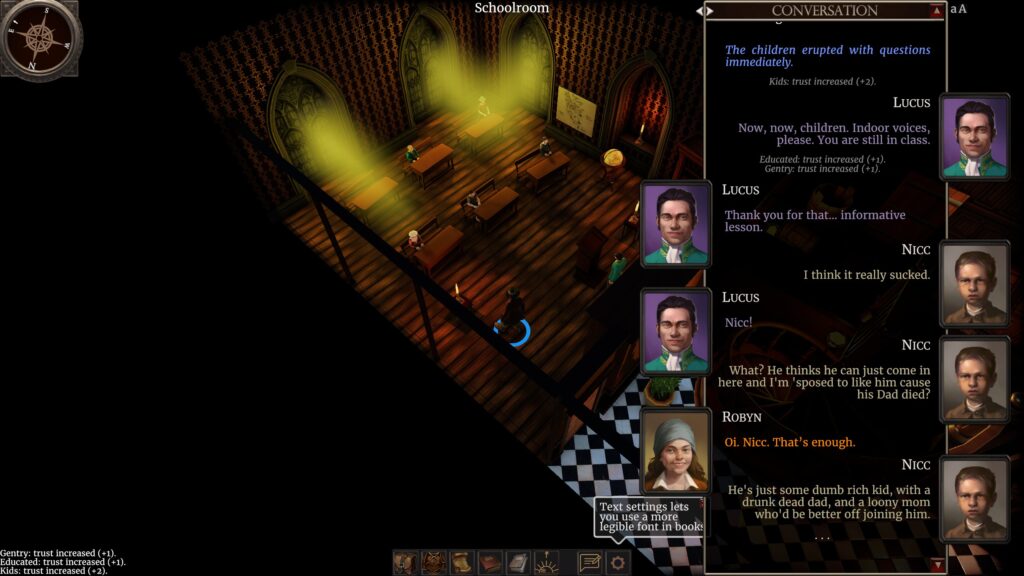
Actions have consequences. Psychic Software uses every opportunity it gets to remind you of that. I ruined a date with a beautiful woman because I couldn’t resist the smell of fresh graves. I’ve watched my childhood friend and people who trusted me hang in public because I persuaded them to do something they shouldn’t have. I tarnished my family name to wield the power of life and death in my hands. Do I regret it? That’s saved up for another playthrough.
Dance with the Devil
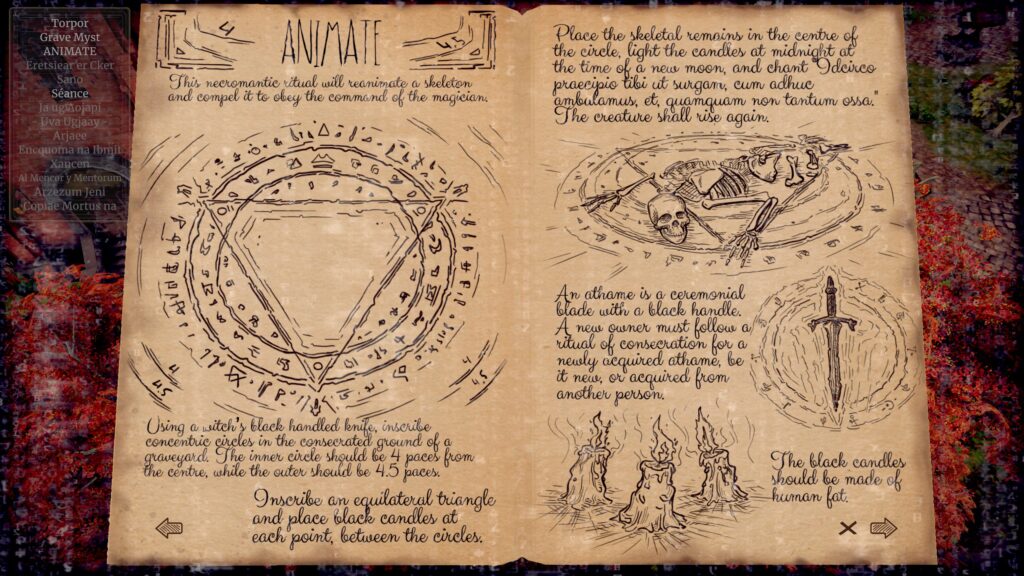
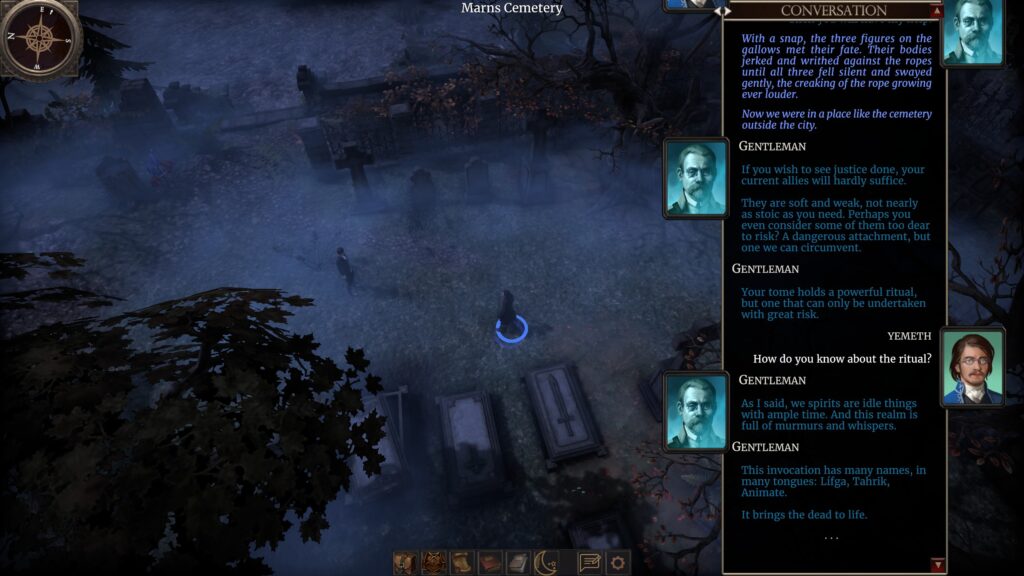
Oh, sure, I’m totally an expert in raising the dead—y’know, aside from hauling my half-dead carcass to the office daily. But clearly, the devs are full-on sorcerers, weaving some exquisitely detailed necromancy into this game, like they’ve got a PhD in dark arts or something. Each chapter of the game tasks you with decoding a ritual from the ancient tome using on-the-ground footwork and research— talking to people, passing skill checks, obtaining information from them, acquiring hard-to-obtain items, and finally, performing the ritual in question. Even raising the undead requires you to dig up graves. Not only that, but you must make sure that you aren’t seen by performing warding spells, because the government of Marns doesn’t take lightly to the dark arts.
This gameplay loop can get a bit jarring at times, especially since the game doesn’t like to hold your hand. You’re expected to pay attention to conversations for clues and apply simple logic to get what you want. I’m all up for figuring out things on my own, but it can get frustrating when you are expected to progress some quests in a certain way. But a cast of colorful supporting characters and the choice and consequence system make it worthwhile. The Necromancer’s Tale is written by folks who know their stuff.
Army of the Dead
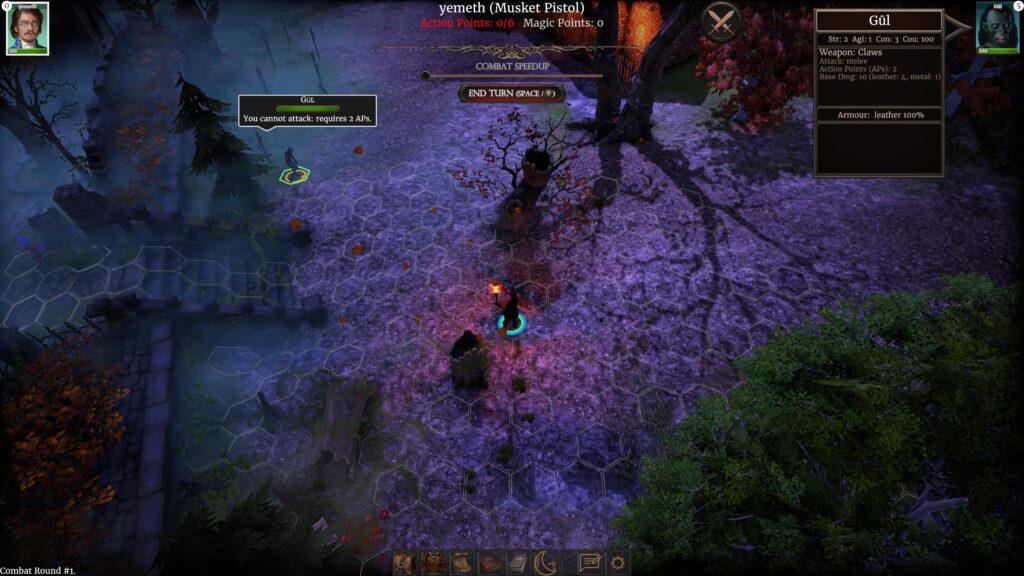
If there is something that I do not enjoy in The Necromancer’s Tale, then it’s the combat. It takes quite a while for the first proper combat encounter, and it’s not anything to write home about. Sure, the power fantasy of being an undead summoner translates well to gameplay. The player is able to summon various beings and take direct control over them, but the crude animations and predictable encounter design make them somewhat of a chore. Thankfully, there is an option to ‘auto-resolve’ each encounter, provided that your item rating is sufficient. This is very much subjective, and you may enjoy the combat more than I, but it is what it is.
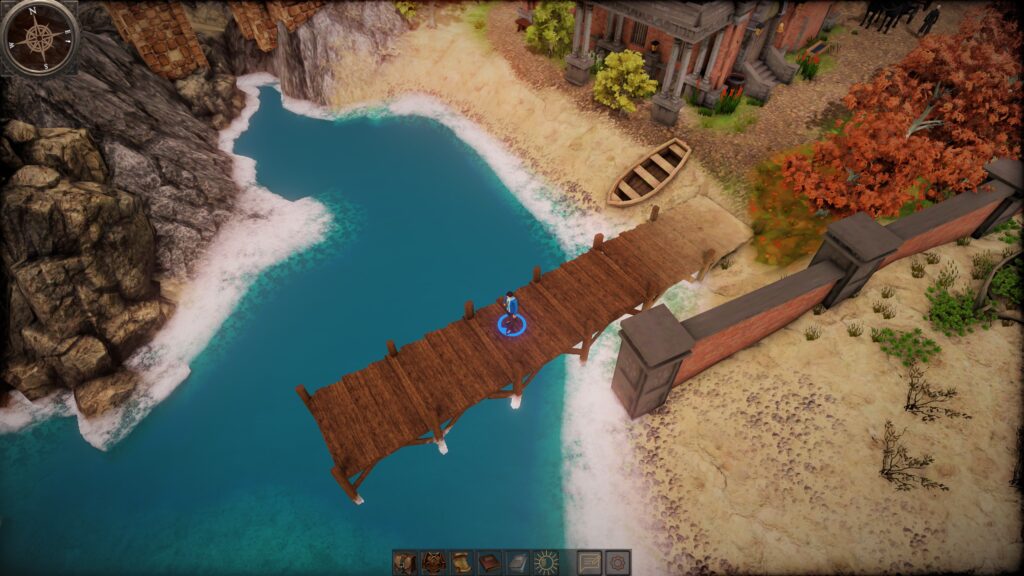
Another gripe of mine is with its open world. The open world is pretty modest by modern standards, and I like that about it. But, there is hardly anything to do in the city of Marns other than meeting quest givers and buying equipment. There are plenty of NPCs going about their business, and the city does change according to the time of day. However, once you stroll past everything once, there is hardly anything new or exciting to see and do there. You can click on any location within the city to instantly fast-travel to it, and I just used this feature for pretty much everything. While the game is rich in lore and worldbuilding (you can even read several books), the city is just window dressing to move the excellent story forward.
Smell the Flowers
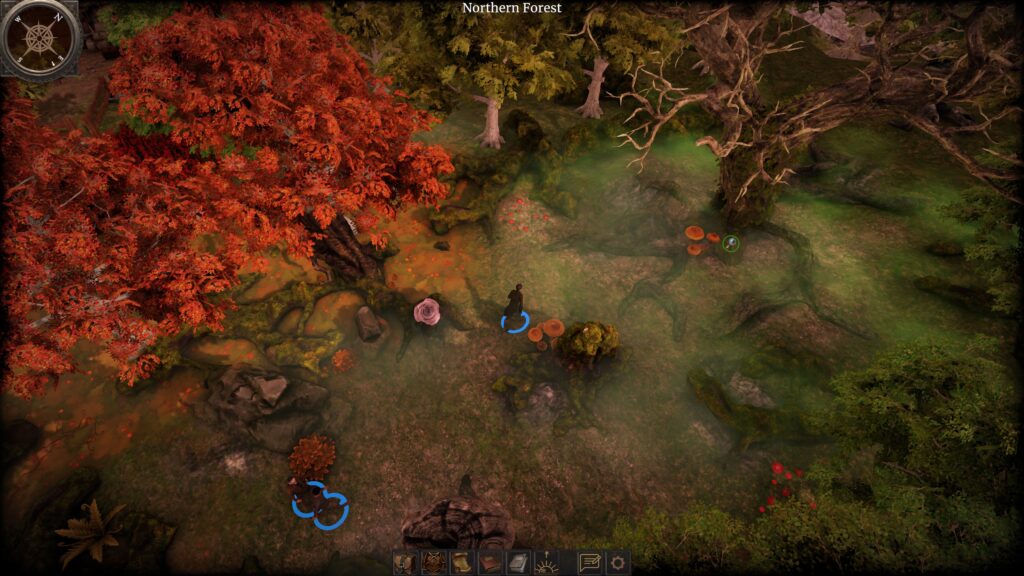
Well, bravo to The Necromancer’s Tale for visuals and music that are… let’s say, adequately serviceable for this kind of game. I mean, I usually prefer my RPGs like my undead minions—charmingly isometric and 2D, thank you very much—but I’ll begrudgingly admit the game’s overall vibe isn’t half bad. The story’s all bleak and grotesque, yet somehow the lighting and aesthetics are so vibrantly cheerful it’s almost like they’re mocking the grimdark narrative. I’ll give credit where it’s due—some locations are downright gorgeous. Animations, though? They could use a necromantic spark to liven them up. And the music? Oh, it fits the spooky mood just fine, but those loops are so repetitive I’m half-convinced they’re trying to hypnotize me. Still, it gets the job done.
Real Talk
CRPGs generally tend to feature moral choices—this one asks, ‘How evil do you want to be on a scale from graverobber to lich god?’ The Necromancer’s story is a ‘bone-fide’ good time if you can look past its crawling pace and bland open world. The narrative on offer here lets you really live out the necromancer power fantasy. The NPCs will be dying to meet you…sometimes quite literally.
FINAL SCORE: 80/100
The Necromancer's Tale
The Necromancer's TaleThe Good
- Excellent narrative and writing
- Necromancer power fantasy
- Actions have consequences
The Bad
- Combat could be more fleshed out and dynamic
- Bland open world