




In an age where reliance on electronics is essential, electronics repair shops become an important pillar of society. In many countries, used and hand-me-down electronic devices are common, but since many of them don’t have proper warranties or are just too old, small repair shops emerge to help those out and save the day. That is the premise tackled in Armenian studio Mandragora’s ReStory: Chill Electronics Repairs.
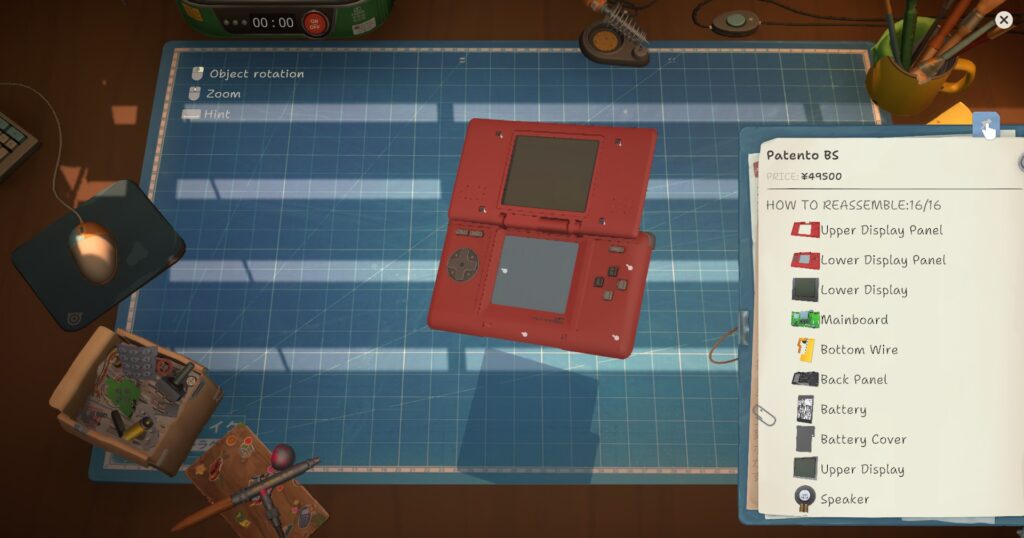
The game is a job simulator-type adventure game, set in Y2K-era Akiba, Tokyo, where you take the role of a shop owner running a small electronics repair shop. You take on requests to repair items ranging from game consoles to lights to mobile phones, slowly opening up to more items. Alongside that, there is a main story that we follow in the region we are serving, and we get to meet all sorts of characters coming to get their electronic items fixed. Each repair involves opening said items in your workspace and doing various tasks, from cleaning parts to swapping non-working parts for working ones.
Right to Repair
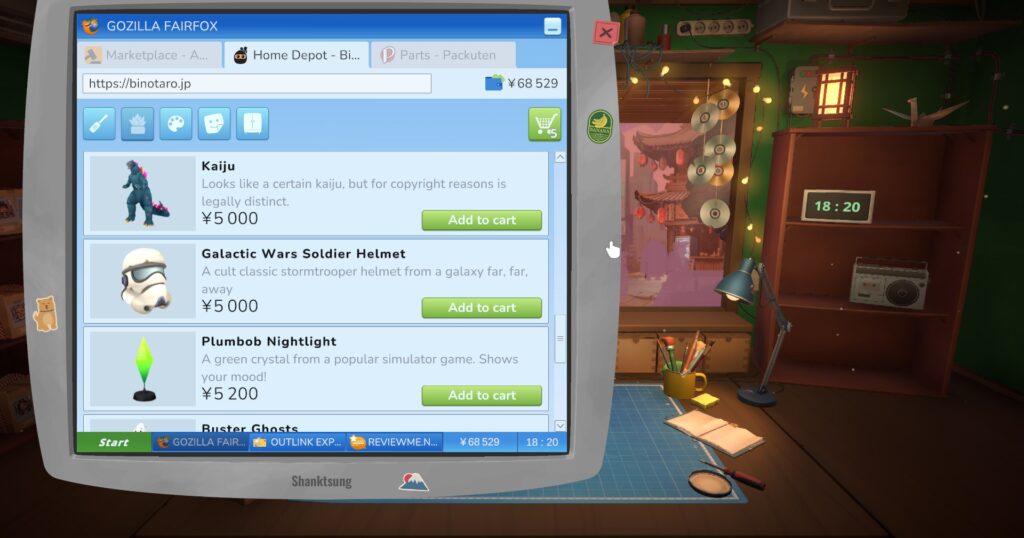
Like most job sims, ReStory‘s primary gameplay is intuitive yet has layers to it—learning and mastering opening up parts and screwing/unscrewing bolts results in going into the flow state and hours melting away. It is well done, and it’s clear devs put a lot of effort into making it right. Lots of subtle, delicious sound effects happen when you open up a phone or put parts of a game console in the right place, ending with a nice ding to notify a job well done. With a mouse, it feels quite intuitive. If you get lost, there is a helpful hint button to guide you. There can be some issues, like zoom not zooming in enough or small parts getting lost behind the main unit floating in front of you. You can order spare parts from the in-game internet.
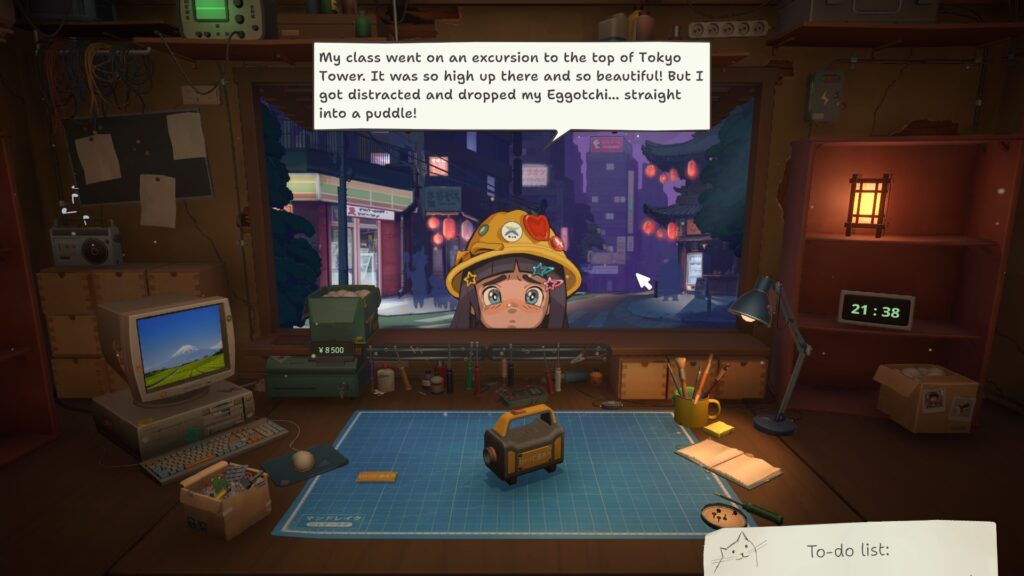
It is immersive in the sense that along with costs for parts and equipment, you also have to take care of rent and internet bills. While there are no big time limits, time for a single in-game day is limited, so you are doing your best to finish up before closing for the night. The online repair orders you undertake give you the best rating if you can finish them within a few days. You feel the weight of every screw turning and every part cleaned up while also juggling orders. That part is well done without feeling too overwhelming. You also can upgrade your own repairing tools, which significantly improve your abilities.
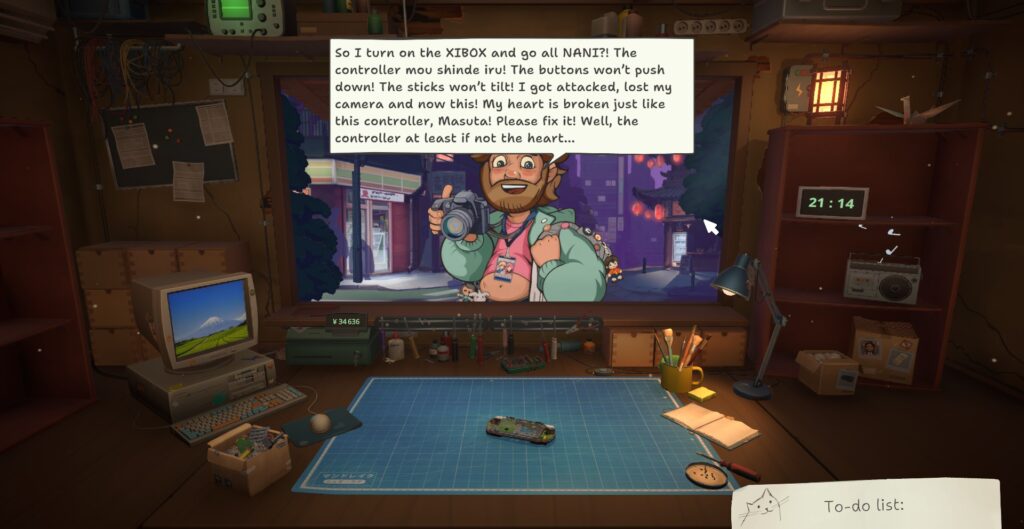
From its demo [https://www.gameffine.com/restory-preview-repair-shop-paradise/] to full release, Mandragora has made many adjustments to the final version, including a better tutorial, much better cleaning and screwdriver actions, and cleaner, more systematic handling of various repair orders (denoted by a box with the customer’s portrait). You can only put one box (of the item to be repaired) at a time on your desk, though I would’ve loved to be given free rein on where to put your repair order boxes and to have challenged my desk organization abilities.
Living the new century
As you do your orders, you will also progress through your story. You inherit your shop from a previous master who is implied to have gotten mixed up with some shady people from the neighborhood. Each new character arrives with a small order to get used to the mechanics. First cleaning gets introduced, then repairing gets shown (buying parts or salvaging them from second-hand products bought off the in-game eBay). Most products are hilarious knockoffs, from Pony PMP to XIBOX to Pokia 3000 phones, though the shop also handles officially licensed Atari consoles. This itself adds a lot of charm, and you look forward to what new comedic knockoffs the devs thought of next. With each new product, the repairing becomes more complex, though you need to buy expensive licenses for them before you tackle those more complex products, hence providing a stopgap so you don’t rush.
You meet many colorful characters, some better than others, and you slowly learn about your community of people—though they barely get fleshed out beyond their character archetypes. Some initial intrigue is presented in the plot, but I was too invested in growing my cash reserves and doing repairs to even care. The game ends with one of the two outcomes, decided at the very end of the playthrough. And it does not matter much in the grand scheme of things, which is a shame, because if this excellent gameplay was paired with good stakes and tension, this would’ve been one of the best games of this year.
Wear and Tear
As expected from a job simulator-type game, expect tedium to set in after some time. While I generally do not mind it, there are some nagging issues that exacerbate the problem. For example, during cleaning jobs, you won’t know whether the deeply bolted parts inside the electric item are dirty inside unless you screw every single part out in the open. If they aren’t, then you’ll again have to screw them back, wasting the player’s time.
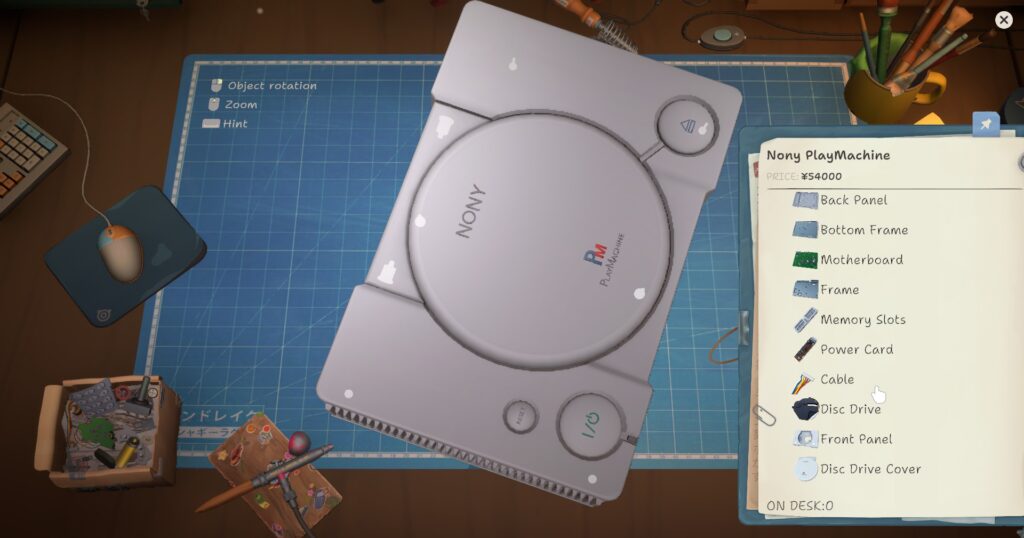
Things bog down towards the end. Licenses become very expensive, and you need to grind money to afford them. There is no incentive to buy licenses for other electronic items unless you’re curious or want to earn more, which you will already have once you flipped higher-end items enough. Moreover, there is no way to check how much electronics cost (when fully repaired) unless you repair one and note it down somewhere and what base prices of new items will be (unless you buy the licenses, which, as mentioned, take lot of grind to get). It is also not suited for sessions longer than 1–2 hours; the activities grow dull and tedious, and there is no story progress for a while because you are grinding money for the next story-event-triggering repair.
Corner Shop Charm
Presentation is nice, though it falters in aspects that could be subjective. I love just how packed and run-down the shop feels when you start—a real Asian “corner shop” feeling. That said, I’m not a fan of the NPC art, which, while serviceable, does not do much to make them sympathetic. Music starts out nice and easy but can turn a little repetitive by the end. The day–night transition and how the sunlight moves as you work through the day deserve applause (though they can randomly throttle the game’s performance).
Real Talk
ReStory has a brilliant gameplay core that’s worth the price of admission; the electronic repairs. With a huge range of electronics and their parts, and each having its satisfying way of disassembling and repairing, it’s as much a puzzle as it is a zen activity. Everything around that core is a big mix of okay ideas and frustrating experiences. The narrative has good hooks but meanders a lot before falling off; the character writing ranges from mediocre to frustrating, and the plot hints at something bigger that doesn’t leave much impact. There is grinding to obtain licenses, and tedium sets in fast, so it is best to play in small sessions. You will be playing this for the solid gameplay and hilarious knockoff brand electronic names and references, and not much else.
FINAL SCORE: 65/100