

Inspired Familiarity
Warsaw-based Reikon Games has come a long way since their last game, Ruiner (2017), a top-down twin-stick shooter. Although Metal Eden shares a lot of DNA with it – a neon-soaked dystopia with cyberpunk aesthetics – it does decide to move on to becoming a FPS, beaming the fight right into your face. A boomer shooter inspired by Doom’s (2016) combat chess, Ghostrunner’s ninja flow, and Titanfall’s frenetic parkour, Metal Eden promises to be a handful! The next few paragraphs might seem to hop, skip, and jump through positives and negatives, but stick with me – you are in for a ride!
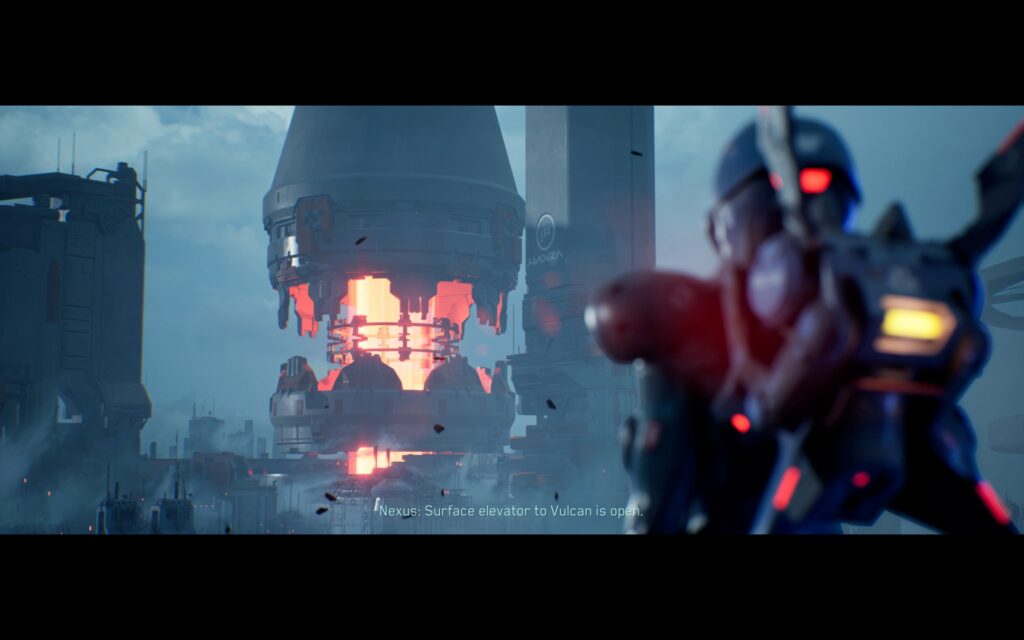
In the far, far future, you are Aska, a Hyper Unit. An advanced battle android tasked with rescuing digital humans from rogue AI Engineers infected by a computer virus. The action takes place on a derelict industrial floating construct called Mobius, and in mining facilities on an inhospitable desert planet called Vulcan. And this is where I should stop you. The story doesn’t matter. Characters will talk into your ears directly and try and engage you in the incoherent lore, but they will fail. For the short 5-6 hour romp, my mind shut down every attempt to understand what was going on. But would you consider that a problem? I definitely didn’t. All the incessant chatter dies down once you complete the on-rail section that is used to pad the quiet between arenas. And then…
Linear Velocity
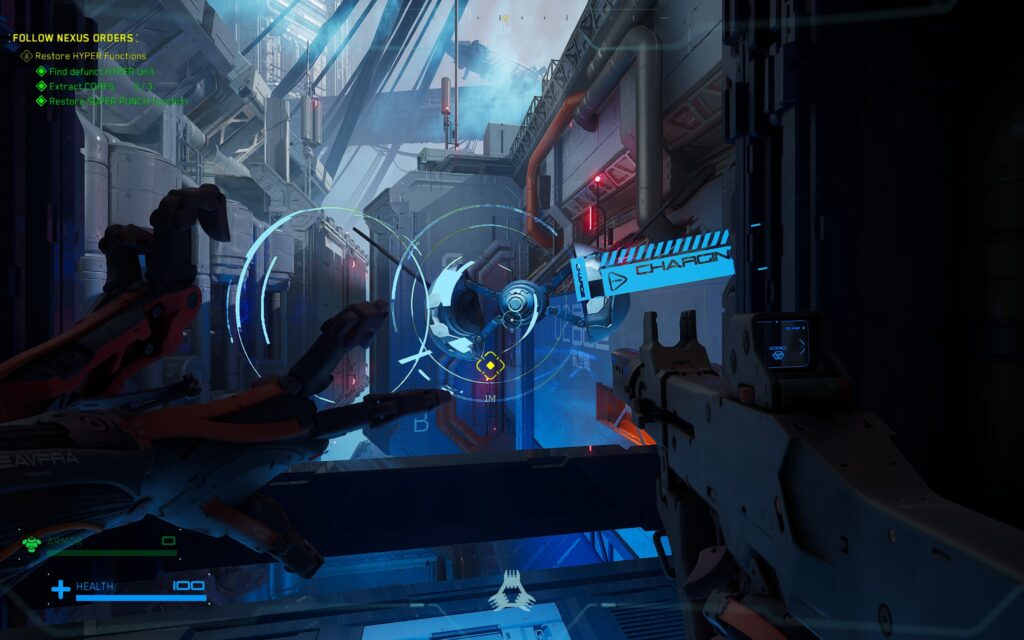
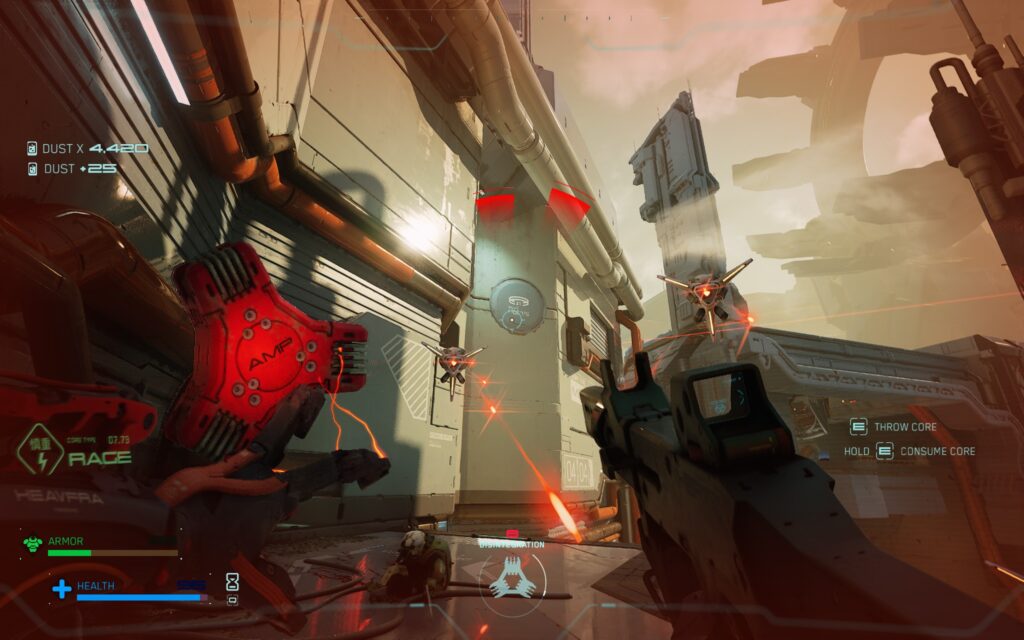
Metal Eden shoots straight. It’s simple and repetitive. 8 linear levels, 7 guns. What it gets right is the pace. Envision this: Pulsating electronic music is drilled into your ears as you wall run and drop into a large battle arena, and enemies start to spawn in multiple waves. You headshot a scrapper in the head with your assault rifle’s alternate, switch to your SMG, and mow down others making a beeline towards you. Double-jetpack jump onto a platform and use your hand cannon in short range on a slasher, before grappling away to a nearby armor pickup. You narrowly avoid incoming projectiles from the gatling drones while trying to find the perfect bait. You rip the core out of an unsuspecting scav which just spawned, which helps you do a Kamehameha super punch, burying your power fist deep into a brute leaper, making its armour shatter into smithereens. As you pump grenades out of your launcher that you hotswapped to, and grab-throw a core, after the cooldown ends, right into the last remaining cleaner, your acrobatic death dance sequence comes to a visceral, but satisfying end. It’s a perfect Nadia Comaneci 10.
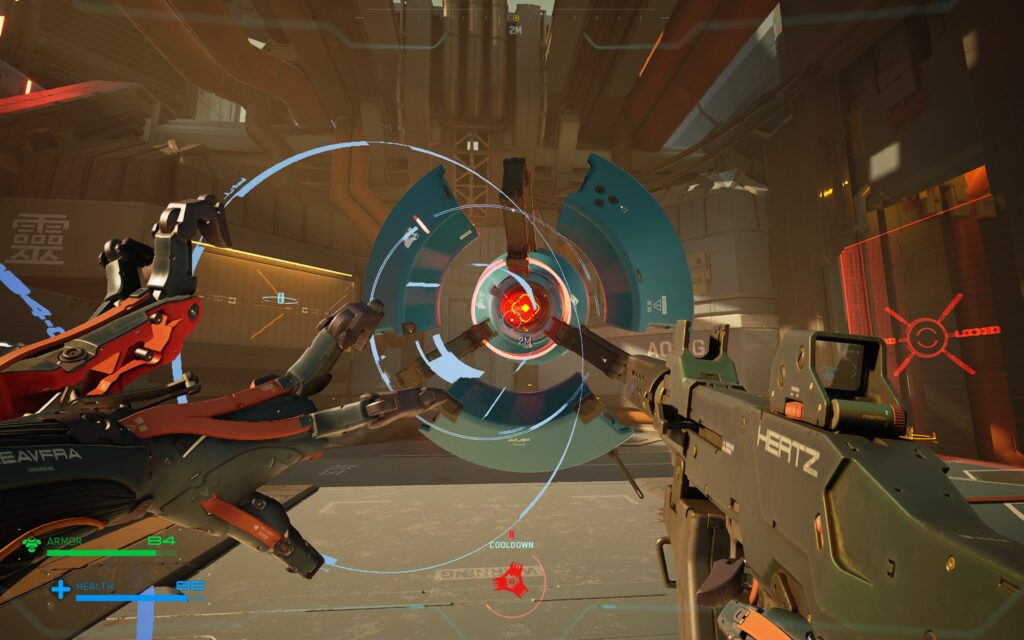
When Metal Eden does the above, your heart races, and boy, does it deliver! But the same can’t be said about the remaining sections, which remain significantly weak. The exposition-heavy lull between comba, which are a drag, the times you turn into a rolling, dodging, weaving, lightning and missile spewing, ball inspired heavily from Metroid, or even the boss battles. The enemies don’t feel unique and varied, their intentions are not choreographed enough, and the manufactured chaos often devolves into becoming a button-masher. Mediocre level design restricts player agency. Replayability takes a nosedive, and you start thinking about all the missed potential. All that skill and strategy, and speed and momentum, crashing headfirst into the kerb of an unfinished core loop. It’s as if the developers suddenly didn’t want you to have too much fun.
Sterile Scarcity
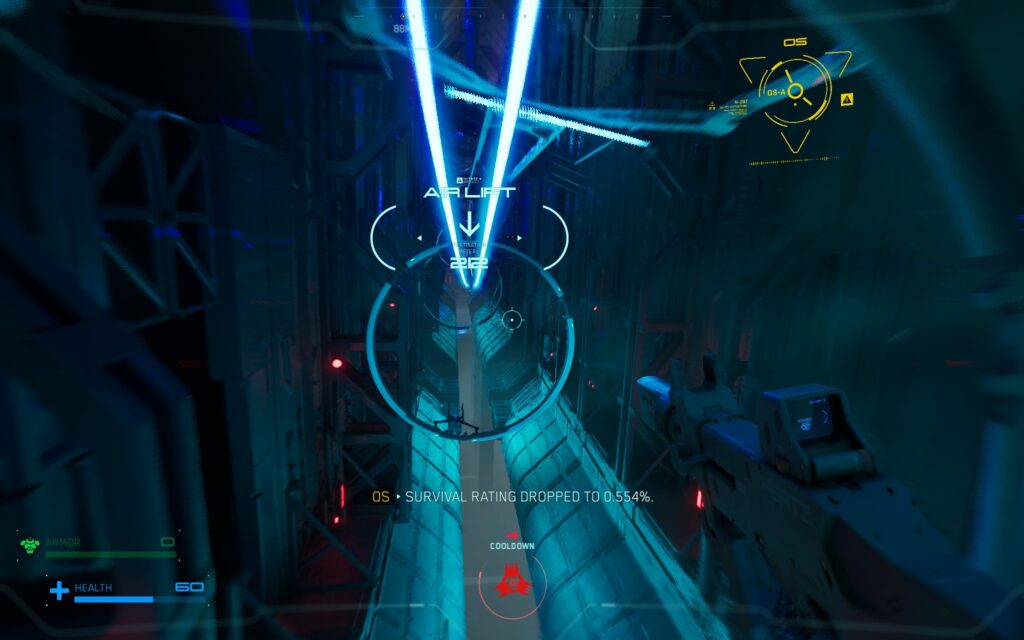
The world looks beautiful with sharp visual clarity, but it is monotonous and cold. There is no reason for you to scan it. You bonk your head on invisible walls and miss jumps onto platforms that are not reachable. You run through linear levels where nothing breaks and face mildly distinguishable enemies with no character. All the talk about transhumanism, consciousness, and the nature of freedom feels surface-level. All told, no show. A game where everything apart from the combat feels like set dressing.
Real Talk
2025 has had a deluge of top-tier games, and I fear Metal Eden might not be remembered for long. The game already has decent accessibility options, control customization, and difficulty settings – but there is not much encouragement to continue once the game is over. But this didn’t stop me from having some breakneck fun, and won’t stop you either.
Disclaimer: Review code was provided by the developer for a review with no riders