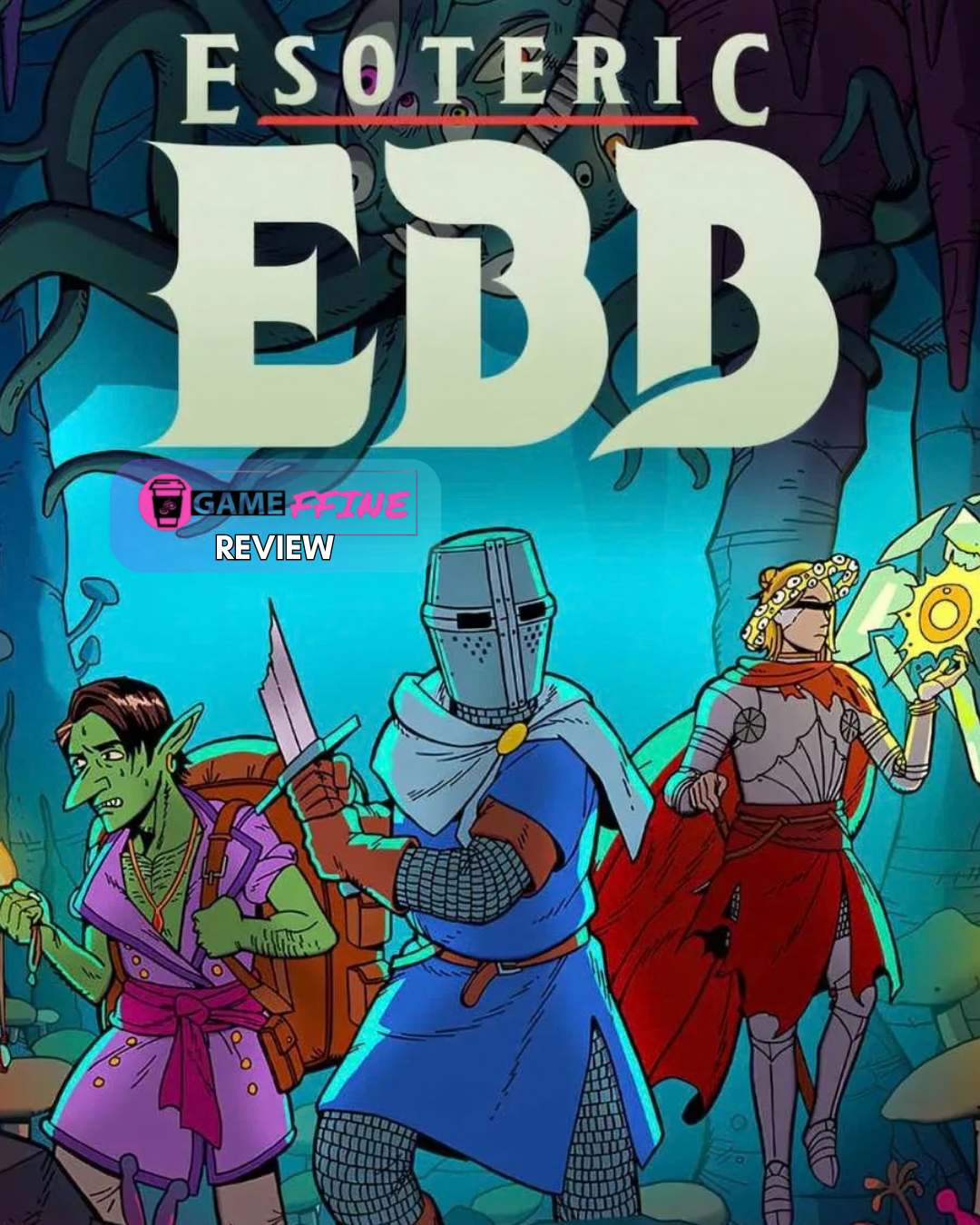





Esoteric Ebb Review
Black Isle’s 1999 magnum opus, Planescape: Torment, spawned many a successor and imitator. It wasn’t until 2019 that a debut game from an unknown studio in a small North European country came out, blew everyone’s minds, and became an instant classic. Disco Elysium, while commonly attributed as the “other most philosophical game of all time,” went above and beyond its main inspiration to become something unique. Ever since Disco Elysium came out, the idea of a “thinking person’s RPG” became more mainstream, and we’ve had a couple of Disco successors (Rue Valley, Sovereign Syndicate) since then, and even more of them are in development. Christoffer Bodegård’s Esoteric Ebb is one of the most fascinating projects to come out of this CRPG re-renaissance. After spending approximately 30 hours with the game, I’m certain that 2026 is going to be one glorious year for CRPGs. The last time an RPG like this dared to scream at the ravenous neocapital machinery, it got sodomized, rubber-stamped, and discreetly swallowed in the antiseptic fluorescence of a hostile takeover orchestrated by a bunch of white-collar Europeans.
If we were still in the 90s, I wouldn’t hesitate to call Esoteric Ebb a Disco Elysium clone. I’m aware that the word “clone” has many negative connotations. However, in video game speech, the word can also be used to celebrate a game’s willingness to build on an already established and beloved formula—refining, reinterpreting, and expanding it in ways that keep the spirit alive while offering something new. After all, many of the games affectionately called Doom clones (Heretic, Hexen, Dark Forces) are excellent games in their own right. Under this thought, Esoteric Ebb is an excellent Disco Elysium clone with deep respect for Planescape: Torment and 5e DnD. At the same time, it somehow manages to carve out a unique identity for itself thanks to its original take on the medieval fantasy setting and witty writing.
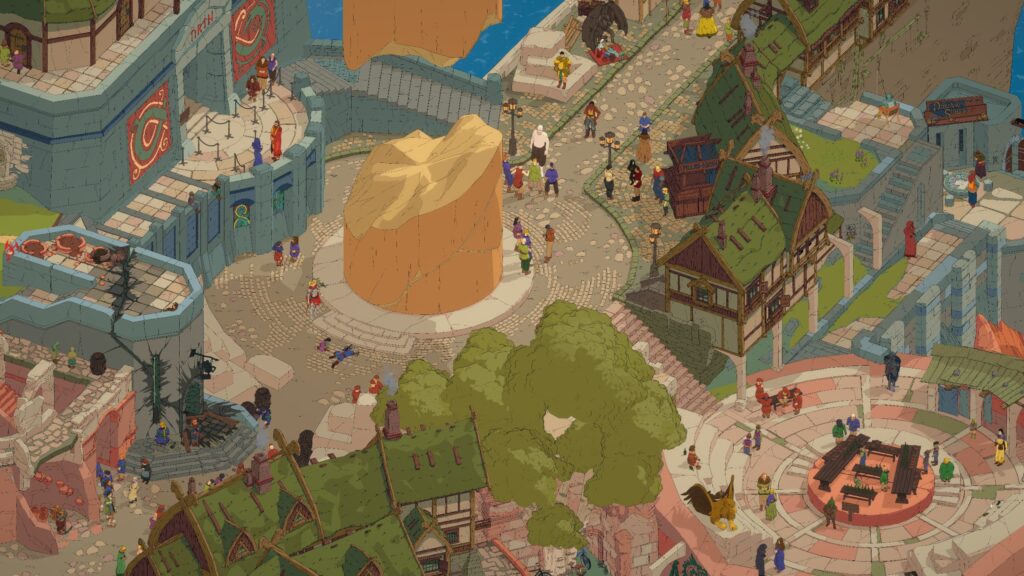
Esoteric Ebb unfolds in a whimsical setting where classic staples of medieval fantasy, such as elves, dwarves, orcs, and trolls, exist side by side with elements that seem out of time and space. There’s magic and dragons, but there are also bicycles, the stock market, and jukeboxes. There are druids and warlocks, but also communist dwarves and Freudian gnomes. The result is a delightfully eccentric world where high fantasy collides with the oddities of modern life. This juxtaposition between fantasy and reality works surprisingly well adds a healthy dose of freshness to the game.
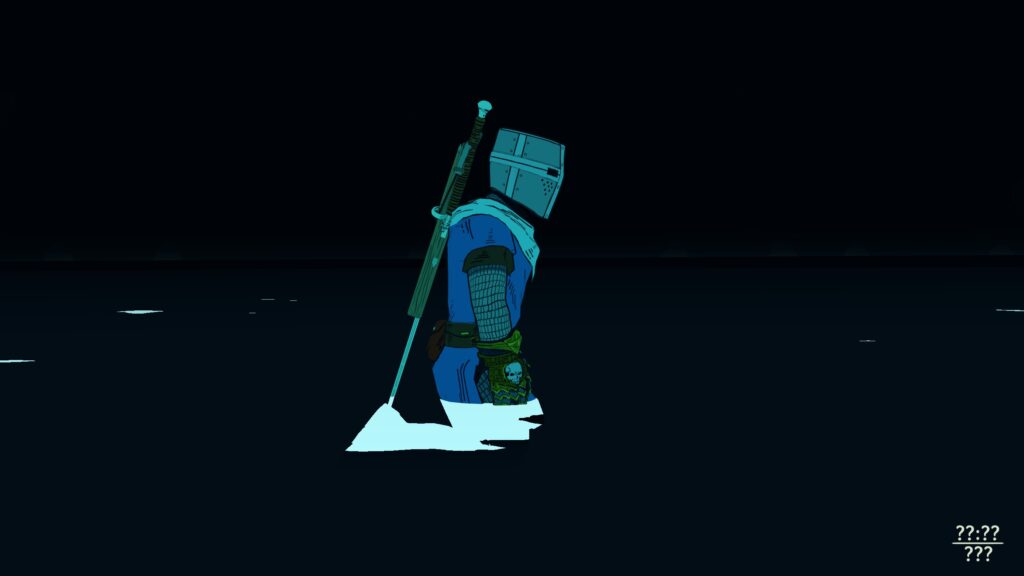
Ṭhe city of Norvik is the last bastion of humanity in the world following a devastating war. The first-ever democratic election is in five days and there’s been an explosion at a local tea shop. You play as a Cleric of Urth sent to the city to investigate the explosion. Things do not go smoothly and you wake up in a morgue with no recollection of past events. This is where Esoteric Ebb begins

Esoteric Ebb’s general story beats are very much the same as Disco and Torment. All three unfold in anachronistic worlds that seem to defy conventional—almost Euclidean—logic. The protagonist awakens in an unfamiliar place with no memory of who they are, guided at first by a handful of nearby NPCs who help set the journey in motion. Before long, it becomes clear that a larger conspiracy is brewing beneath the surface. Along the way, the player’s political leanings and factional loyalties are repeatedly tested, while a barrage of philosophical dilemmas prods, mocks, and interrogates the very foundations of your worldview. Esoteric Ebb doesn’t hesitate to display its inspirations.

Esoteric Ebb is a deeply political RPG. It doesn’t try to hide this fact. In fact, the politics are sometimes so on the nose that it might squeeze a few cringes out of you. But, overall, it adds to the game more than it detracts. Esoteric Ebb has so much to say about the narrow gap between nationalism and fascism, social democrats hiding behind the mask of socialism, mass privatization and why apolitics is worse than satan. Bodegård questions and critiques each ideology with fervor and passion, though not as graceful as Disco Elysium.
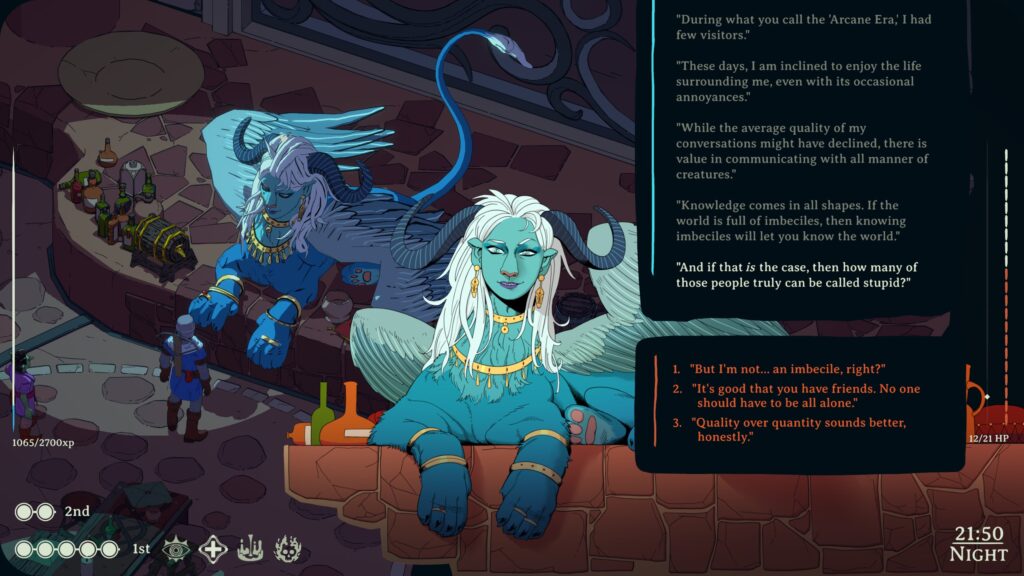
Where the game excels is its critique of masculinity, sexism and power. It’s basically a Foucouldian power trip. Yet rather than leaning into bleak cynicism, the game delivers its critique through sharp satire and dark humor, choosing ridicule and absurdity over outright doomposting. This results in plenty of outright hilarious scenarios of the main character being ridiculed for his takes on gender, power and politics. My first playthrough as an apolitical, naive and slightly misogynistic character who screamed “I am THE CLERIC” in everyone’s face went as well as you’d expect.
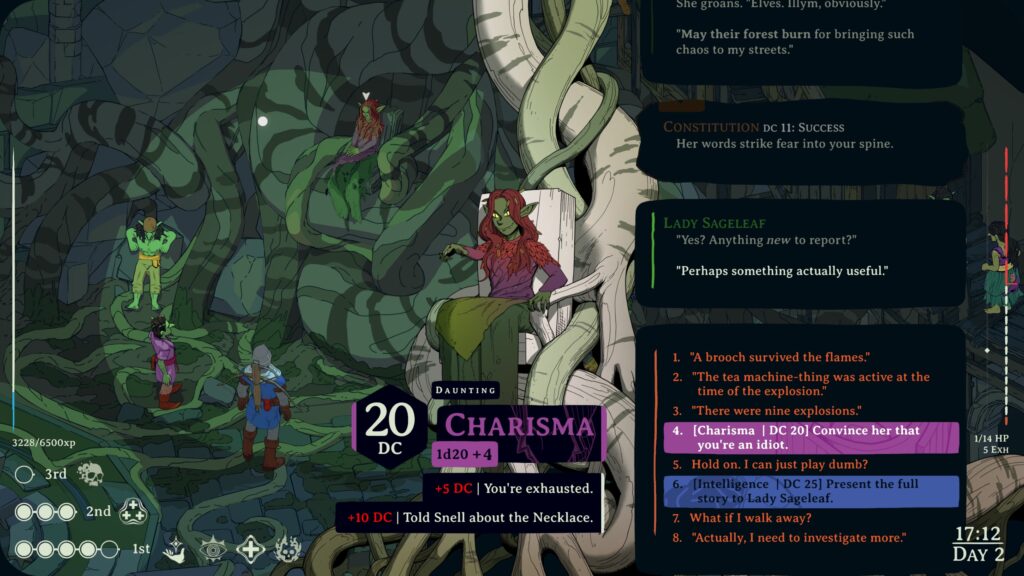
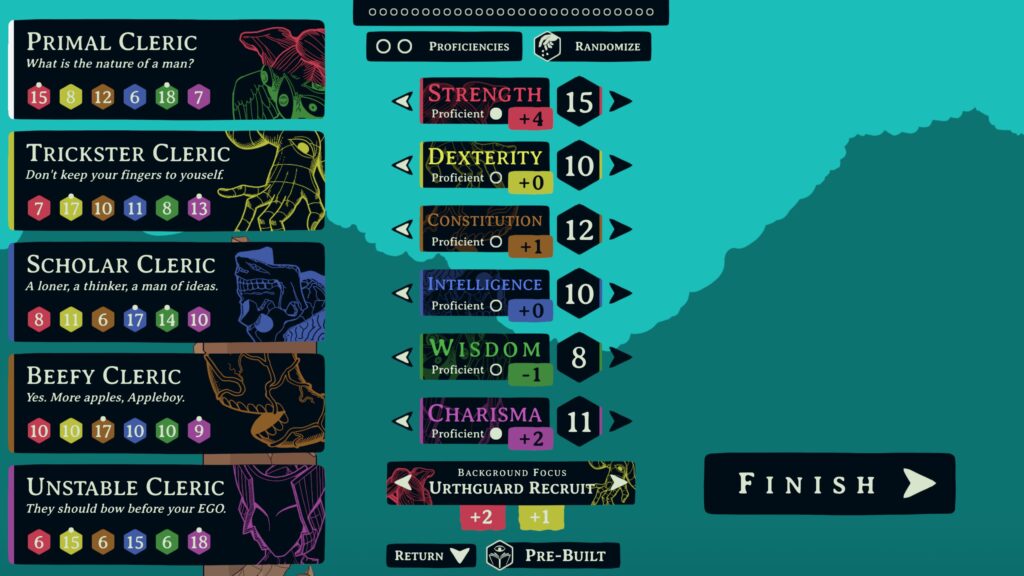
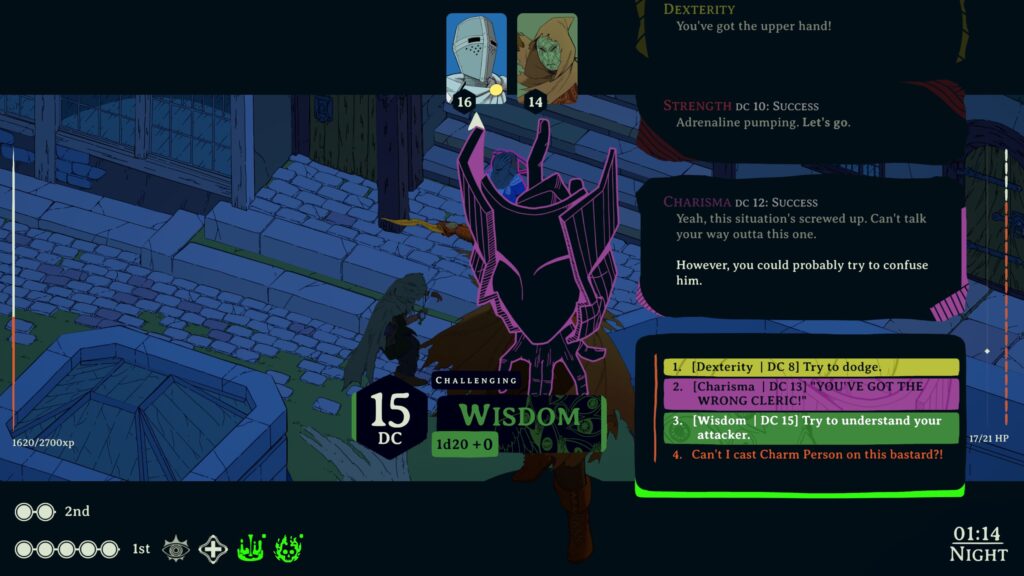
Esoteric Ebb is shaped like a DnD campaign where frequent dice rolls decide the outcome of each and every encounter. But the backbone is still that of Disco Elysium. The moment to moment gameplay, the manifestation of RPG attributes as voices in your head, the role discourse plays in character progression, it all is here. Familiar stats like Strenght, Dexterity, Constitution, Intelligence, Wisdom and Charisma are embodied by different voices inside the cleric’s head and decide his interaction with the characters and the world around. For example, Strength stand for masculinity, and nationalism, while Dexterity focuses on self preservaton, pushing the cleric to vote for the capitalists. Intelligence and Wisdom are polar opposites of each other— the former standing for egocentrism and the latter in favor of empathy. While Disco Elysium’s tagline was “what kind of a cop are you?”, here it’s “who are you going to vote for?” Fantastic stuff all around.
Esoteric Ebb may wear its inspirations on its sleeves, but there are some things it does better. For example, its rendition of the Thought Cabinet is plain more effective. Instead of collecting and internalizing a stream of abstract thoughts throughout the game, players unlock new feats through heated internal debates that occur at the conclusion of certain quests—essentially arguments you have with yourself. At the end of each discourse, you must choose between three contrasting feats. Each option provides distinct ability modifiers, passive bonuses, and even alters how certain items grant their benefits, subtly shaping both your cleric.
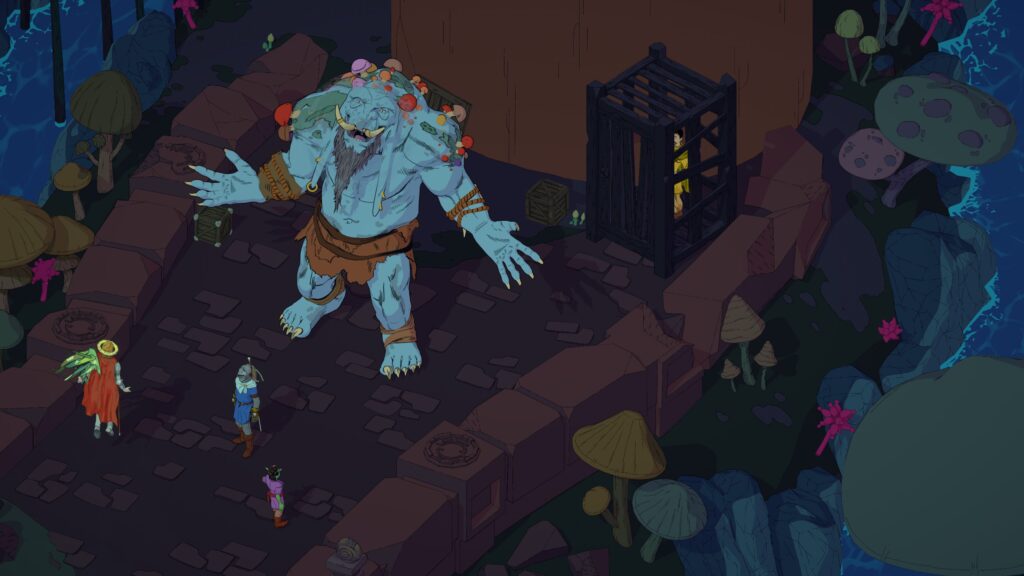
Another cool mechanic is the ability to ‘behold’. It’s basically a fancy way to examine NPCs to discover their weaknesses, allegiances and quirks before initiating conversation or entering into battle. Speaking battle, there are only a handful of encounters in the game and they’re all handcrafted. Making heavy use of dice rolls and hilarious writing, Esoteri Ebb tests your mettle against the undead, assassins and even a gigantic troll king.
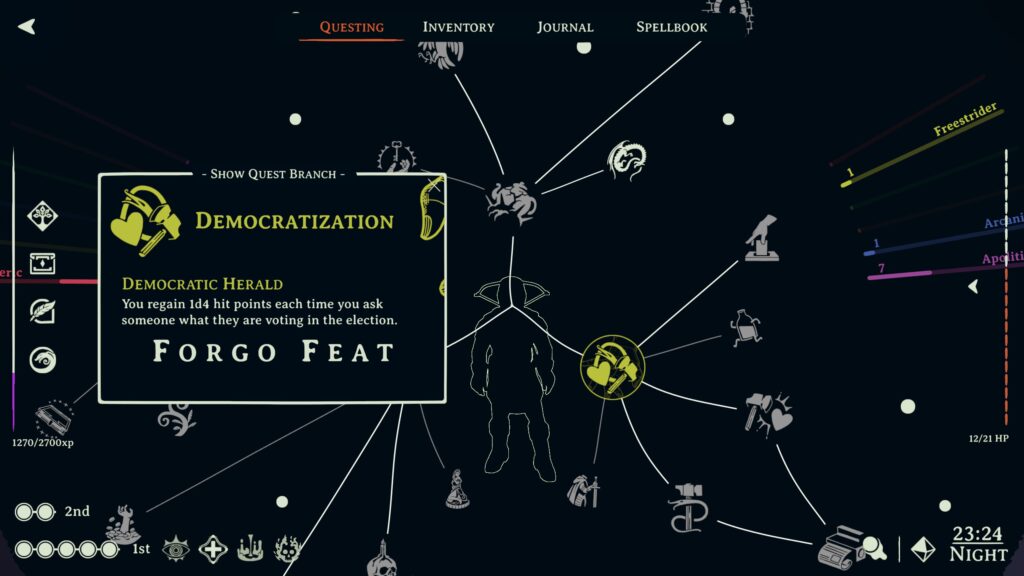
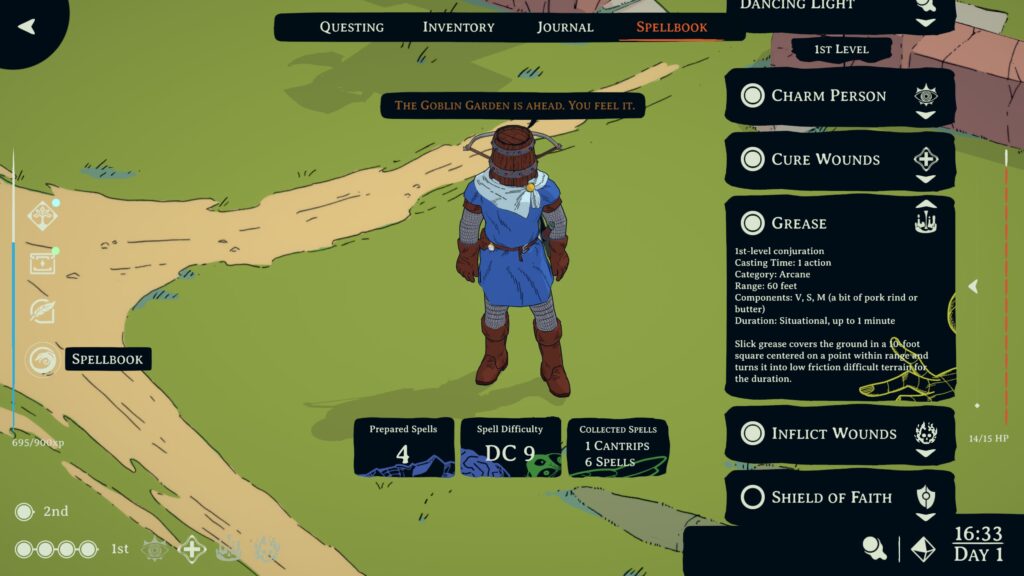
There’s also a spell system in place, with the cleric given the opportunity to unlock, buy and discover spells that can either be used during contextual encounters or during combat. These spells are heavily inspired by DnD and includes the likes of Bless, Shield of Faith, Grease, Inflict Wounds, Heal and more. Context-specific spells include speak with the dead, speak with plants, revify, etc. Sadly, the spell system remains severely underused throughout the game. Outside of combat, there’s just not enough interactions to make full use of all of them, especially the higher-level ones.
Esoteric Ebb is also a more relaxing and forgiving affair. You are given five days to get to the bottom of the central mystery and time only advances when conversing with NPCs or when taking part in scripted events. There’s more than enough time to see what the game has to offer in these 5 days and then some. Of course, this being a choice-driven RPG means that you won’t see “everything” in one playthrough. An average playthrough lasts anywhere between 10-15 hours.

If you fail a dialogue check, chances are that you can immediately retry it by spending an easily available material called Shards of Jor. What’s more exciting is that there’s no right way to play the game. In my experience, failing dice rolls lead to more interesting outcomes. You’re never forced to save scum at any point in the game, which is a big plus as dice rolls can be wildy unpredictable.
I’d argue that there’s not a huge amount of variation between playthroughs. Obviously you can try to do things differently and choose a different build, as well as another political leanings. But, it doesn’t alter the story in any significant manner. The replayability rests in the role playing possibilities. The game essentially allows you to begin with only two attributes at a high level, which results in three markedly different playstyles depending on the configuration you choose. In practice, this means each build shapes the experience in distinct ways, influencing how you approach dialogue, problem-solving, and character progression throughout the game.
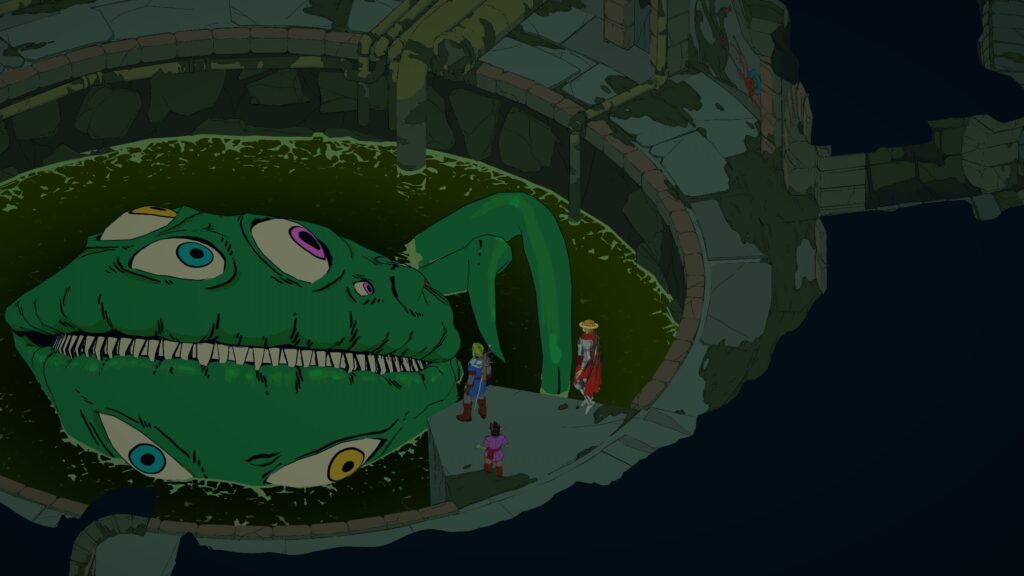
The visuals and background scores also require applauding. he game is bright and vibrant in tone, yet the art style remains remarkably clean and easy on the eyes, giving the world a cheerful charm without feeling visually cluttered. The character portraits looks very high-quality and full of detail. . Environments are colorful and vibrant, with bold outlines and soft shading that keep the visuals readable. While the game world is quite small, each area of the map feels distinct and minimalist, making sure that your attention goes right where the dev intended it to go. I’m not an expert when it comes to the music. I’ll just say that they fit the calm, witty tone of Esoteric Ebb and doesn’t at all feels repetitive.
Real Talk
Esoteric Ebb succeeds because it embraces its inspirations with confidence and reverence. It borrows the philosophical backbone of Planescape: Torment and the introspective depth of Disco Elysium, then reshapes those ideas into something playful, political, and unmistakably its own. This “thinking person’s RPG” will surely find a spot in our Best of 2026 list.
FINAL SCORE: 90/100

