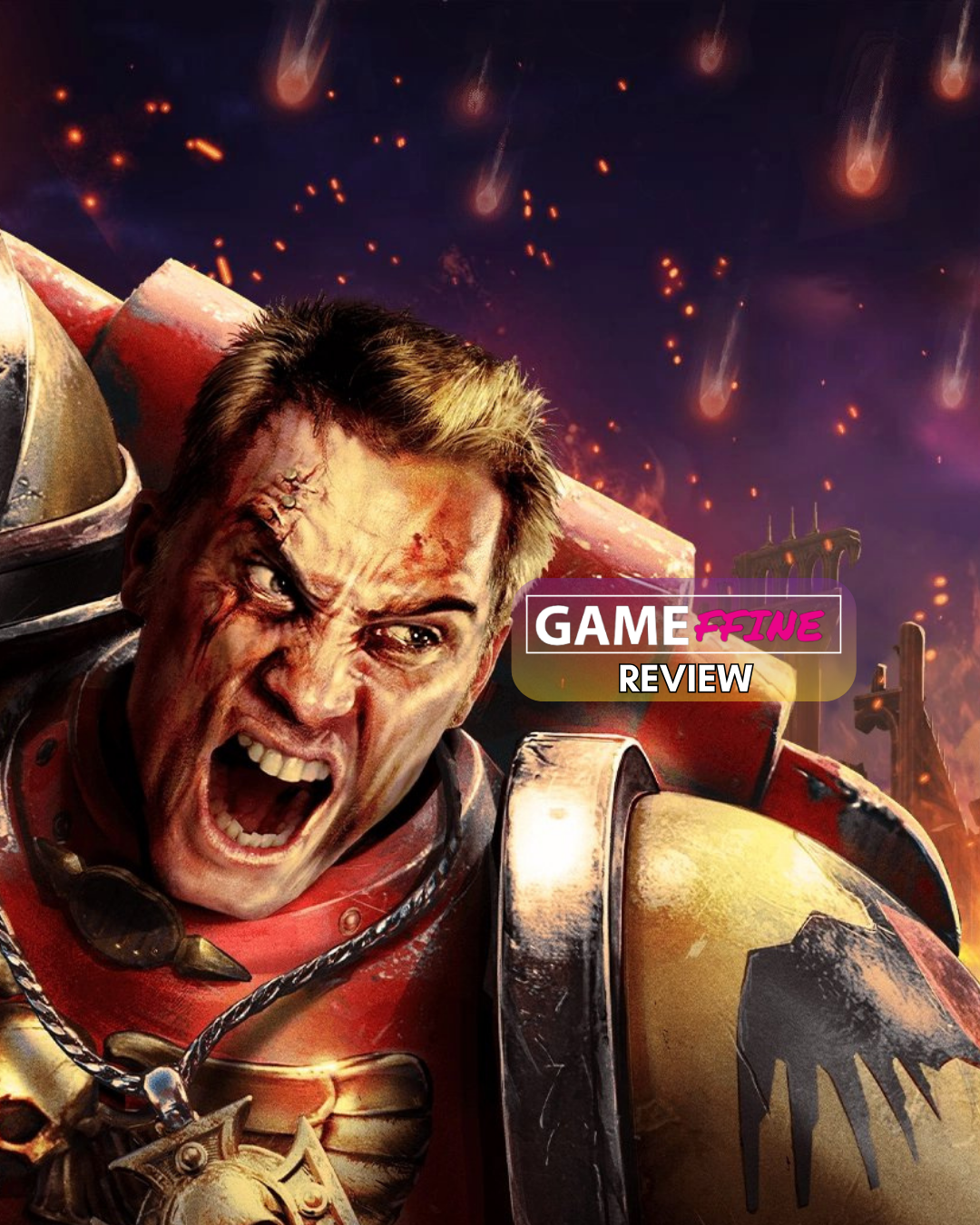





Warhammer 40k is known for a dark universe spreading across the stars in the distant future, when mankind had expanded to the stars. It is one of the most popular IPs to exist in modern times, besides other popular worlds like Dungeons and Dragons (with this being a bit on the sci-fi side). 40k has evolved to involve books, video games, board games, and a whole lot more stuff on the side. More recently, a bunch of the older strategy games – the first Dawn of War game and its expansions – have been remastered and bunched into one collective edition called the Warhammer 40,000: Dawn of War – Definitive Edition. I took a train on memory lane back to simpler times – when I would come back home from school at 5 and sit down for a few hours of chill gaming on my family’s only PC. The blend of financial independence and a remaster of older classics doesn’t exactly make for the smoothest cocktail, but I gave it a try anyway to see how it goes down.
A War Retold
Dawn of War: Definitive Edition is a collection of all of the first four games – the original Dawn of War, Winter Assault, Dark Crusade, and finally Soulstorm. The original Dawn of War and Winter Assault play out their campaigns in a more linear fashion, giving the player control of the factions in their quest for glory. Dark Crusade and Soulstorm make the game more non-linear, allowing for player input into how the campaign ends. Based on the lore of future games, there are canon endings for these campaigns, though it is still up to the players to try and lead their faction to victory.

A collection of lore and the story up to that point would definitely have been welcome, because there are a lot of people who love to read about the Age of Strife and how it ultimately led to the formation of the Imperium of Man (and other origin stories for all of the factions). Most of us dive into nothing and have to depend on the game to spoon-feed bits and pieces here and then. While I’m definitely the type to go back to my browser and find out about the lore drops, I don’t think most folks nowadays have the patience to do that. Also, having loading screens in 2025 to move from one screen to another is pathetic beyond belief.
I was thinking of ranting about the lack of coop in the game, but I realized this was Relic’s safest and most casual bet on RTS as of late. Expecting new maps or new features would be like using the monkey’s paw and getting your wish without a catch. I’m happy that at least the skirmish mode made it in, and that all of the maps over all of the games are inside. If modern processors are faster than those in the 1990s, the game should have been able to support more maps with larger player counts. I’m still not sure why more 8v8 or 6v6 maps weren’t added – they are the maps for really having some fun. The game certainly doesn’t have 100+ maps as Relic claims in the announcement trailer.
Dawn of War: Definitive Edition is a collection of games set in the Kaurava System, a gigantic conflict that took place a few years after the formation of the Space Marine doctrine to protect humanity from other races. The main mechanics are pretty similar to those of most other strategy games – players gather resources, build troops, and crush the enemy. Of course, the enemy can do the same, so players get locked in a mirror match of strategic actions till someone makes a mistake.

To make games a bit more challenging, Dawn of War adds the challenging aspect of point control. There are certain areas of the map that need to be controlled in order to generate more requisitions. Requisition is the primary resource needed for deploying the most basic troops, so taking control of these points early is necessary. The secondary resource, power, is generated by constructing power generators in the main base. Power is needed for vehicles and other stronger units. In order to progress in the game, players need to conduct research, which unlocks better technologies and units.
Dawn of War has another important mechanic that makes it stand out from other strategy games on the market – it has a cover system. Being inside bushes or ditches provides cover from enemy units, giving a small increase in the amount of damage taken in combat. Being exposed and on open ground also attracts a small decrease in the amount of damage taken in combat. The cover system in Dawn of War, while being almost a copy of the feature in Company of Heroes, does not have that great an impact. It is only in a very small proportion of scenarios where the cover system actually affects the outcome, mostly when numerically and technologically both sides are almost equally matched (compared to this, in Company of Heroes, cover is the difference between life and death).
One of the main claims in the announcement trailer was improved pathfinding and large army support. I found a lot of issues in the pathfinding in both the campaign and in the skirmish maps – I’m unable to see what these imaginary “fixes” were that were being advertised. About time I talk to Harvey Specter and put out a lawsuit for wrong advertising, but that’s just me. Also, I thought we were supposed to be getting bigger unit caps, too? Where are they, lost in transit from Mars?
Dawn of War: Definitive Edition definitely had some minor changes done, mostly in the graphics department. The game was upgraded with a modern physics engine to handle better physics and particle effects. The units look sharper, too, as compared to back in the day. I did not get an opportunity to try out the widescreen mode, but presumably the game got a significant update here, too. Relic put out the best designers to ensure the game was remade from the ground up while keeping the core of the game the same as before. This usually works, but except for the main graphics themselves, I doubt much has changed in terms of mechanics (one of the reasons I hate remasters over remakes).

In Dawn of War: Definitive Edition, even the sounds have been refined and redone to ensure the game feels as good as possible. I’d say there is some room for improvement, especially in the main battle theme itself, but that’s a topic for another story. Re-doing the theme should have been a priority rather than in-game sounds.
Real Talk
Warhammer 40k: Dawn of War – Definitive Edition feels more like a repackaging than a true upgrade. While the Definitive Edition retains the qualities that make Dawn of War a beloved RTS, it doesn’t introduce meaningful innovations in gameplay. The changes focus mostly on updated visuals and audio, which may not feel substantial for returning players. For newcomers who never owned the original, this version is serviceable, but for veterans, it may not justify the purchase.
FINAL SCORE: 70/100
The Good
- Decent graphical improvements
- Support for slightly larger maps
The Bad
- Expensive title for few changes to gameplay mechanics
- Most features, like "improved" pathway findings, were not seen