



In what industry analysts are calling the final blow to the mainstream emulation scene, Nintendo has accelerated its aggressive campaign to scrub the internet of Nintendo Switch emulators.
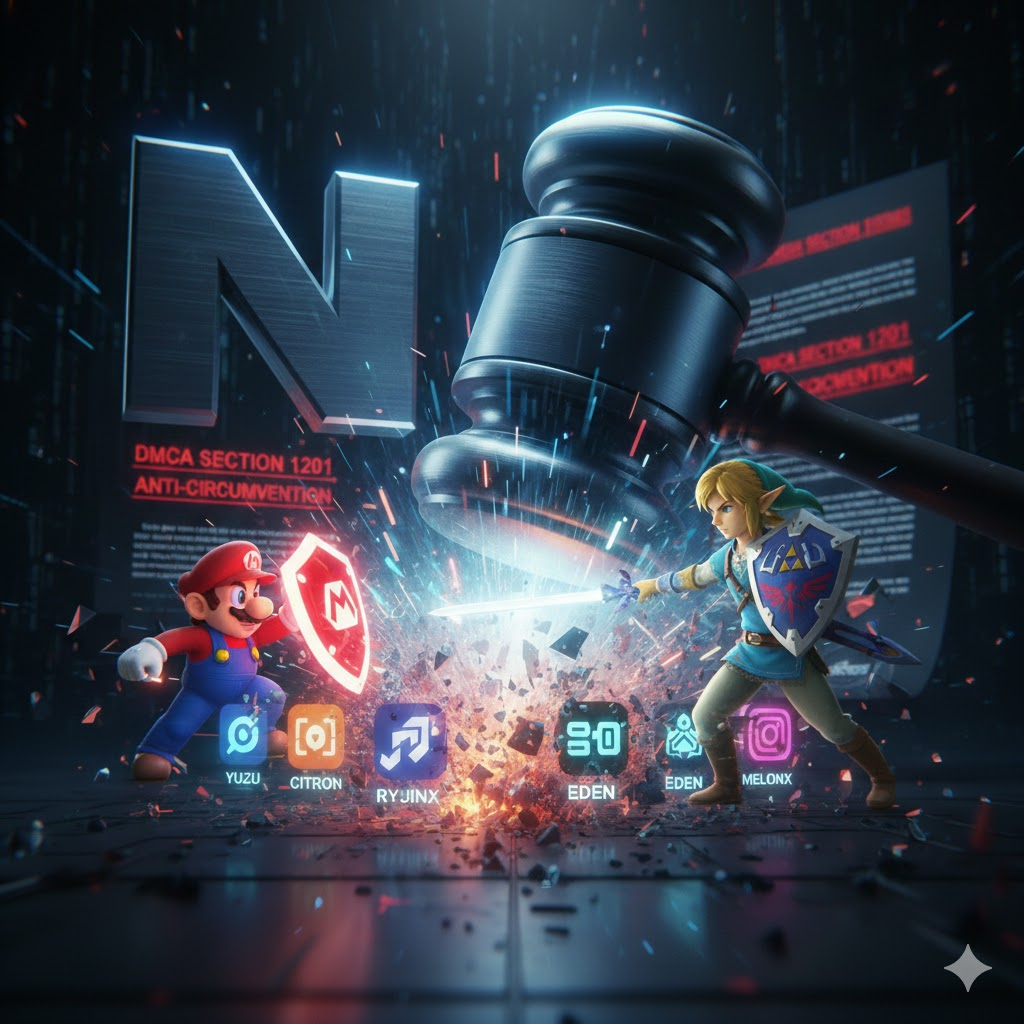
This week, the gaming giant successfully executed a massive legal “blitz,” utilizing a combination of DMCA anti-circumvention strikes and strategic settlements to dismantle the infrastructure supporting nearly all active and archival Switch projects.
The Great GitHub Purge
Yesterday, Nintendo sent DMCA notices to virtually every Nintendo Switch emulator and fork currently hosted on GitHub. This massive legal sweep includes active projects such as Eden, Citron, Kenji-NX, and MeloNX, as well as dormant or archival repositories like Sudachi and Skyline. While some repositories remain visible for the moment, their removal from the platform is considered imminent.
By targeting the heart of open-source development, Nintendo is attempting to scrub the digital infrastructure that allowed Switch emulation to see a major resurgence early last year. Projects like Citron and Eden had picked up exactly where the Yuzu team left off, offering organized development and new features that far surpassed early efforts like Suyu.
The Legal Silver Bullet: TPM Circumvention
Nintendo’s legal argument centers on the circumvention of technological protection measures (TPMs). The company contends that because the Switch uses proprietary cryptographic keys to decrypt games, any software capable of running these games—even if it does not bundle the keys—is an illegal circumvention tool.
Notably, neither Citron nor Eden provides these keys or firmware; users are required to mod their own consoles to import their own files. Furthermore, Nintendo asserts that Switch games can only be legally played on official hardware. Because the Yuzu case was settled out of court, these specific claims remain largely untested in a court of law, yet they have been enough to force the industry’s largest hosting platforms to comply with takedown requests.
Pre-empting the Switch 2 Ecosystem
The timing of this crackdown is not accidental. With the Nintendo Switch 2 on the horizon, Nintendo is moving to protect its next decade of revenue. By wiping out the existing codebases now, they ensure there is no ready-made foundation for hackers to adapt for the new console. Nintendo is clearly determined to prevent “Day 1” emulation, where flagship titles could potentially be played on PC at higher resolutions than the actual hardware. Because the next console is expected to feature backward compatibility, allowing current emulators to thrive would pose a direct threat to new hardware sales.
The Community’s Retreat Underground
The golden age of easy-access emulation appears to be over. While the GitHub pages are likely to disappear, the resistance is moving to private infrastructure. Most active projects have already taken steps to prepare for this shutdown by duplicating their repositories and hosting them on private, offshore servers.
However, the barrier to entry for the average user has skyrocketed. Without a central hub like GitHub, the scene is becoming fragmented, making it virtually impossible for Nintendo to scrape the code from the web entirely, but equally difficult for the general public to find. Nintendo isn’t just targeting the software; they are killing the discoverability of the scene. If it can’t be found through a standard search, for most people, it simply doesn’t exist.