


Played on PS5 in Performance Mode. Purchased on release day.
The Blood of Dawnwalker asks you to make choices before you have even worked out what kind of hero you want to be. Your family needs saving, a vampire lord rules your homeland, and almost every worthwhile undertaking competes for a finite amount of time. Meanwhile, sunset transforms you from a vulnerable human into something considerably more dangerous.
It is an ambitious foundation for a new RPG, and Rebel Wolves mostly makes it work. Across my roughly 30-hour playthrough, Dawnwalker delivered compelling stories, a demanding combat system, and enough freedom to make the adventure feel personal. Its two halves do not always feel equally enjoyable, and the technical roughness is hard to overlook, but this is one of my favorite new IPs of the year.
Before the Adventure: The Physical Edition
Before getting into the game itself, the Steelbook edition deserves some appreciation.
The beautifully adorned steel case, with its mural-like artwork, made an immediate impression. Inside were a personal thank-you note from Rebel Wolves and a map of Vale Sangora. These are modest additions individually, but together they made opening the game feel like an occasion.
I have been buying fewer physical games lately, even as the future of physical editions remains a contentious subject. This purchase reminded me why I still value them. The Steelbook felt like a collector’s item: something worth keeping and displaying, with a little personality beyond the disc inside.
It made a release-day purchase feel premium in a way a digital transaction simply would not have done for me. 1.jpeg)
Story and Narrative
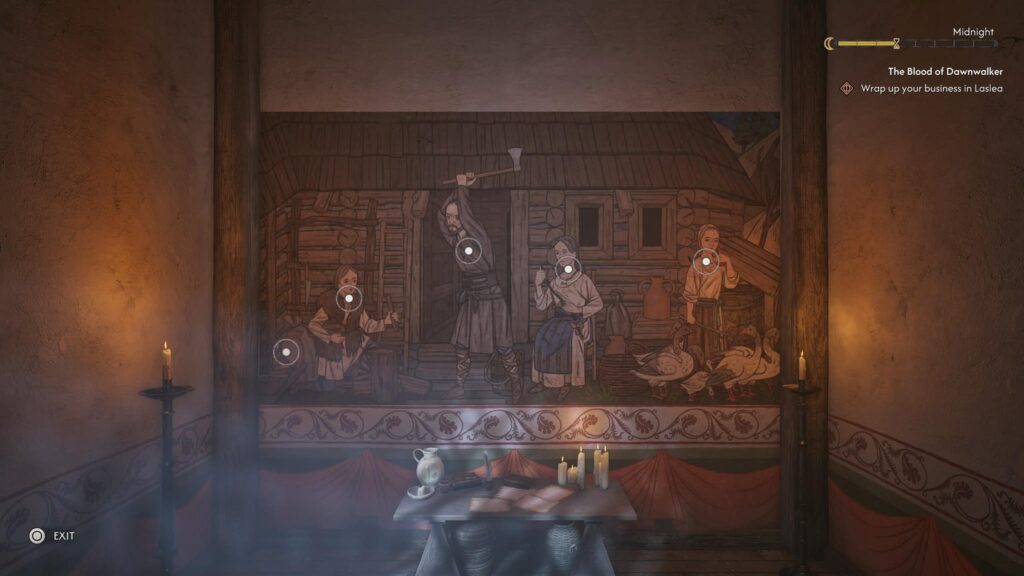
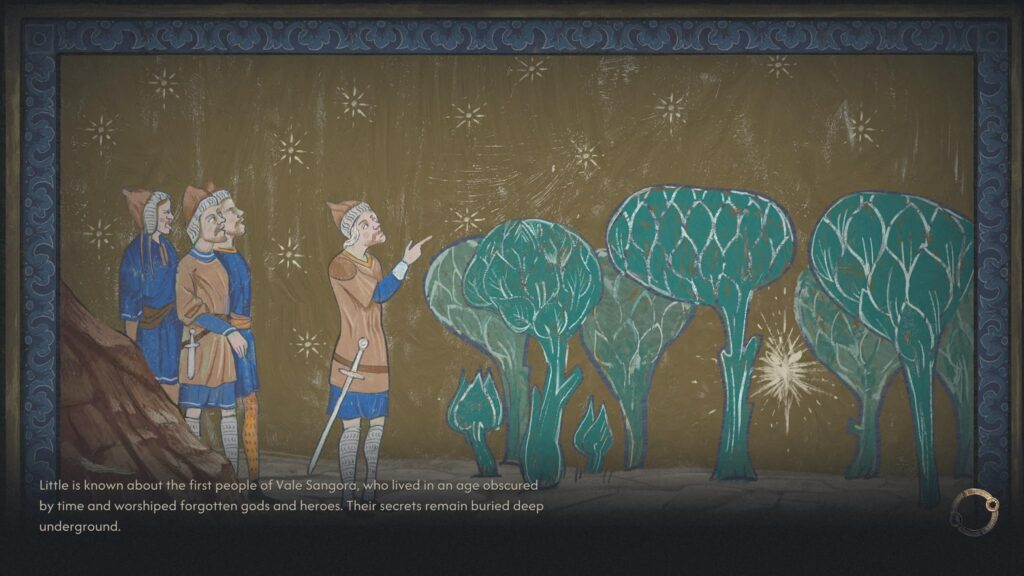
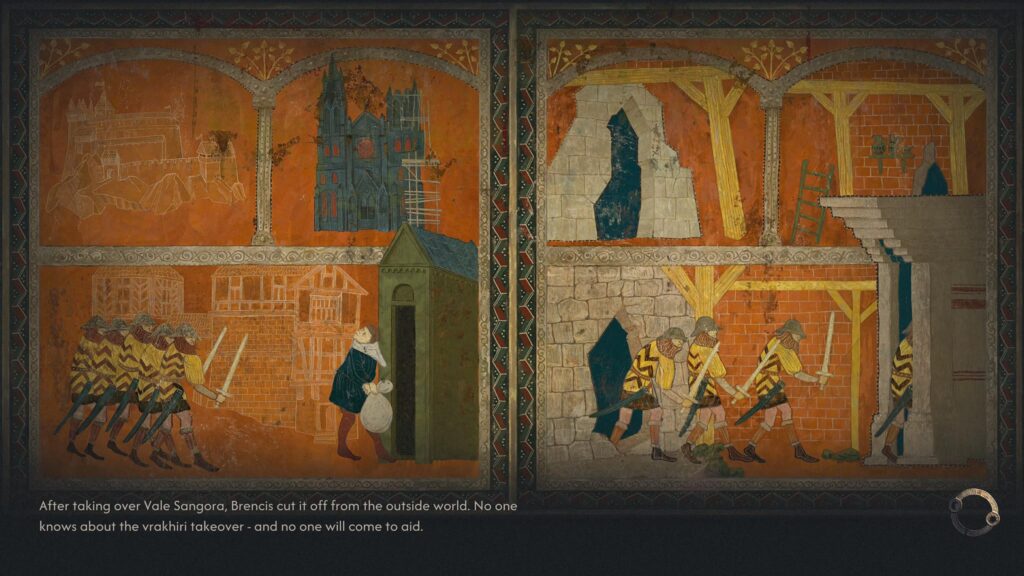
Dawnwalker takes place in Vale Sangora, a fictional valley in the Carpathian Mountains, against the backdrop of plague-stricken 14th-century Europe. Brencis and his vampire cabal have taken control, and you play Coen, the titular Dawnwalker: human during the day, vampire at night, and caught between the two identities while trying to rescue his family. Saving your family is the immediate concern. What responsibility you feel toward the rest of the valley is another matter.
That distinction gives the adventure much of its appeal. Vale Sangora is packed with ancient mysteries, isolated communities, opportunities to strengthen yourself or undermine Brencis, and encounters that can end in tragedy or unexpected joy. There are people to question, places to investigate, and situations that demand judgment rather than an automatic acceptance of whatever a quest-giver tells you.
The writing frequently reminded me of Kingdom Come: Deliverance and The Witcher. There is a familiar mixture of everyday hardship, uneasy humor, folklore, and people trying to survive circumstances much larger than themselves. It is surprisingly charming for a game with so much misery in its foundations.
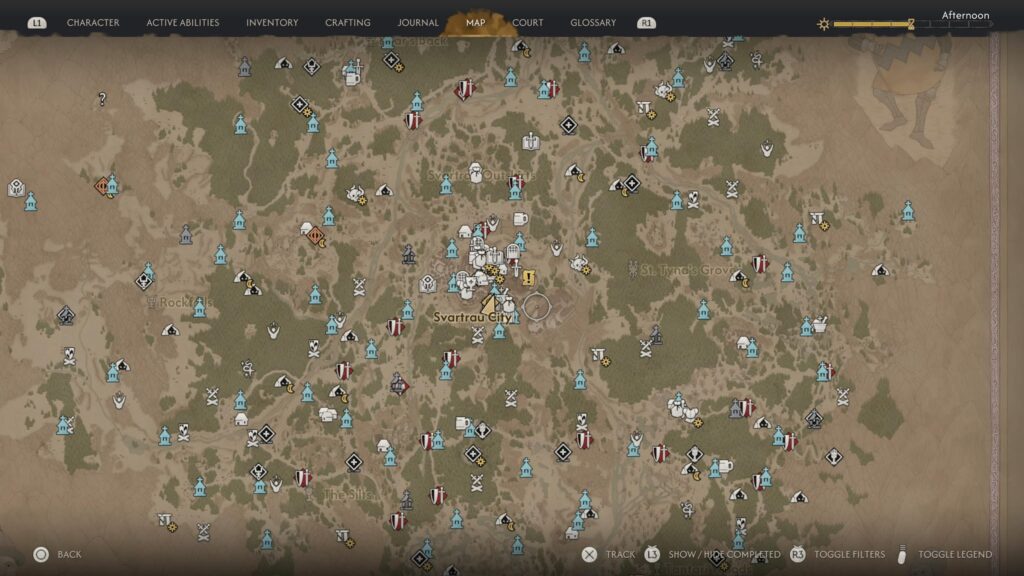
The deadline gives these stories a different weight. In a conventional RPG, an urgent family rescue can comfortably wait while you help every farmer locate his missing cattle. Dawnwalker makes that contradiction harder to ignore: Coen has 30 days and nights to pursue his rescue.
There is an important distinction, however. This is not a continuously running countdown. Exploration and ordinary combat do not advance story time; particular quest steps and other marked actions do. The game shows their cost through an hourglass icon. Reaching the deadline also does not simply end the game, although Coen’s family may suffer the consequences.
Bandai Namco’s explanation of the time system
For me, it created a little of that Majora’s Mask anxiety: a persistent awareness that I could not indefinitely postpone the thing I had come here to do. But there was still room to wander. The pressure settled into decisions about which stories deserved my attention and which preparations mattered most.
That makes the narrative feel unusually personal. Your adventure is shaped by what you pursue, what you postpone, and what you leave unresolved..jpeg)
Gameplay and Mechanics
Combat has a steep learning curve, particularly with directional blocking enabled. You have to read incoming attacks, match their direction, and find the timing for your response. On a controller, that turns familiar sword fighting into a rhythm of analogue-stick movements, defensive decisions, and counterattacks.
It is a bitch to get used to. Once it clicks, though, the movements begin to feel natural, and encounters become considerably more satisfying.
Dawnwalker is not Elden Ring. Progression steadily takes the edge off its threats. Better equipment, additional abilities, and higher stats mean enemies that once demanded your complete attention eventually become much more manageable. Learning the combat matters, but so does building a stronger Coen.
The more interesting challenge is adapting to his two forms.
Human by Day, Vampire by Night
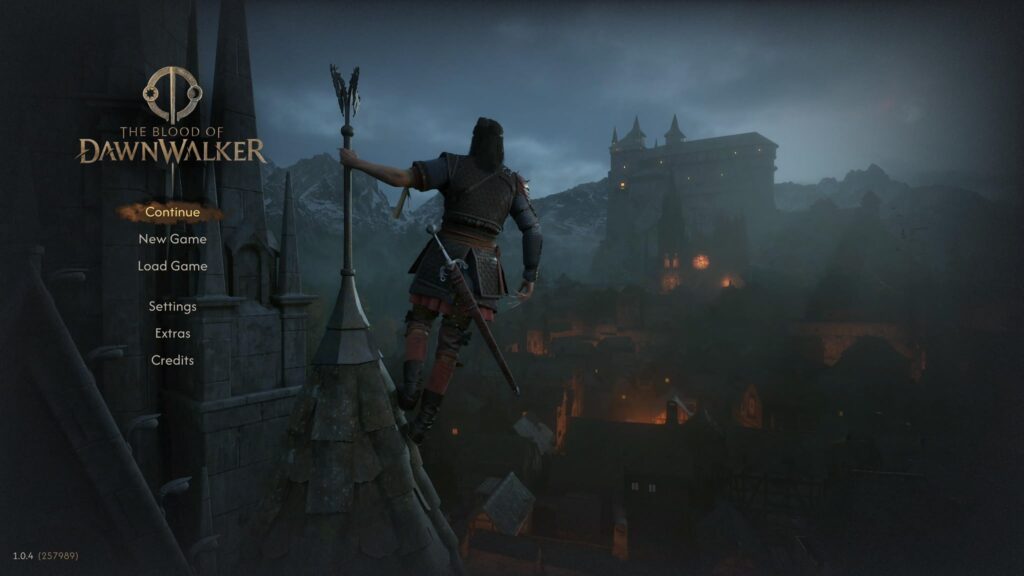
At night, Coen has the immediately appealing toolkit: blood drinking, shapeshifting, supernatural movement, and vicious combat abilities. Powers such as Shadowstep and Clawride also change how you navigate the valley, opening routes across rooftops and other elevated spaces. Bandai Namco’s gameplay recap
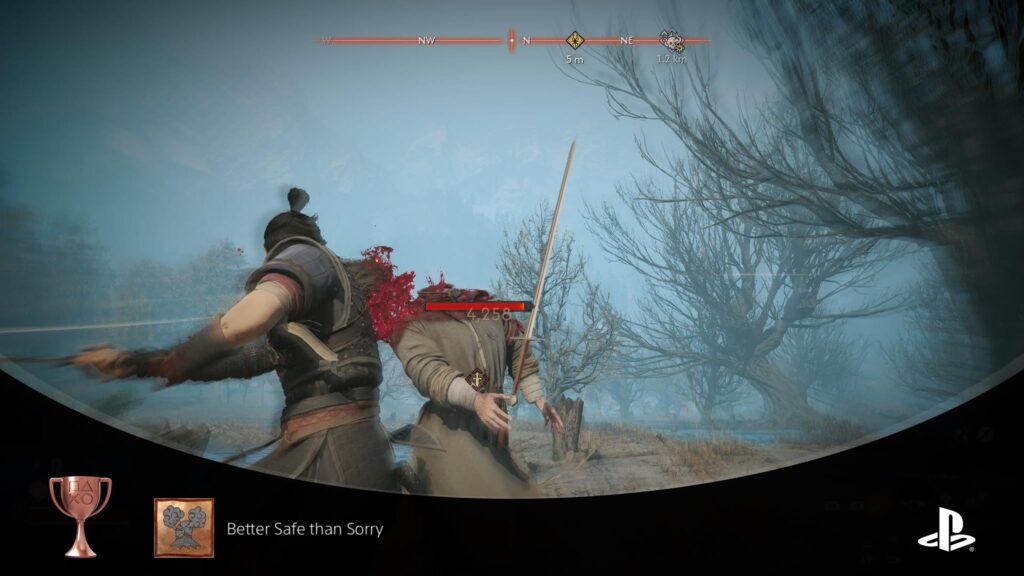
Early daytime Coen, by comparison, can feel like a villager who has brought a stick to a supernatural power struggle.
That is an exaggeration, but it captures the imbalance I felt. Roughly a third of my first playthrough went into getting through the opening five missions. Those early daytime sections could be both difficult and dull, especially when I already knew how much more entertaining Coen became after sunset.
.jpeg)
Human abilities eventually catch up enough to make the contrast more interesting, but it takes time. I understood why certain quests required daylight: without reasons to engage with that half of the game, I would have been tempted to spend far more of the adventure as a vampire.
The developers anticipated that temptation. In a September interview with Eurogamer, reported by HowToVideoGame, director Konrad Tomaszkiewicz explained that human Coen is deliberately weaker. Witchcraft gives him powerful abilities of his own, partly because the team worried players would otherwise simply skip ahead to night. Reporting on the director’s explanation
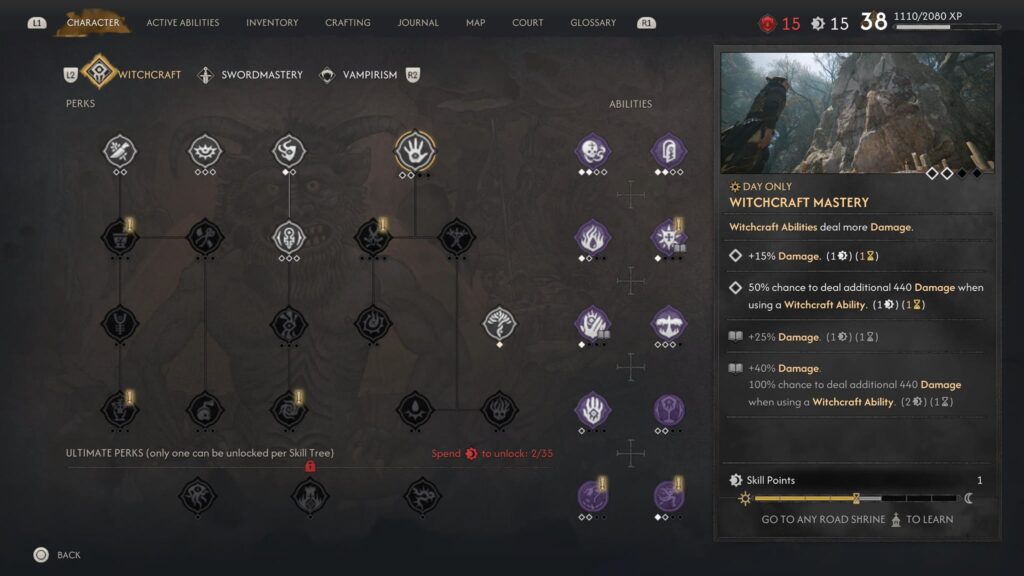
That rationale makes sense. Witchcraft gives daytime play its own identity and tools, rather than relying entirely on sword fighting. It includes offensive and defensive magic, crowd control, damage over time, and buffs and debuffs. Official Skills & Power bulletin
For me, though, the design intention is stronger than the early-game balance. Vampirism sells its fantasy almost immediately. Being human requires considerably more patience before it becomes comparably rewarding..jpeg)
Progression and the Cost of Preparation
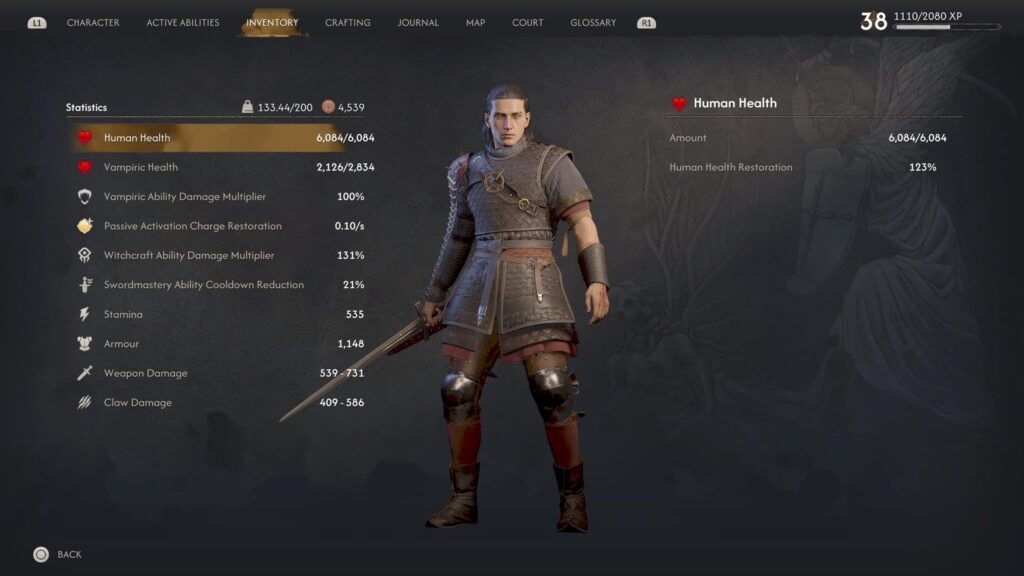
The skill system is another area where Dawnwalker could have been more adventurous. Health and damage improvements often felt like the sensible investment, even when a new active ability promised a more substantial change in how I played. I wanted more decisions where experimenting with an unfamiliar skill felt as attractive as taking a reliable numerical upgrade.
The same issue affected my choice between swords and claws. Swordmastery works during both day and night, while vampirism is restricted to nighttime. All three skill trees share the same pool of earned skill points.
Consequently, investing in swords frequently felt easier to justify. Claws might better express the vampire fantasy, but a sword remained useful throughout the entire daily cycle.
Learning or improving some abilities also consumes story time. I understand the logic: training and studying should take effort. In practice, I would have preferred skill development to be free of that additional cost. Choosing between abilities already gives progression enough tension without making experimentation compete with rescuing your family.
Still, I reached the endgame with enough time remaining that this was more an irritation than a serious obstacle. The clock influenced my decisions more than it restricted my ability to finish..jpeg)
Graphics, Performance, and Sound
I played on PS5 in Performance Mode, choosing the 60 FPS target over higher visual fidelity. For a combat system built around reading attacks and responding accurately, smoothness was my priority.
The launch patch introduced that mode on PS5, PS5 Pro, and Xbox Series X, alongside the 40 FPS Balanced and 30 FPS Quality options. Those are targets, and my experience included noticeable drops. GamesRadar’s coverage of the launch performance options
Vale Sangora’s visual vocabulary suits the adventure: muddy settlements, ruined towers, forests, castles, caves, and mountain passes establish its medieval setting. The game is built in Unreal Engine 5. And the vibe of an isolated valley is very convincing.
The technical finish is less convincing. During my playthrough, I encountered multiple audio cutouts, frame drops, and the recurring awkwardness familiar to anyone with an affection for European RPG jank. These problems interrupted an otherwise absorbing adventure often enough to deserve mention.
The music has a clear connection to the setting. Rebel Wolves identifies 14th-century European folk traditions and communities living beneath the mountains as key inspirations. Its published music includes compositions by Nikola Kołodziejczyk, Piotr Musiał, and Mikolai Stroinski. Official music bulletin
That is thoughtful groundwork for the soundscape. The audio interruptions I experienced were especially frustrating in a game that depends so heavily on atmosphere and storytelling. 1.jpeg)
Vampiric Personality
Dawnwalker has personality, and that goes a long way.
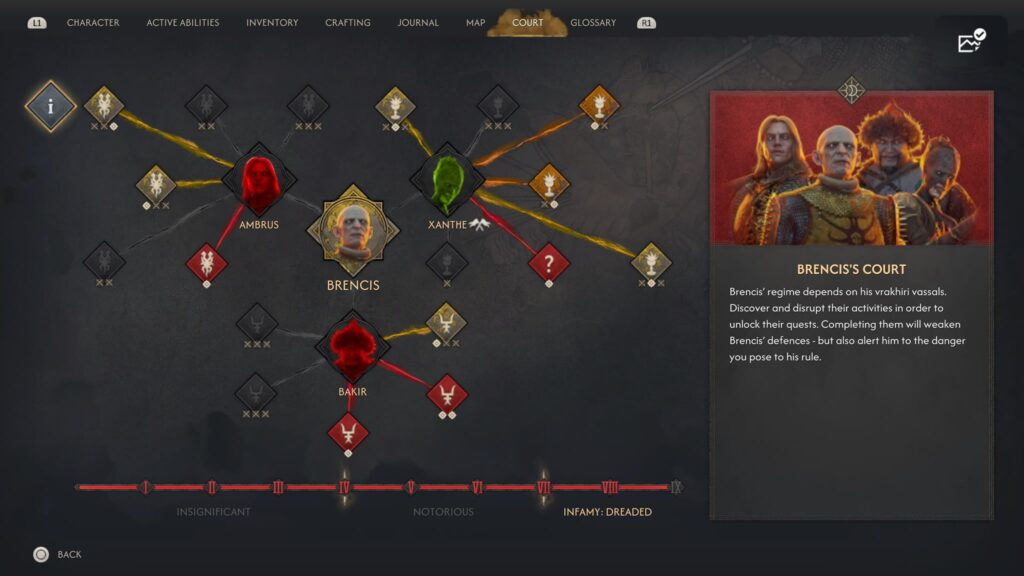
Its appeal comes from the way its systems interact. Choosing a quest also means considering its time cost. Preparing for a confrontation means thinking about whether you want to arrive as a human or a vampire. Developing Coen means deciding how much to invest in each identity, with the rescue always somewhere in the back of your mind.
Across approximately 30 hours, those ideas mostly hold together. The game lets you explore, make judgments, and pursue your own version of the story with respectable flexibility. Even when an individual system frustrates, the adventure keeps giving you reasons to continue.
Rebel Wolves is also leaving room for the series to evolve. Tomaszkiewicz has said the time mechanic will return in future stories only where it fits; the studio has not committed to imposing the same structure on every entry. That is a possibility for a sequel, rather than a confirmed decision to remove it.
PC Gamer’s report on the sequel discussion
Commercially, the debut has made a strong start. PC Gamer reported Rebel Wolves’ announcement that Dawnwalker had surpassed one million copies sold within its first three days.
Real Talk
For me, the attraction is already clear. The Blood of Dawnwalker delivers a compelling world, memorable storytelling, and a fresh set of pressures within a familiar RPG framework. Its daytime opening needs patience, its progression could better reward experimentation, and its presentation needs more polish. Yet I finished it feeling that I had played something with an identity worth developing.
If you enjoy Kingdom Come: Deliverance and The Witcher, and appreciate an RPG that expects you to learn its systems with relatively little hand-holding, Dawnwalker is worth your time. It certainly earned mine.
Final Score: 89/100
The Blood Of Dawnwalker
The Blood Of DawnwalkerThe Good
- Weight To The Decisions You Make
- Excellent World Building
- Deep and Multi-faceted Character
- Great take on a Vampire RPG
The Bad
- Skill System Needs Rework
- No New Game Plus or Photo Mode At Launch
- Sharp Learning Curve
- Missing graphical, and technical polish in some areas