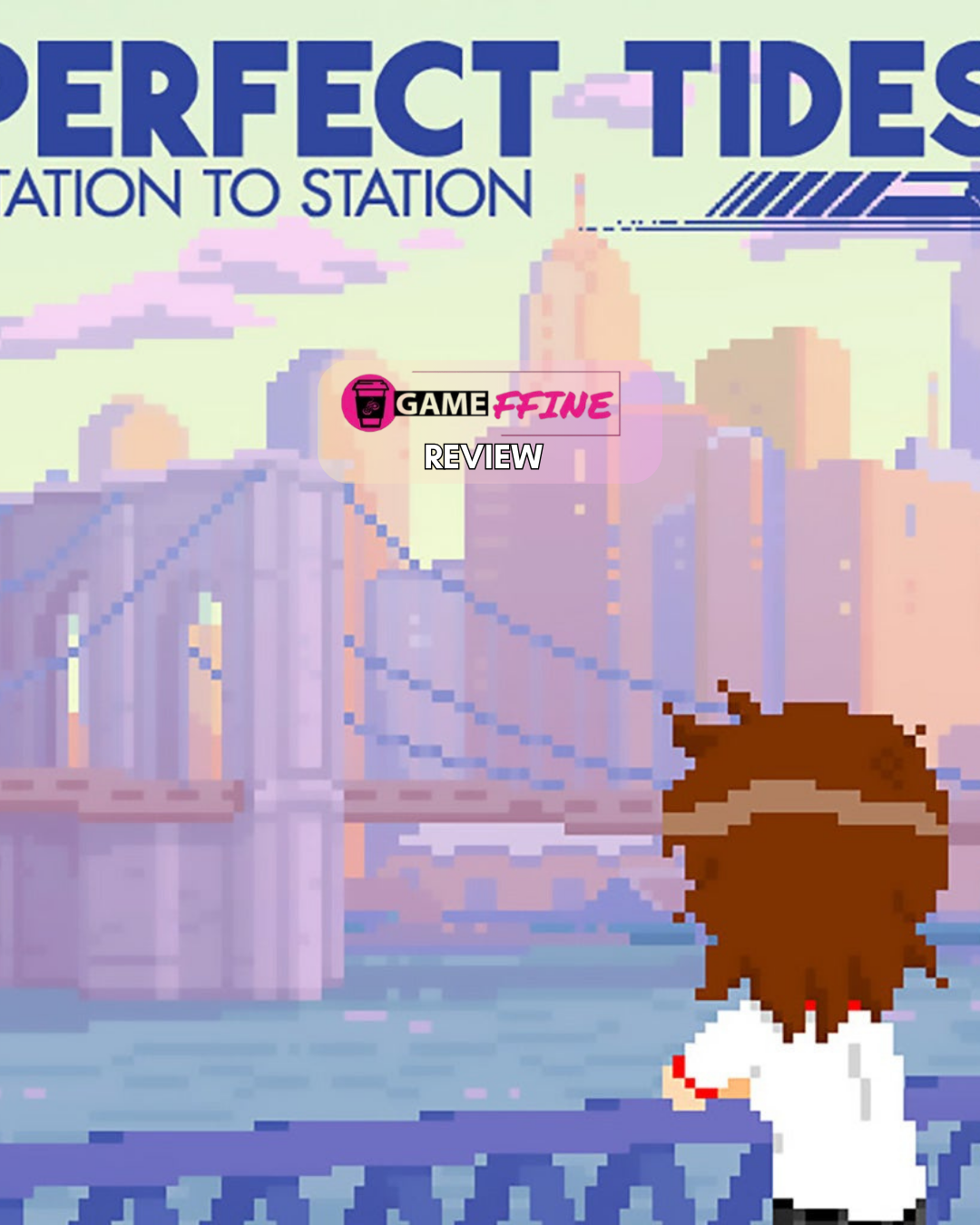





If someone asked me if I’ve ever played a game or watched a movie that I felt seen by—truly, painfully seen—I would, without hesitation, point them toward Perfect Tides: Station to Station.
Developed by Three Bees, the solo indie studio founded by Meredith Gran, this title serves as a direct sequel to the 2022 indie favorite, Perfect Tides. While the original introduced us to the angst of adolescence on a small island, Station to Station throws us into the deep end of the next terrifying chapter: being 18, living alone in a big city, and realizing you have absolutely no idea what you’re doing.
It is a game about the momentum and whiplash of young adulthood, a heartfelt story about finding your own voice while dealing with unexpected outcomes that are entirely beyond your control. It’s gritty, entertaining, and at times, emotionally exhausting in the best way possible.
City Lights and Quarter-Life Crises
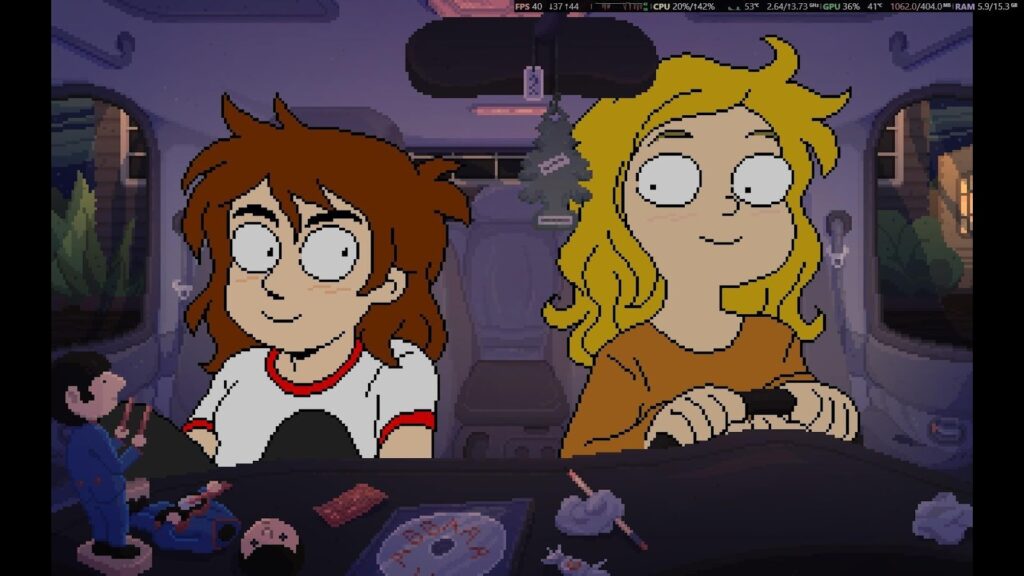
The story follows the life of Mara Whitefish, now 18 and an aspiring writer trying to balance the chaos of college, work, and romance. If you played the first game, you remember Mara as a teenager desperate to escape her island home. Now, she’s finally done it—and the reality is hitting her hard.
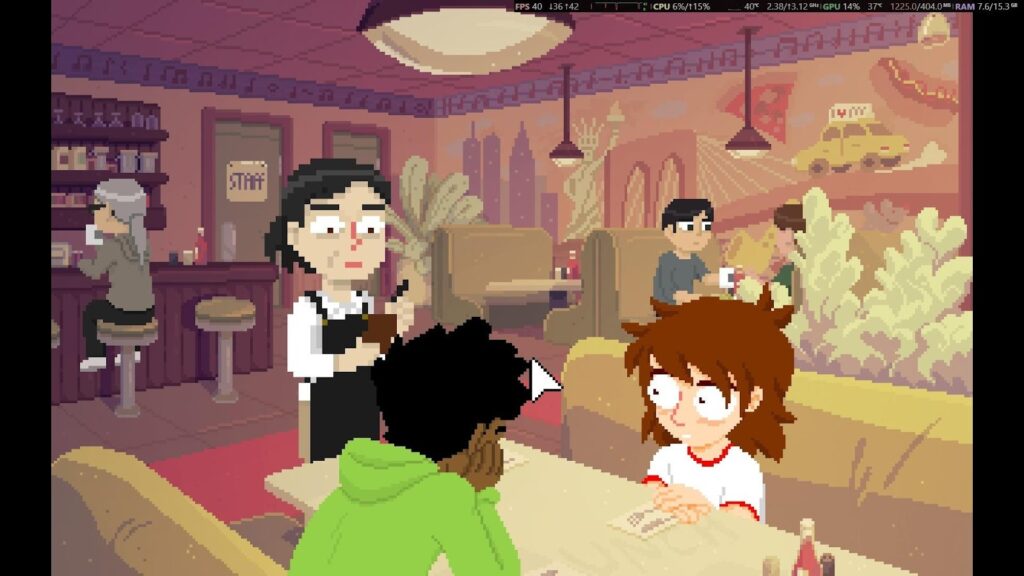
Mara is a freshman at the State University of Creative Studies (SUCS), trying to carve out an identity for herself while physically and emotionally separating from her family. She’s living in the city, but the tether hasn’t been completely cut; she still commutes back and forth to her mom’s home in the suburbs, caught in that weird limbo between “independent adult” and “child who needs laundry done.”
The writing here is spectacular. As you play through the game’s four seasonal acts—Spring, Summer, Fall, and Winter—you experience the highs and lows of a young adult in an unpredictable city. Mara works part-time at the college library, crashes occasionally at the apartment of her good friend Daniel, and navigates a long-distance relationship with her boyfriend of nearly a year, Adam.
What makes Station to Station so compelling is that it doesn’t shy away from the awkwardness. Mara is messy. She is trying to fit in, dealing with existential crises, and learning that the “freedom” she craved comes with a lot of lonely nights and confusing social cues. It captures that specific anxiety of being a freshman—the feeling that everyone else received a handbook on how to be a person, and you somehow missed the distribution day.
Gameplay: Collecting Insights, Not Just Books
Mechanically, Perfect Tides: Station to Station is a point-and-click adventure, but it often feels more like a sophisticated visual novel. While you do the standard genre things—collecting items, talking to NPCs, solving light puzzles—the core of the gameplay revolves around Mara’s internal world.
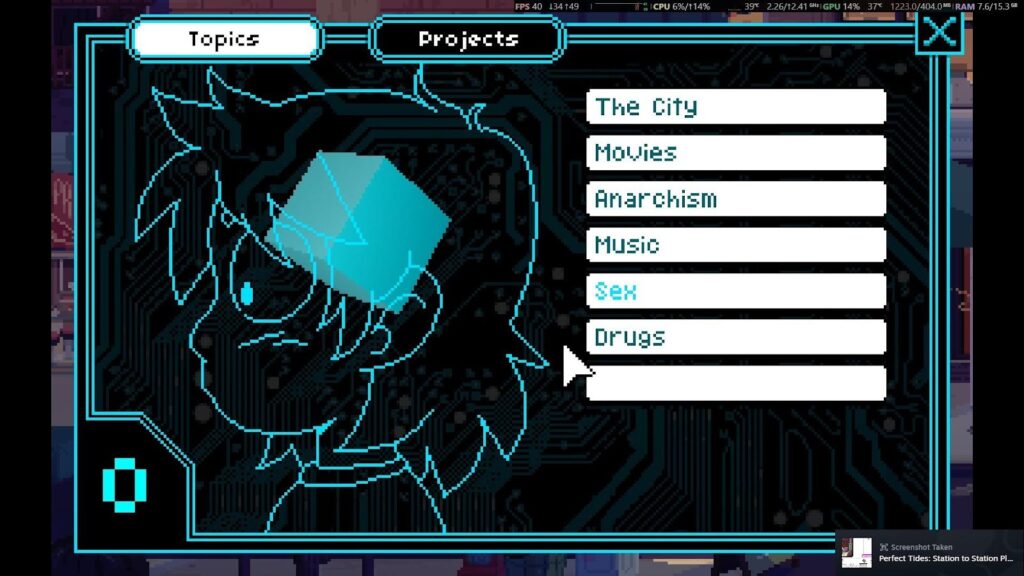
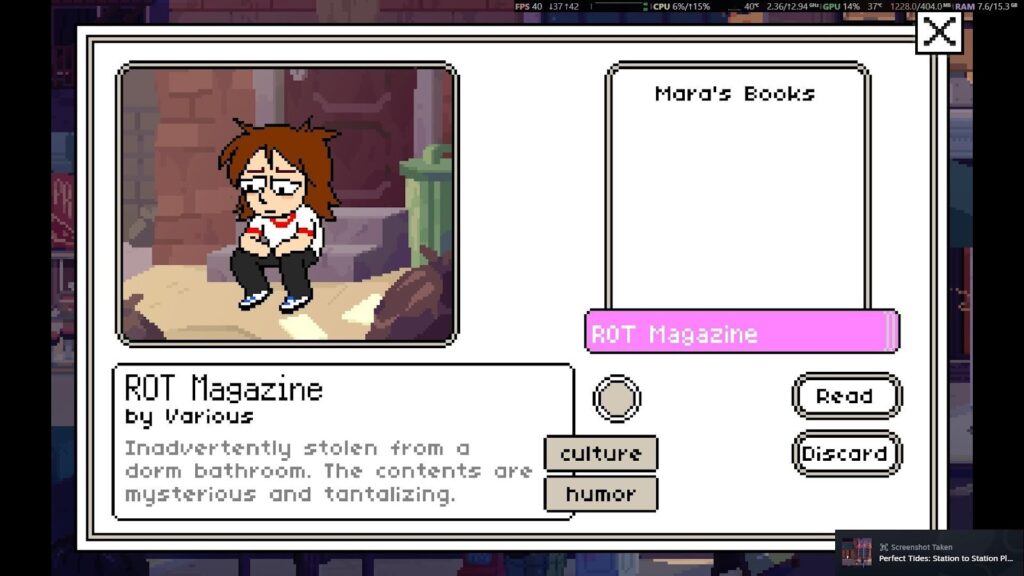
The game features an “Insight System” that I absolutely loved. As an aspiring writer, Mara’s power comes from her perspective. You have an interface where you can track Mara’s insights on various topics such as movies, music, and sex. These aren’t just static stats; they are living, breathing metrics that increase as you interact with the world. Every conversation you have, every piece of media you consume, and every book you read feeds into this system.
There is also a dedicated trading system that allows you to exchange books with other characters. This isn’t just busy work; it’s essential for Mara’s growth. Reading books unlocks new dialogue options and “insights,” which in turn allows Mara to write better essays and navigate social situations with more nuance. It’s a gameplay loop that perfectly metaphors the creative process: you have to consume art and live life to have anything worth saying.
However, the gameplay isn’t without its flaws. Throughout the majority of the game, the flow is fluid and simple, but there were distinct instances where I hit a wall. I would find myself wandering a scene, having interacted with everyone and clicked on everything, completely confused as to what I was supposed to do next.
A subtle hint system would have gone a long way here. The game relies heavily on you understanding the logic of the story to progress, but sometimes that logic is obscure. Getting stuck breaks the immersion of an otherwise beautifully paced narrative, turning a moment of poignant reflection into a frustrating pixel hunt.
A Visual and Auditory Vibe
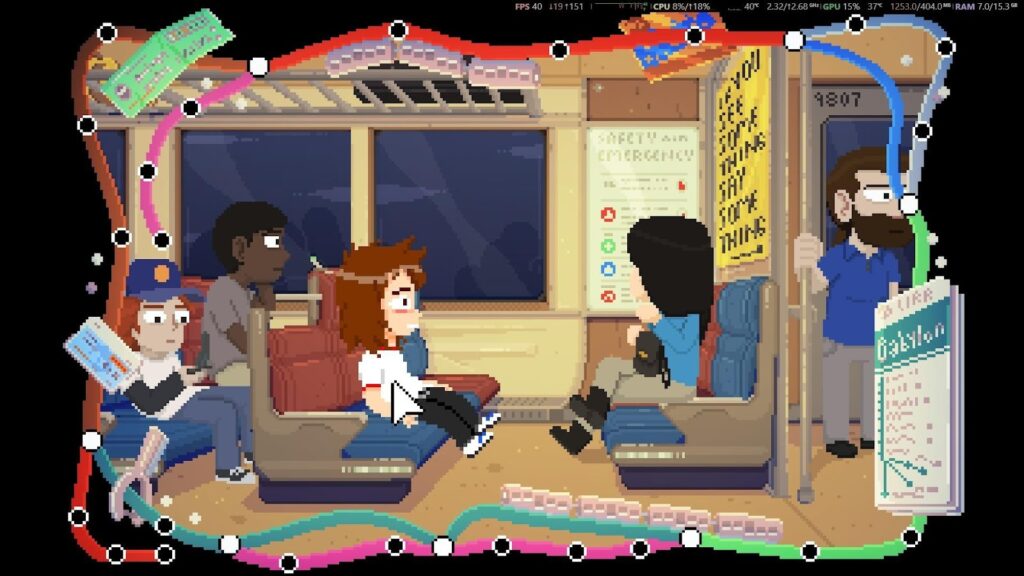
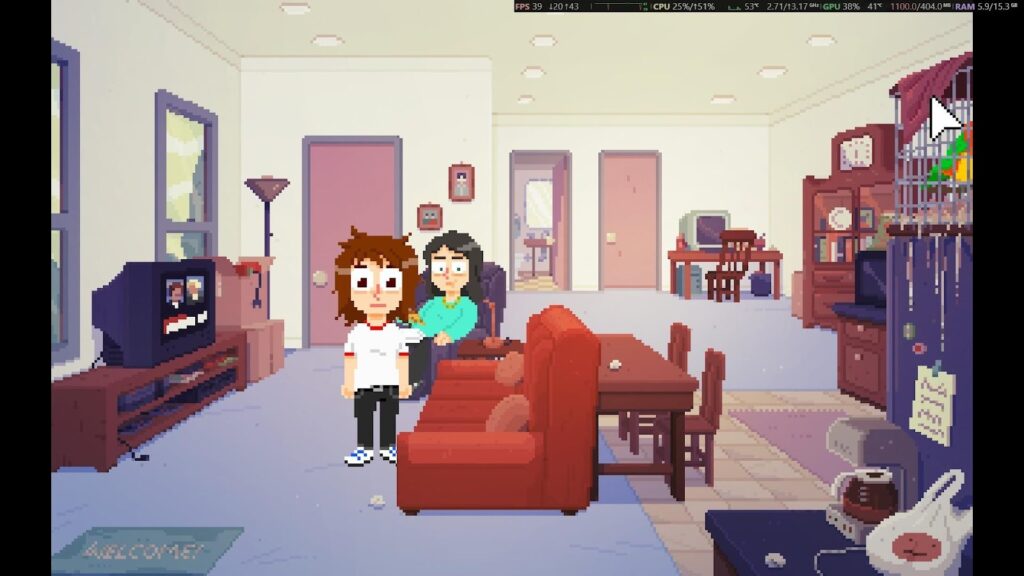
Despite the occasional mechanical friction, the game’s presentation is flawless. Station to Station is a pixel art game, but don’t let that label fool you—it is incredibly expressive. The scenes are created with a level of detail that makes the city feel lived-in and vast. There is a nostalgic, peaceful vibe to the art direction that contrasts sharply with Mara’s internal turmoil.
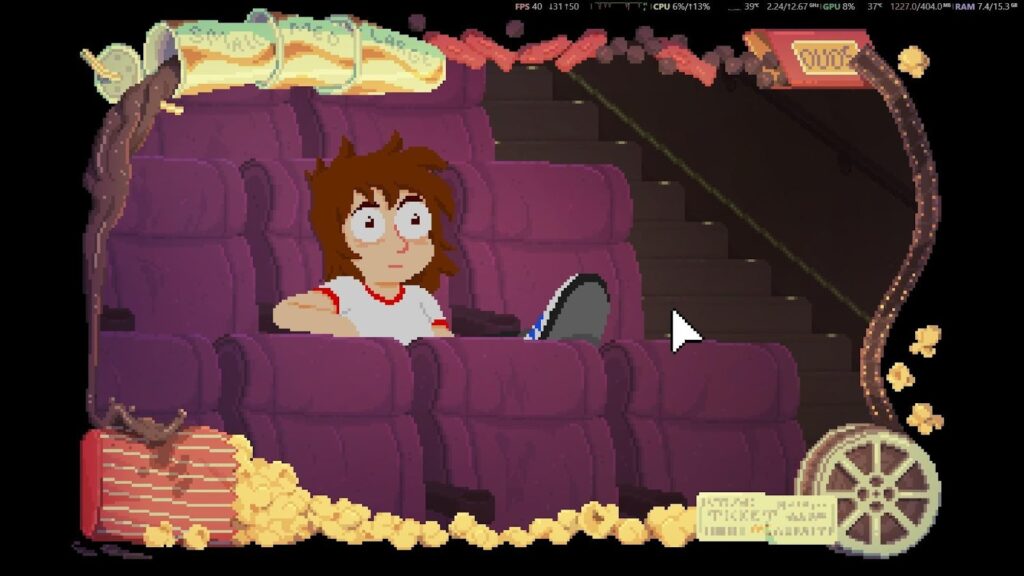
I particularly loved the presentation of the cutscenes and dialogue. The game uses intricately detailed frames around scenes, almost like a comic book layout (fitting, given Meredith Gran’s background). These frames ground the action and give the game a unique visual identity that separates it from other retro-style adventures.
The sound design deserves a special mention as well. The soundtrack is pleasant, interesting, and always fits the scene perfectly. It captures the era and the emotion of the moment without being distracting. A standout moment for me was the transition to Summer, which featured a reference to Linkin Park’s “What I’ve Done.” It was such a specific, era-appropriate touch that it made me laugh out loud while simultaneously hitting me with a wave of nostalgia. It’s these small details that make the world feel authentic.
The “Visual Novel” Debate
It is worth noting that while this is marketed as a point-and-click adventure, your enjoyment will depend on your patience for reading. It feels more like a visual novel in many respects. You are often just sitting back, watching Mara’s life play out, and seeing how she deals with the choices you’ve made for her.
For me, this was a massive positive. I liked that the game prioritized narrative momentum over complex puzzle-solving. We are essentially observers of Mara’s life, guiding her hand but ultimately watching her make her own mistakes. It allows the story to breathe and gives the emotional beats—the breakups, the reunions, the academic failures—more room to land.
Real Talk
Perfect Tides: Station to Station is a game for anyone who has ever felt out of place. It’s for the former theater kids, the writers, the people who moved to a new city and cried on their first night. It is a game that respects the intelligence of its audience, refusing to hand-hold you through its emotional beats or its gameplay.
While the ending felt a little “off” to me—perhaps a bit abrupt or unresolved compared to the rest of the journey—and the lack of a hint system is a genuine grievance, these are small blemishes on an otherwise stunning piece of art. I enjoyed this game far more than I expected I would. It is painfully relatable, and it has very likely changed my opinion on what point-and-click games can be. If you have an appreciation for storytelling, beautiful pixel art, or characters with comically large eyes and even larger emotional baggage, you owe it to yourself to play this
FINAL SCORE: 90/10
The Good
- The world feels real, and Mara’s internal monologue is painfully relatable.
- A heartfelt story about the awkwardness of finding your voice.
- Intricate pixel art and framing that elevates the genre.
The Bad
- Confusing progression at times with no hint system to guide you.
- The conclusion felt slightly off compared to the rest of the narrative.