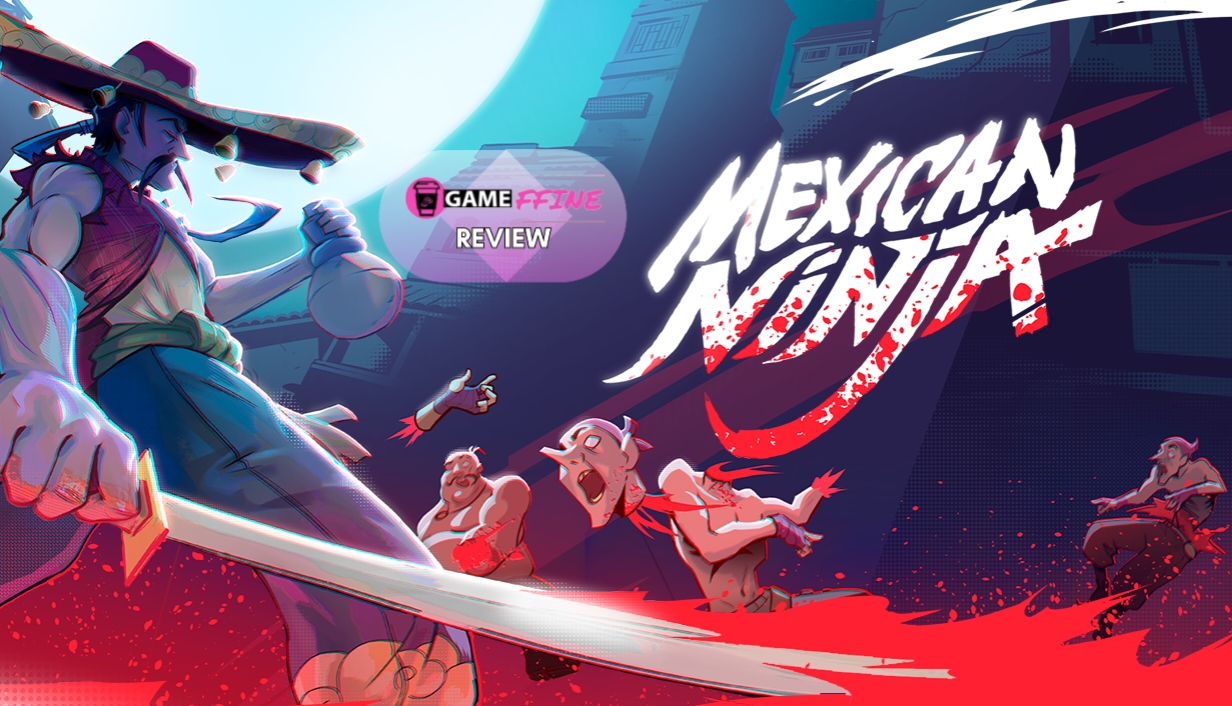





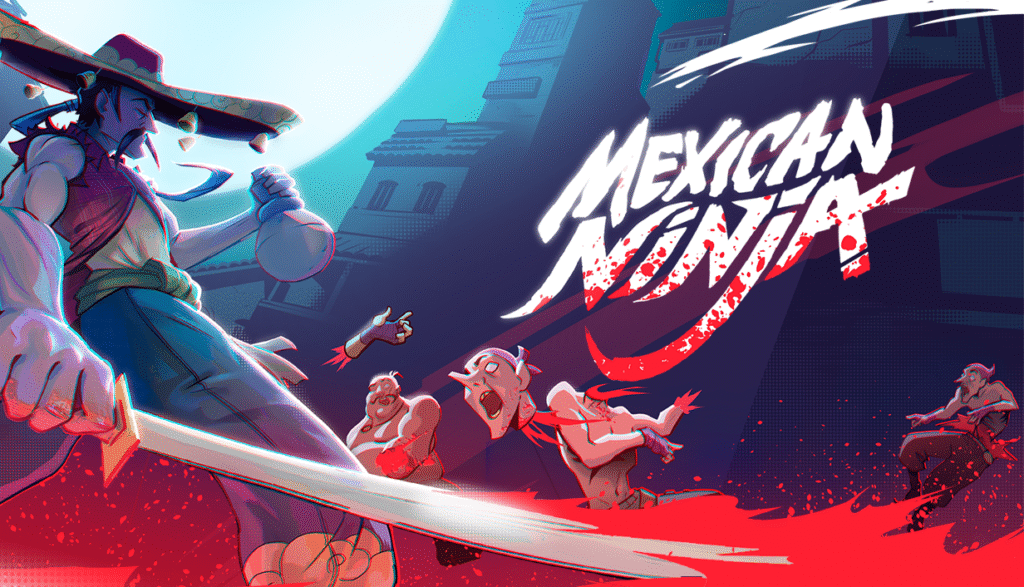
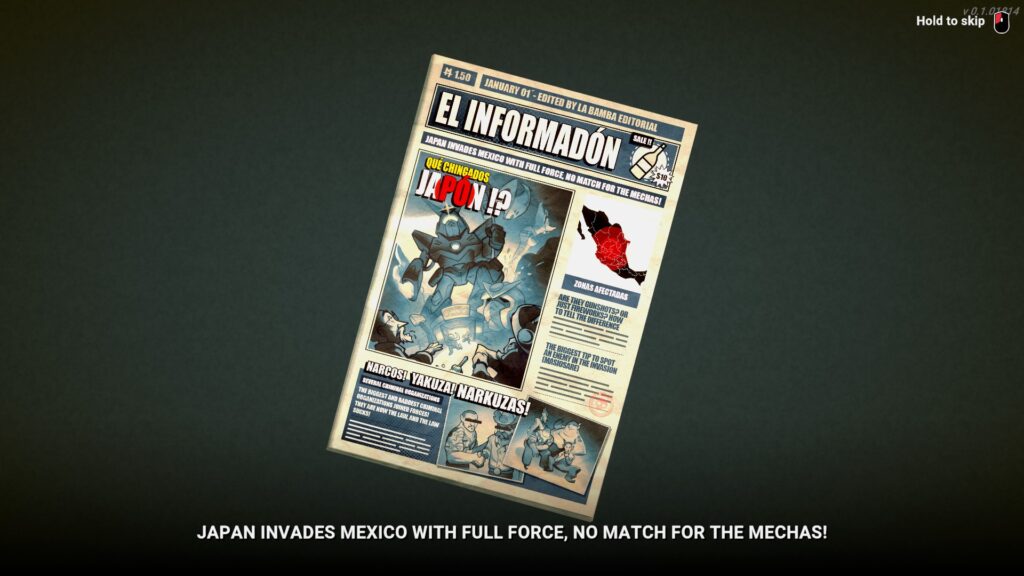
There are games that take themselves very seriously. Then there’s Mexican Ninja. The premise alone tells you pretty much everything you need to know. In Nuevo-Tokyo, Mexico and Japan have somehow collided into one ridiculous world where Narcos and Yakuza have joined forces to create the Narkuzas. Naturally, someone has to fight back. That someone is the Mexican Ninja. Developed by Madbricks and published by Amber Studio, Mexican Ninja is a 2.5D roguelite beat ’em up that mixes old-school arcade brawling with modern roguelite progression, flashy abilities and a sense of humor that absolutely refuses to behave itself. It sounds ridiculous. It is ridiculous. And that’s exactly the point.
A Love Letter to the Arcade
The first thing Mexican Ninja gets right is the feeling of an old-school beat ’em up. You move through colorful streets, enemies pile in from different directions, and suddenly you’re throwing punches, swinging a blade and launching people across the screen. The controls are deliberately approachable. Light and heavy attacks form the foundation, while special abilities give you more options as you progress. The combat looks simple at first, but there is more depth once you start paying attention to positioning, timing and combos. Several hands-on previews have highlighted the responsiveness of the combat as one of the game’s strongest features. That’s important because beat ’em ups live or die by how good it feels to hit something. Mexican Ninja understands that. There’s a satisfying rhythm to moving through a group of enemies, finding an opening, chaining attacks and then using a ridiculous special move to clear some space. It’s messy. It’s loud. It’s fun.
WATCH GAMEPLAY HERE :
The Way of the Donkey
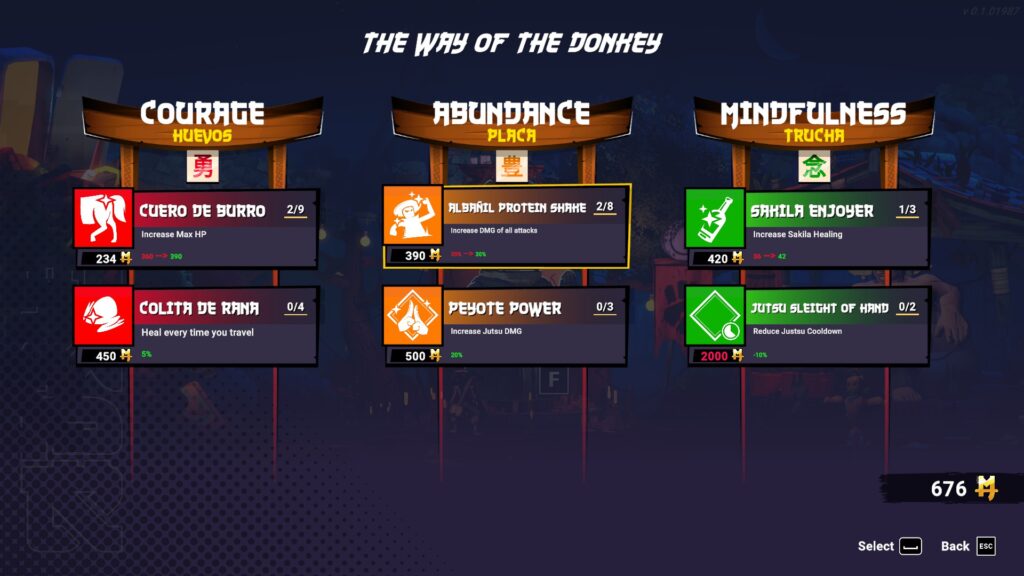
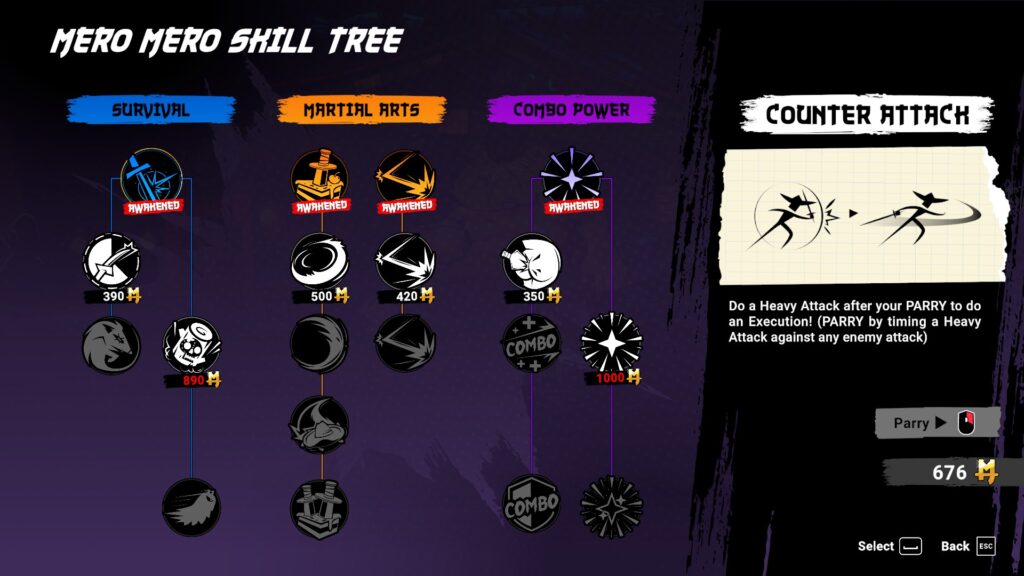
Mexican Ninja could have stopped at being a simple arcade brawler. Thankfully, it doesn’t. The roguelite structure gives every run a reason to feel different. As you progress, you can unlock new abilities, powers and upgrades that change how you approach combat. There’s also the wonderfully named Way of the Donkey skill tree, which lets you develop your own version of the Mexican Ninja. This is where the game becomes more interesting than its first impression suggests. You aren’t simply getting stronger. You’re experimenting. One run might focus on abilities that help with crowds. Another might encourage a more aggressive approach. The ability system gives you reasons to try different combinations rather than relying on exactly the same attack pattern every time. That experimentation is important for a roguelite because eventually the novelty of beating up another group of enemies can wear off. Build variety is what keeps you coming back.
When the Joke Becomes the Game
Let’s talk about the humor. Mexican Ninja is not subtle. Not even slightly. The game throws Mexican and Japanese references together with crude jokes, exaggerated characters, drug references, suggestive dialogue and plenty of deliberately stupid moments. Even the developers describe the game as an intentionally over-the-top experience. Some of it works brilliantly. Some of it probably won’t work for everyone. That’s the risk of building an entire game around this kind of humor. Several previews have praised the game’s personality while also noting that the comedy can occasionally become exhausting. Personally, I think Mexican Ninja is at its best when it doesn’t try too hard to explain the joke. The world is already absurd. A Mexican ninja running around Nuevo-Tokyo is enough. Sometimes the game adds another joke on top of another joke when the first one would’ve been enough. But at least it commits to the bit.
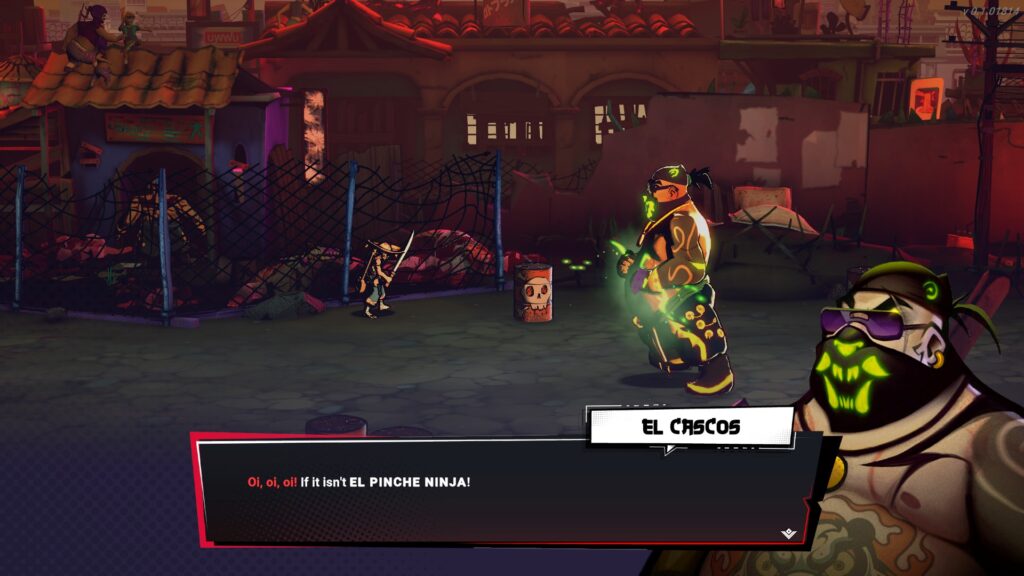
Nuevo-Tokyo Looks Like a Comic Book Had Too Much Coffee
Visually, Mexican Ninja has a style that’s difficult to mistake for anything else. The colorful 2.5D environments, exaggerated characters and comic-inspired presentation give the game a strong personality. The developers aren’t aiming for realism, and that’s absolutely the right choice. Everything feels exaggerated. Enemies look ridiculous. Attacks are intentionally flashy. The city feels like a strange collision between futuristic Tokyo and Mexican visual influences. The presentation also works well with the game’s arcade roots. It feels closer to an animated comic brought to life than a serious crime story. That’s a good thing. A game this ridiculous needs visuals that match its attitude.
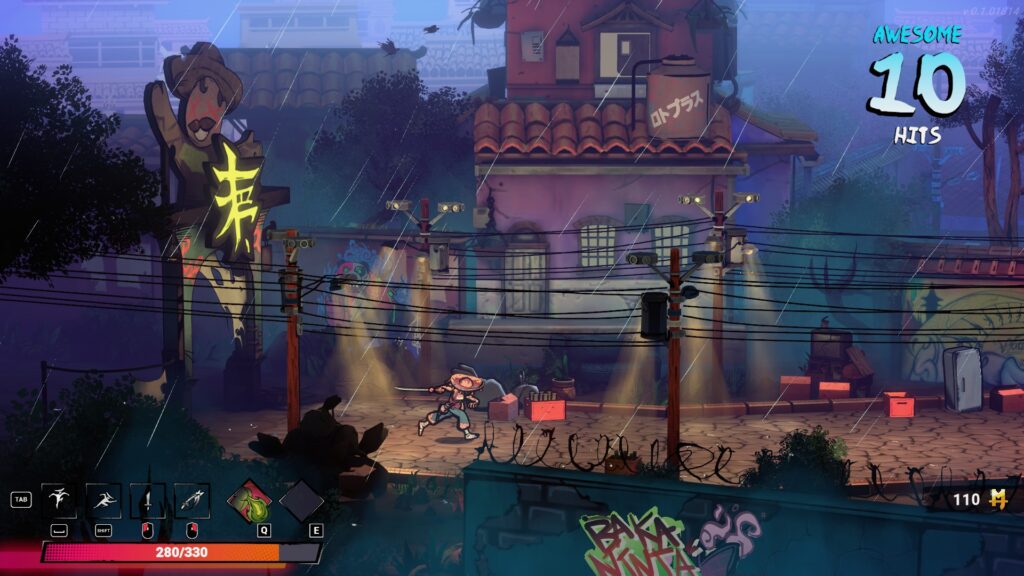
The Problem With Going Back for Another Run
The roguelite structure is also where Mexican Ninja could lose some players. The first few runs are easy to enjoy because you’re discovering abilities, enemies and the game’s sense of humor. Eventually, though, repetition becomes more noticeable. Some demo players have already mentioned concerns about repetition, difficulty balance and limited variety, while other previews have pointed toward the need for more enemy and level variation. This is something the full release will ultimately have to prove. A roguelite needs enough variety to make another run feel worthwhile. The good news is that the developers have had plenty of feedback from the demo, and the full game expands beyond what was available in that early version. Whether the additional content completely solves the repetition problem is something players will discover after launch.
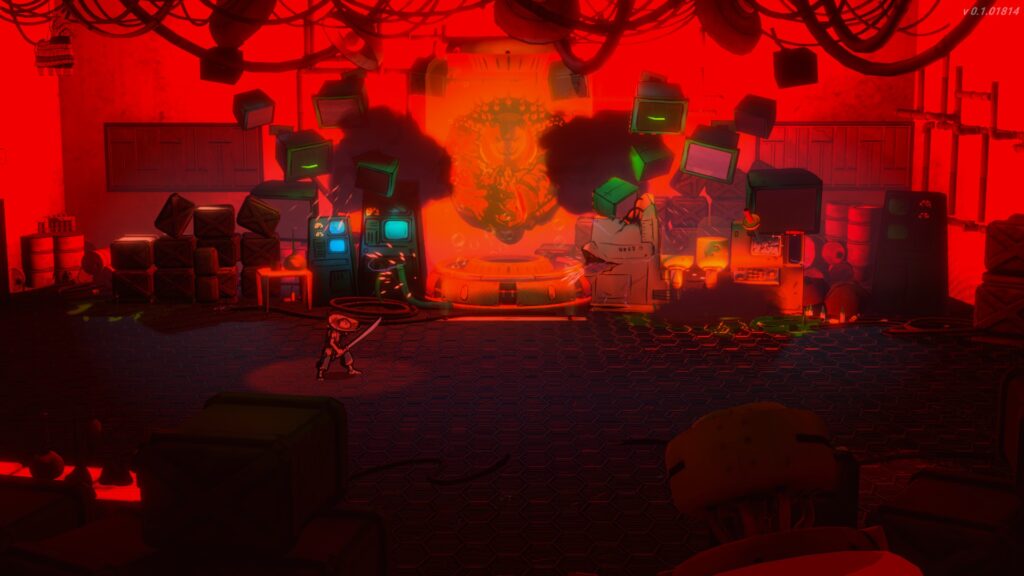
A Game That Knows Exactly What It Wants to Be
One thing I appreciate about Mexican Ninja is that it doesn’t seem embarrassed by its own identity. It isn’t trying to become the next serious action franchise. It isn’t pretending to be an emotional epic. It wants you to put on a sombrero, grab a sword and beat the living daylights out of gangs in a completely ridiculous city. And sometimes that’s all you need.The combination of arcade combat and roguelite progression gives the game enough mechanical depth to support its ridiculous presentation. Without that foundation, the humor would probably get old very quickly. With it, there’s an actual game underneath all the chaos.
Final Verdict
Mexican Ninja is exactly the kind of game that makes you stop scrolling and ask, “What on earth am I looking at?” And then you play it. The answer is a colorful, chaotic beat ’em up that mixes Mexican and Japanese influences, old-school arcade action and roguelite progression into something that’s almost impossible to take seriously. That’s its greatest strength. The combat has a satisfying rhythm, the upgrade system gives you reasons to experiment, and the presentation has enough personality to stand out in a crowded indie scene. Still, there’s something refreshing about a game that simply commits to being ridiculous. Mexican Ninja doesn’t want to be sophisticated. It wants to be fun. And sometimes, watching a sombrero-wearing ninja beat up a gang member with an absurd special attack is exactly the kind of nonsense gaming needs.
FINAL SCORE : 84/100
The Good
- Fast and satisfying beat 'em up combat
- Creative Mexican-Japanese setting
- Roguelite builds give runs variety
- Excellent arcade-inspired presentation
The Bad
- Humor can become repetitive
- Difficulty balance needs careful tuning
- Enemy and level variety will be important for long-term replayability
