


Thereʼs something deeply unhinged about a game that looks you dead in the eye and says, “Yo, what if we combine Sailor Moon, Hades, and Nier to kill God?” Welp, look no further because thatʼs Kernel Hearts in a nutshell. Developed by Ephemera Games and published by Whitethorn, this is definitely one of those charming, ambitious debuts that you see from time to time.
You play as a member of the M.A.H.O.U. Unit, which is an elite squad of Magical Girls, climbing the shifting, sentient Tower of Babel with a mission to punch biblical monsters in the face and transform into your true form, which is very kawai btw, and bond with weirdos along the way so that you can eventually dethrone God so the world stops drowning in ashes. Itʼs ridiculous. Itʼs stylish. Itʼs got yerba mate. And somehow it works.

Ashes, Androids, and a lot of Heart
The world of Kernel Hearts is a post-apocalyptic Patagonia filtered through anime aesthetics and Argentine soul. Humanityʼs last holdout is at the base of the Tower of Babel, a place where survivors scavenge, scheme, and try not to cough up too much ash. (Ehehehe, Angeldust) You’re not some chosen one with a tragic backstory about dead parents but a rebootable android who wakes up, gets briefed, and gets tossed into the meat grinder. Die, and your memory backups restore you in the lab. Sounds like Infinite Torture Sim… I know… But this just comes with the magical girl contract.
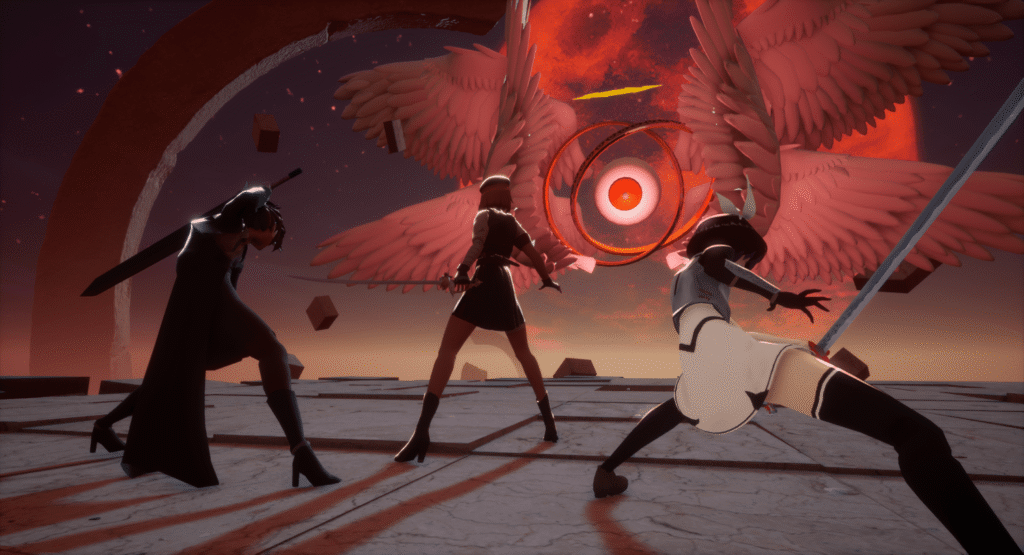
What elevates the story beyond this “cool concept” is how personal it feels. The four main girls, Lord, have mercy on them: Fernet, Spika, Laika, and Dolce arenʼt just different weapon types. Their personalities bleed into their animation, attack rhythm, and idle. Fernet, who is a Spiritmancer, will casually sip mate between fights. Spikaʼs katana work is clean and disciplined. Laika swings a massive blade like sheʼs got personal beef with them angels. Dolce dances through combat like the apocalypse is just a random Tuesday. The writing leans into that cultural mashup pretty hard and the Japanese magical girl tropes are filtered through South American warmth and melancholy. Yep, it hits.
Between runs you hang out in Babel, gifting items, deepening bonds, and unlocking visual-novel-style conversations that actually make you take a chill break. It’s not full Persona, but the social layer gives the rogue-like loop emotional weight. Every death isnʼt just a reset but another chance to understand the people (and angels) youʼre fighting for… or against.
Combo Soup Of Chaos
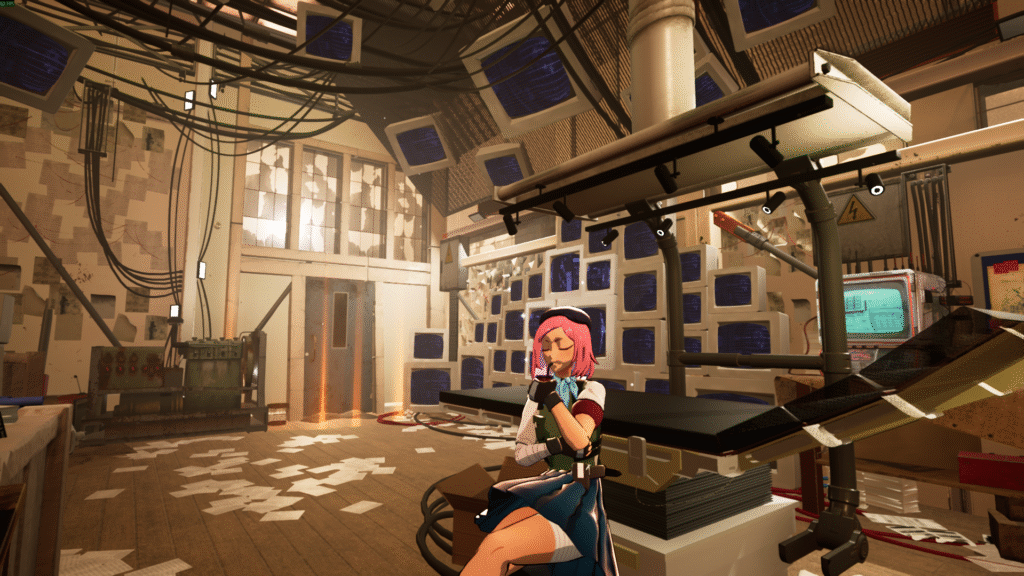
Now this is a third-person co-op action RPG that wants you mixing light attacks, heavy swings, spells, movement abilities, and temporary run powers into personal combos. Itʼs closer to a stylish hack-and-slash than pure Souls-like or pure Hades, with enough fluidity that chaining abilities together doesnʼt feel staggering.
The Tower itself is a living, shifting place. Floors escalate in difficulty the longer you stay (thereʼs a visible pressure meter), so you have to either push deeper or extract while youʼre ahead. Bosses guarding each domain are big, theatrical, and designed to test whatever wild build youʼve cobbled together that run. Dying is expected and not particularly punishing; you keep permanent chip upgrades and story progress while temporary powers reset. So it’s not very punishing but rather asking you to die try and die more. It strikes a nice balance between the “one more run” addiction and long-term investments.
There is a 256KB chip system for customizing your MAHOU.OS which is both smart and thematically adorable. You’re literally installing limited digital “memory” upgrades (like downloading more RAM online), which forces decisions about what to prioritize. Want more health? Better dodge windows? Stronger transformation payoffs? Yeah rack your brains on your build. Solo is fully viable and still fun, but the game is clearly built with co-op in mind. Up to four players can slice through the Tower together, and the chaos of coordinating transformations and combos is fun. And yes, there is cross-play support.
Anime Souls With Unreal Engine
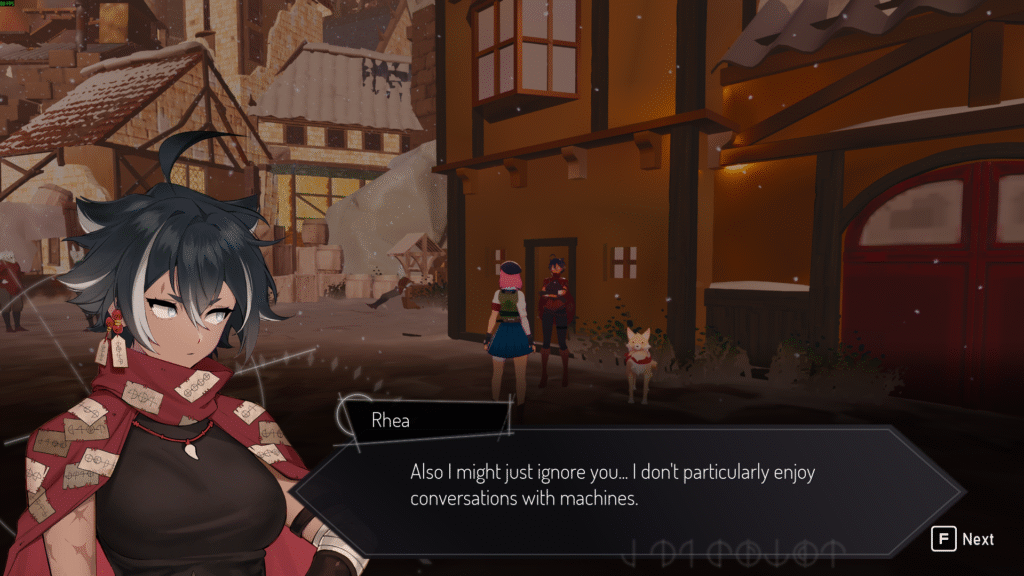
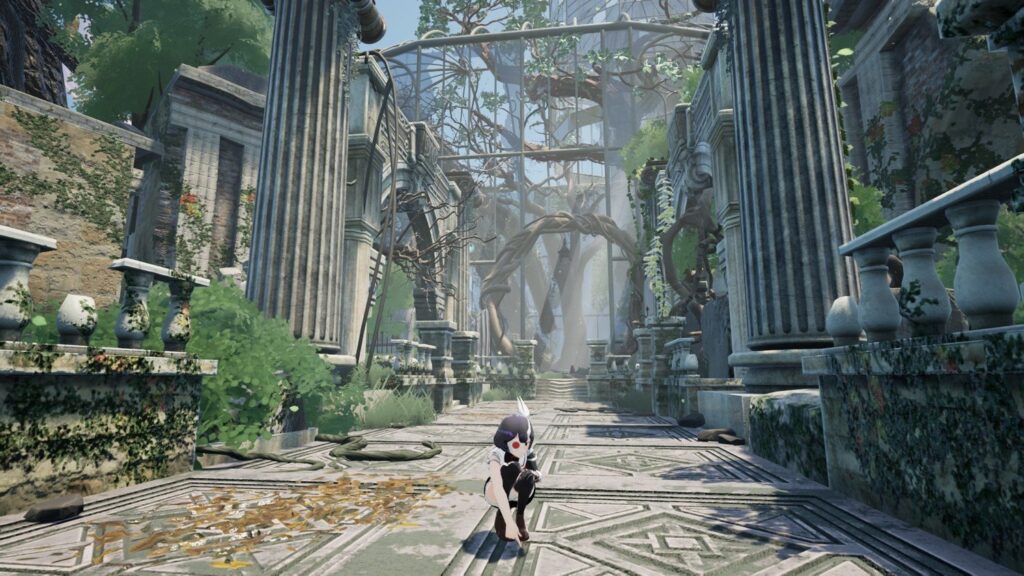
Visually, it swings for the fences. Character designs are sharp and expressive. The silhouettes read instantly in the middle of a chaotic fight, which is exactly what the developers were going for. The key art and transformation sequences pop with color and flair (still very kawai). The world itself mixes ruined beauty with eerie biblical imagery such as petrified angels that wake up when you hit them, sweeping ash-choked fields, and the looming Tower that was spacious but quite oppressive.
That said, itʼs still an Unreal Engine 5 indie title from a small studio. Some open areas can look a little sparse or “default UE5” in motion compared to the gorgeous stills and cutscenes. Itʼs never ugly, but the fidelity isnʼt consistent across every environment. When the game is firing on all cylinders, especially during big set-piece fights or transformation bursts, it looks fantastic. When it’s not, you notice the bits that aren’t as fluid as you’d like.
Moe Moe Tyuuneee!!
The soundtrack, led by Pretty Patterns, is an absolute highlight. Itʼs a stylish mix of electronic, vocal-driven tracks that feels like an anime opening and a melancholic end-of-the-world anthem. The music sells the emotional swings hard with triumphant tunes when you’re melting a boss and haunting creaks when you’re wandering the ashes. Sound design in combat is punchy and satisfying, with enough weight behind the bigger hits and transformations to make every successful combo feel earned. Although, there is a lack of hit response that feels satisfying compared to your average hack and slash rogue.
The Not So Little Things
Itʼs not perfect at all by any means. The visual consistency issues mentioned earlier keep it from feeling fully polished. Some enemy designs and attack can get a little muddy in the heat of co-op chaos. And while the social systems are nice, they donʼt quite reach the depth of the best character-driven RPGs. A few mechanics still feel like theyʼre one or two balance passes away from greatness. But none of that sinks the ship. This is a first game from a passionate team that poured years of love into something weird and specific, and that passion is visible in almost every frame. (They definitely got me hooked for a couple of hours with fun and engaging re-playability.
RealTalk
Kernel Hearts is the kind of game that makes you want to grab three friends, queue up, and scream “one more run” at 2 a.m. Itʼs stylish, heartfelt, mechanically satisfying, and just the right amount of unhinged and chaos with your folks. The combination of rogue-like, expressive action combat, and genuine character writing that isnʼt a blatant copy of something is rare, and Ephemera mostly sticks the landing. If you like your action RPGs with personality, your magical girls with actual emotional stakes, and your god-killing capabilities, this oneʼs an easy recommendation. Itʼs not the most refined game of the year, but it might be one of the most adorable
FINAL SCORE: 84/100