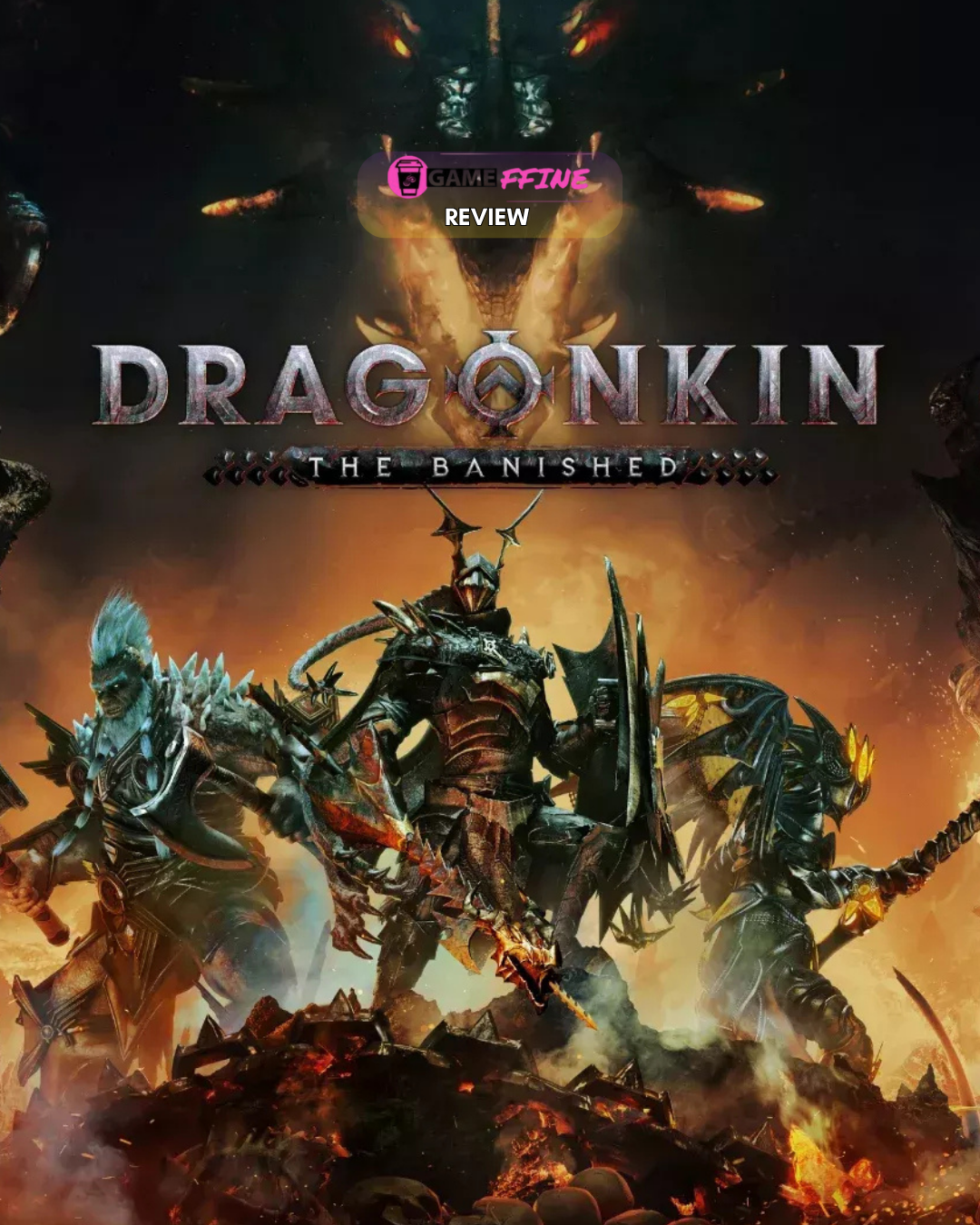




Here’s Jay presenting Gameffine’s Dragonkin: The Banished review
Avid Gameffine readers know how hyped I was for Eko Software’s Warhammer: Chaosbane (check out our review). It came out at a time when I was riding the Warhammer train hard by clocking thousands of hours into Vermintide 2. It was also Warhammer’s first foray into ARPGs. Who wouldn’t want a piece of that? But alas, it all came to an end when I actually played the game. Chaosbane ended up being a shallow and compromised experience, both in terms of content and design.
Seven years after the fact, Eko and Nacon are back with yet another ARPG. Through Dragonkin: The Banished, they’re testing the ARPG genre once again in a totally new IP. Unlike Chaosbane, Dragonkin launched in early access last year and hit 1.0 on March 16, in a jam-packed release window stuffed with games like Slay the Spire 2, Resident Evil: Requiem, and Crimson Desert, of all things. It wouldn’t be an understatement to say that Dragonkin flew under the radar of many RPG fans. Combine that with the news of their publisher Nacon going under, and yeah, things haven’t been smooth for the peeps at Eko. On a positive note, Dragonkin turned out to be a fine game, perhaps Eko’s best since How to Survive.
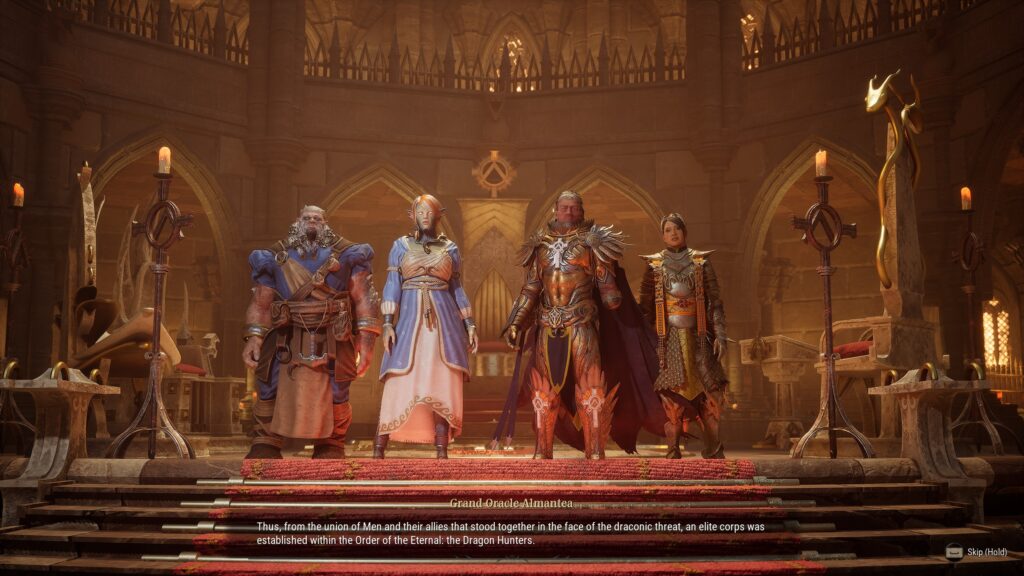
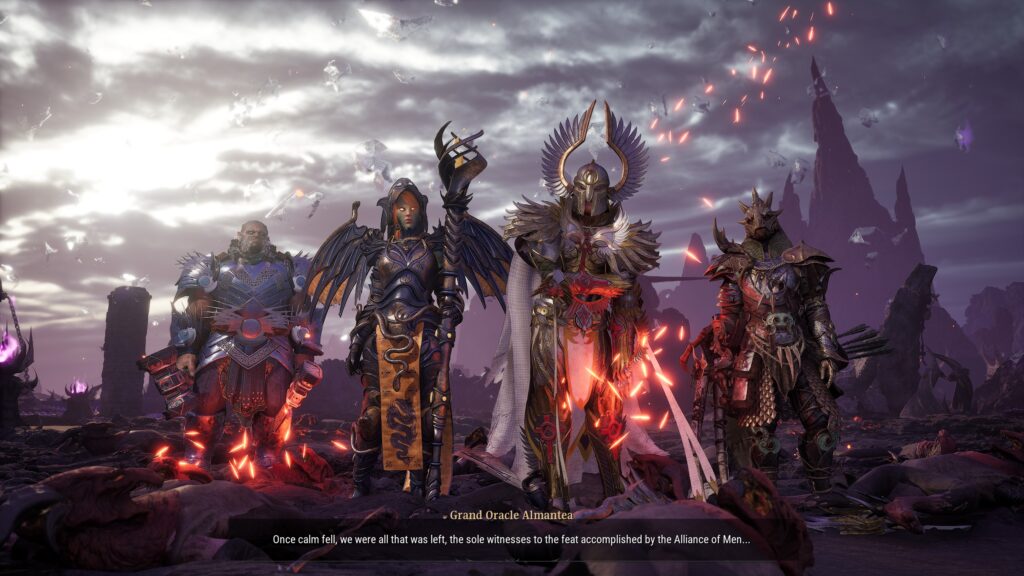
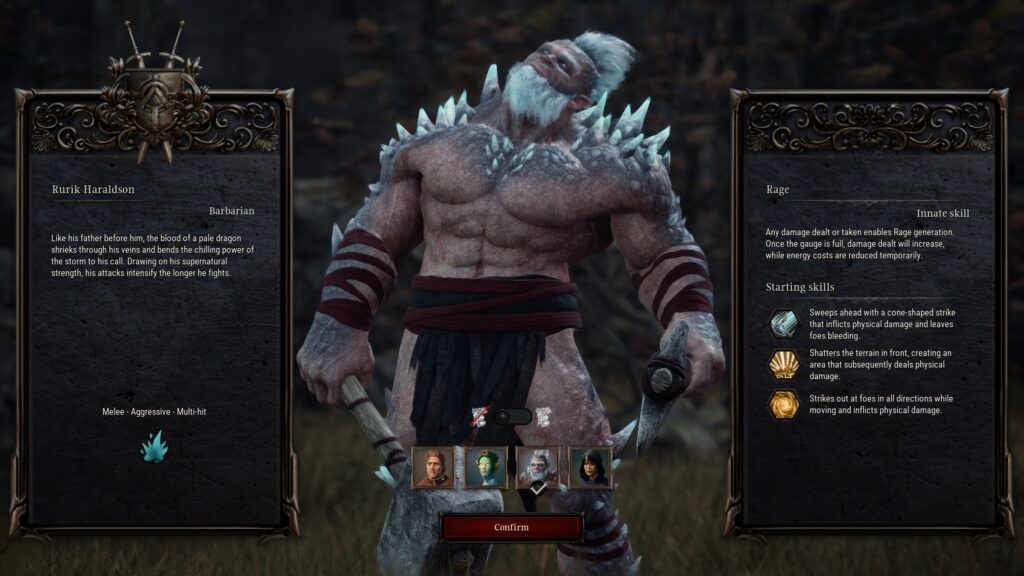
The story of Dragonkin: The Banished is basically Diablo, but Diablo is replaced by ancient dragons. Dragons and their minions rise up and plan to overtake the world, and heroes from different factions/kingdoms rise up to the occasion. Time is a flat circle. You get to play as one of four different factions, mimicking the game’s classes. There are the Knight and Barbarian focusing on oonga boonga big stick melee and the Oracle and the Archer dishing out damage from afar. The story is your typical “chosen one saves the day” stuff, but that’s the case for 90% of ARPGs out there.
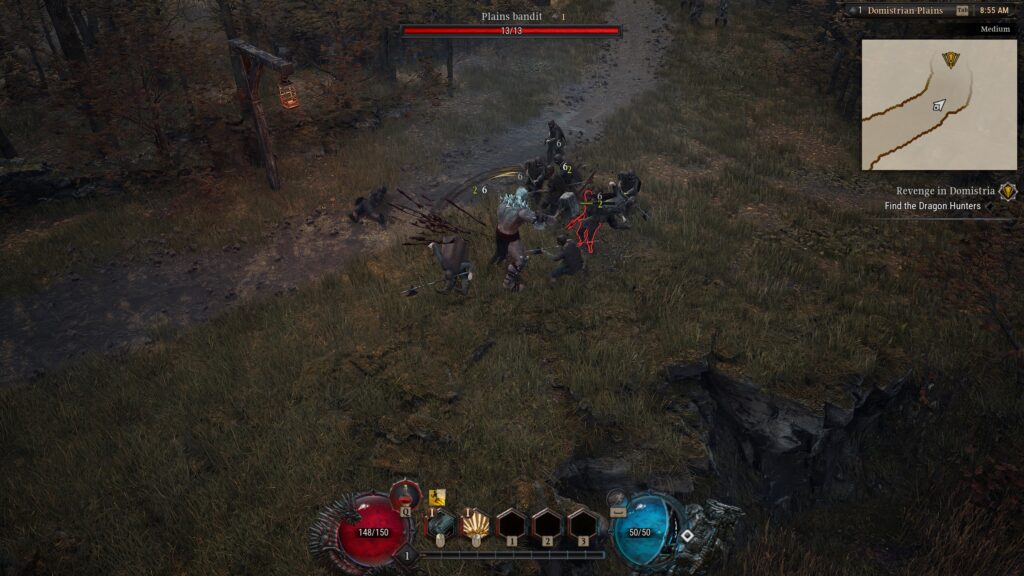
The prologue of the game does a great job of presenting the classes. This glorified tutorial lets the player try out maxed-out versions of each character before committing to one. You’ll be one-shotting your way through hundreds of cannon fodder mooks to get the lay of the land. As one would expect, each of the classes plays vastly differently from each other and gets an ample amount of class-specific gear and skills to experiment with.
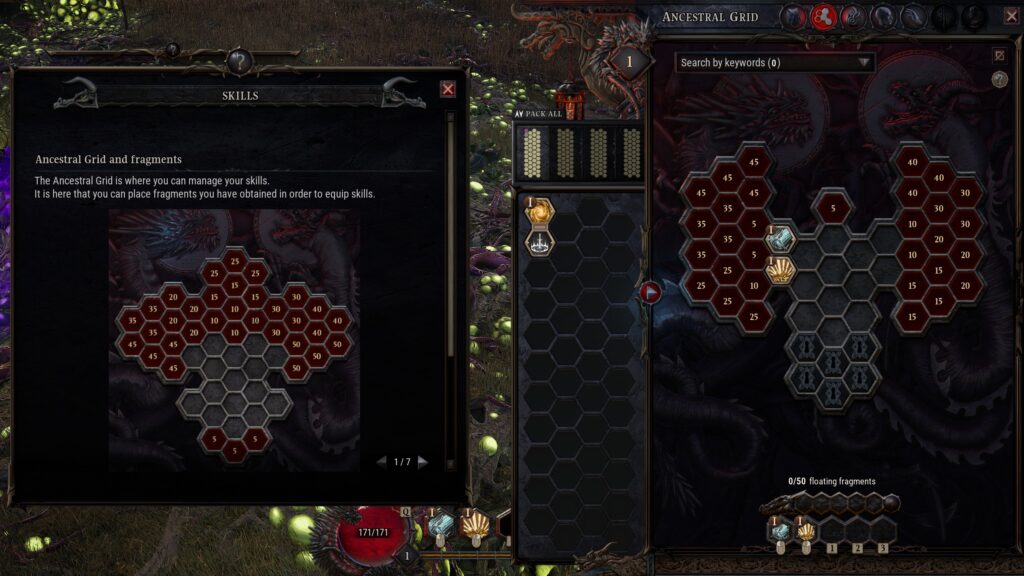
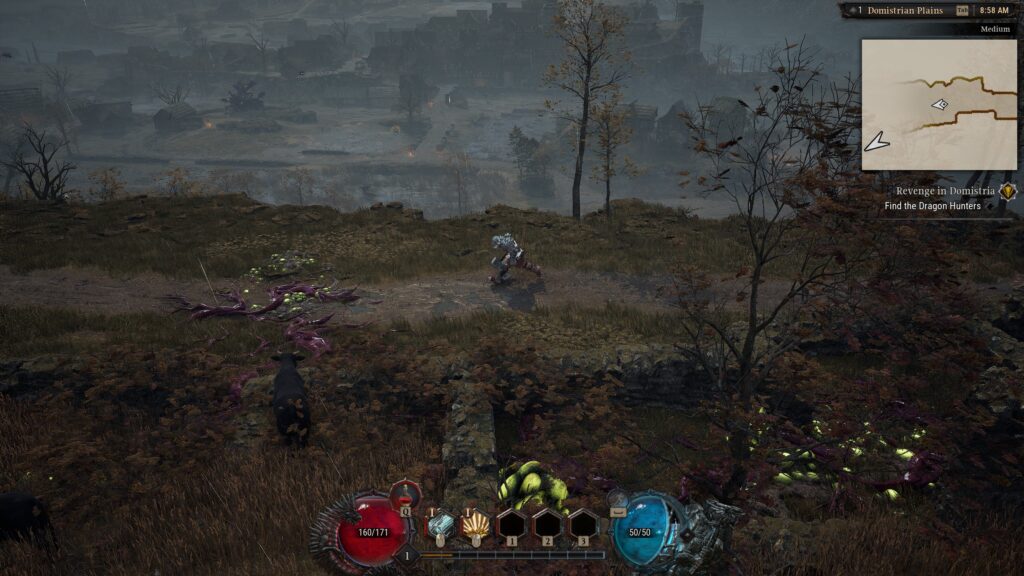
What separates Dragonkin from Chaosbane is that the combat actually feels good and responsive. There are tonnes of skills to mess around with for each class. Dragonkin is not a mere Diablo clone and does enough to stand on its own scaly feet. For example, while you still level up, skills are acquired as loot and can be placed in a grind, and you can attach modifiers to them or rearrange them as you please, resulting in different types of synergies and optimizations. You also have a pet, a wyrmling that has its own set of attributes and skills. alongside your own. The core gameplay follows a familiar loop: clicking on enemies to dispatch them in satisfying ways, collecting loot, upgrading your characters, and repeating the cycle.
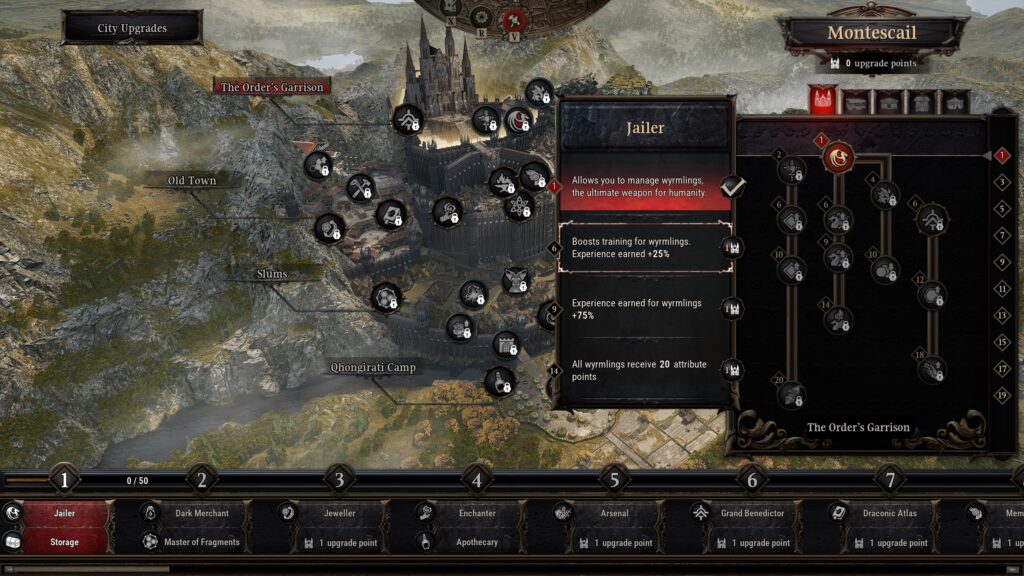
Another unique aspect of Dragonkin is its city-building mechanic. The last bastion of humanity functions as your base of operations. You are given the choice of upgrading several elements of the city throughout the campaign, which results in an extra layer of progression and a slew of upgrades. Pretty neat stuff and a nice change of pace from all the killing and pillaging.
The main campaign is quite lengthy, and it took me roughly 20 hours to get it sorted. Taking Chaosbane’s criticisms to heart, the maps in Dragonbane are massive, sometimes to the degree of “unnecessarily so.” The missions can feel monotonous at times, but that’s how it is with this genre. Similar to Chaosbane, the difficulty creep is not very linear and has spikes here and there. There’s, of course, the endgame content, which I admit I did not see in its entirety. The cream of the crop is the presence of 2-player split-screen couch co-op. Gotta give props to a developer who supports local co-op.
Real Talk
Dragonkin: The Banished is no Path of Exile or Grim Dawn, and it doesn’t need to be. Instead, it stands as a clear improvement over the studio’s previous effort. The combat feels solid, and there’s a substantial amount of content to dive into for its $24.99 price point. With the foundation in place, Eko Software seems poised to only improve further from here.
FINAL SCORE: 77/100
