



The golden age of crowdfunding RPGs has come and gone, giving us some modern classics like Pillars of Eternity, Grim Dawn, and Underrail, while also leaving behind a few titles that didn’t quite live up to expectations (Dead State, anyone?). There are also a few that didn’t remain in collective memory, confined to niche circles. The two-person development house Whalenought Studios’ 2015 Serpent in the Staglands is one of those RPGs. It wasn’t a great CRPG by any means, plagued by balancing issues and bugs throughout its life. The duo’s second venture, the cyberpunk tactical game Mechajammer, didn’t impress either. But you know what they say- third time’s the charm. In the case of Whalenought (now going by Hannah and Joseph Games), this certainly seems to be the case. Banquet for Fools, their third game and a spiritual successor to Serpent in the Staglands (which in turn is a spiritual successor to Darklands), seems to have not just hit the right notes but gone above and beyond to become one of the most unique CRPGs in recent memory.
After extensive refinement and content updates, Banquet for Fools is set to leave Early Access on March 5, 2026.
Million Bucks Visuals
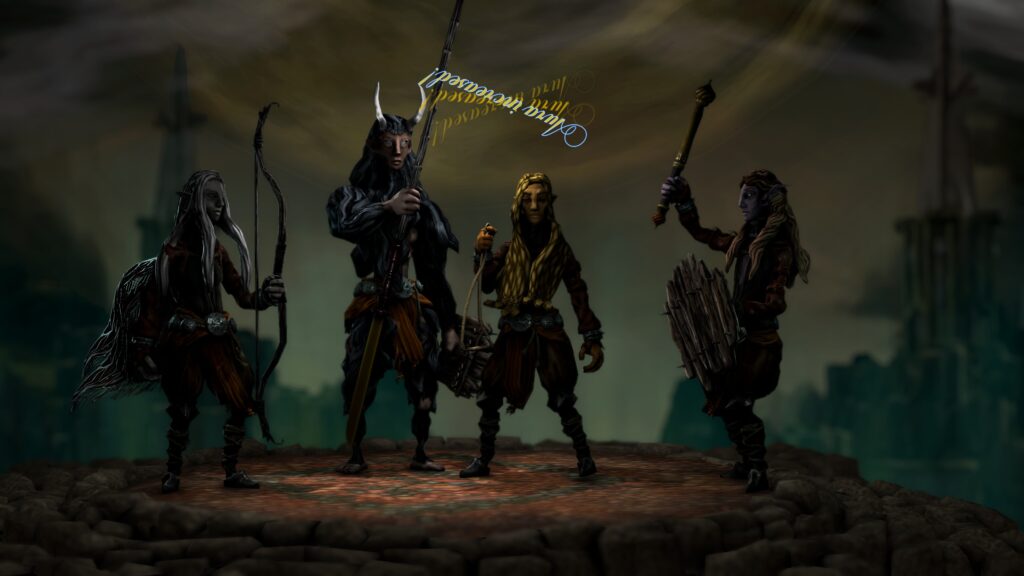
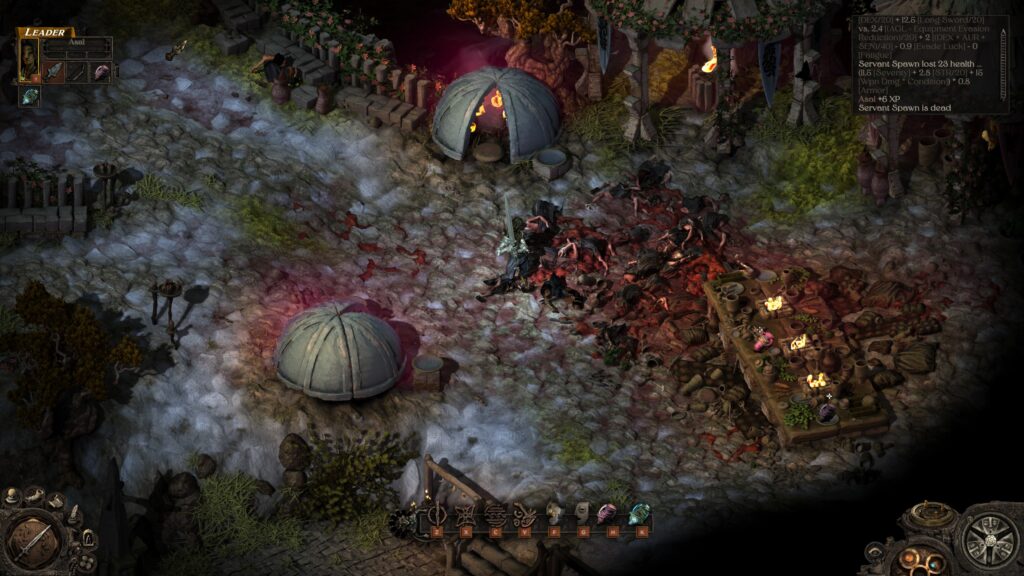
One look at Banquet for Fools‘ Steam page, and the first thing that grabs your eye is the art style of the game. Developers Joseph and Hannah blend high-quality pre-rendered backgrounds with claymation-inspired 3D models on top of a Bronze Age-inspired pagan fantasy world. The result is a gorgeous-looking game that’s alien, melancholic, and above all, dynamic. The last time I was impressed with the visuals of an RPG was when I played No Rest for the Wicked. Banquet for Fools is another testament to the fact that art design>graphical fidelity.
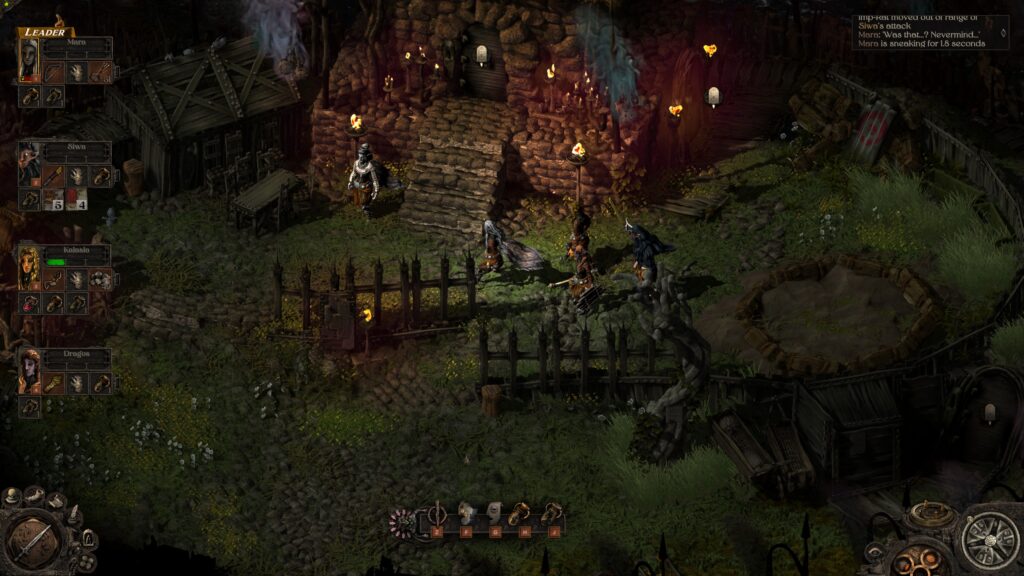
It’s not just the art style that makes Banquet for Fools stand out. From the main menu to the UI elements, everything is highly stylized like the cover of a leather-bound medieval tome or a reliquary. For lack of a better description, it straight up looks like a million bucks. The downside to having extremely detailed, well, everything, is that it gets hard to spot tiny things in the environment, and makes reading a bit hard on the eyes. But this is one case where I’d prefer style over functionality.

Callback to a Bygone Era
There are games that “claim” to be old school, and there are games that actually “are”; Banquet for Fools belongs to the latter category. Like its predecessor, Banquet for Fools is made with veteran RPG aficionados in mind. So much so that the game may seem very unwelcome and hostile to the uninitiated. In fact, the idea for the game was derived from a planned expansion to Serpent in the Staglands titled A Fool’s Banquet. In time, it became its own thing with a new story, new gameplay mechanics, and a different take on a familiar setting.
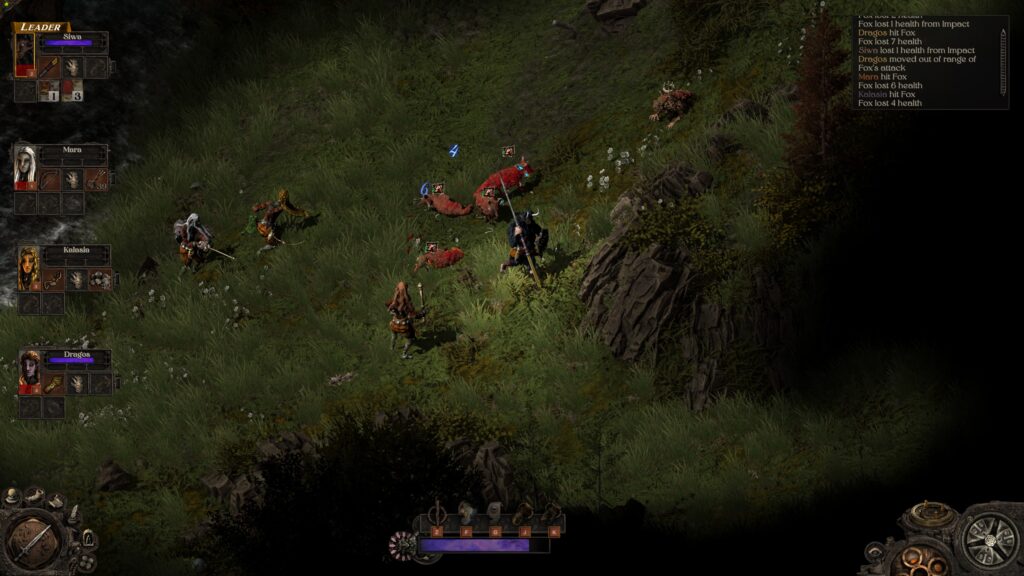
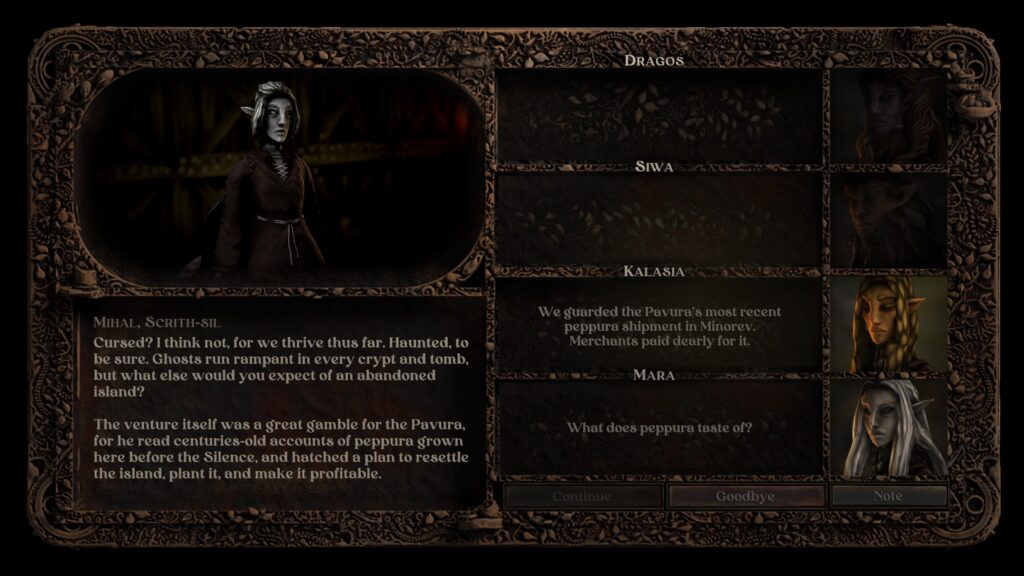
Set in the same universe as Serpent in the Staglands, Banquet for Fools focuses its attention on the newly-charted island of Invimona. You play as a party of four Vollings, a species that turned to Paganism after being shunned by their patron gods. Taking up the guard duties of a powerful Volling lord, your party is tasked with investigating a curious case of an entire village going missing overnight. Rather than sticking to high fantasy genre tropes, the focus here is on exploring relatively grounded folk myths and traditions. Along the way, your party will be asked to assist neighbouring settlements and eventually happen upon the remains and mysteries of a civilization long gone.

As with its predecessor, Hannah and Joseph nailed the otherworldly atmosphere by backing it up with unique lore carrying over from Serpent, sharp writing, and music that blends authentic medieval lyre and electronic beats. I have not completed the main story yet, but so far, it’s been pretty engaging, with the mystery of the disappearing village kept wrapped. I really loved how each of your generated party members gets to give their input while conversing with NPCs. Usually, player-generated party members have the personality of wet paper, but there is no single “canon” companion you are required to choose to experience the narrative at its fullest.
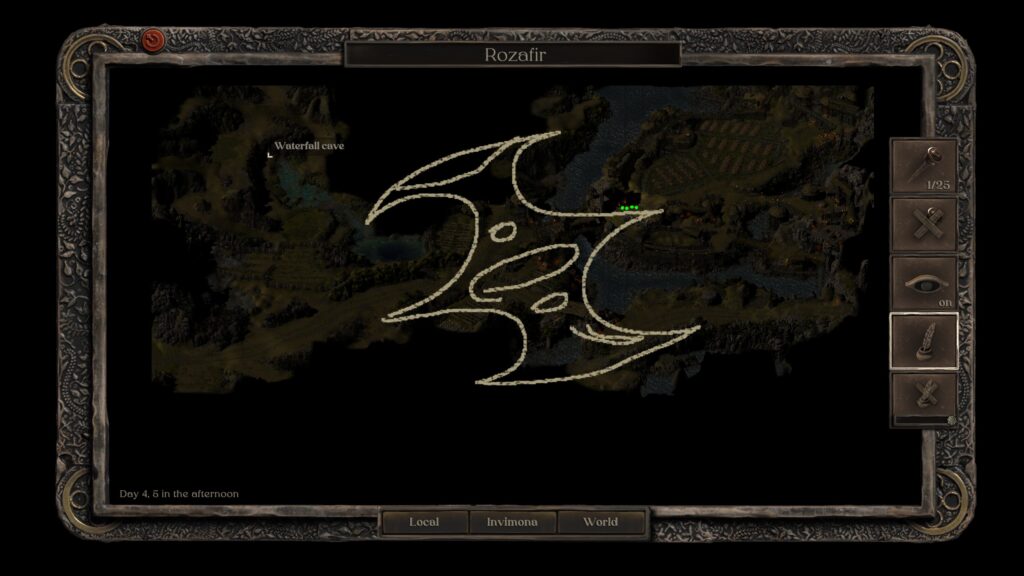
While Banquet for Fools is described as a “party-based beat ‘em up RPG” by its creators, its approach to role-playing is something that we haven’t seen in a while. For starters, there is no quest log or pointers on the map showing you where to go. Dungeon maps are crude at best and “wow, this is vague” at worst. But what it does give you is a customizable journal to keep track of quests, conversations, events, and important NPCs. The Map is also customizable with pointers, notes, and even a sketch tool useful to mark routes. I just love it when devs go the extra mile.

Banquet for Fools expects you to think critically, commit details to memory, and recall past events without constant hand-holding. Obviously, this approach won’t go down well with everyone. Modern gaming conveniences, combined with the pace and pressures of everyday life, often make it difficult for many of us to fully embrace such purist design choices. I understand both sides of the debate: those who appreciate the absence of traditional quality-of-life features and those who find that very lack frustrating. Personally, I embrace the game’s unapologetic attitude and its commitment to preserving a gameplay style of days past. Fortunately, the developers haven’t held back when it comes to tooltips. They’re abundant, and their presence is crucial to making the experience enjoyable.
Banquet for Heroes
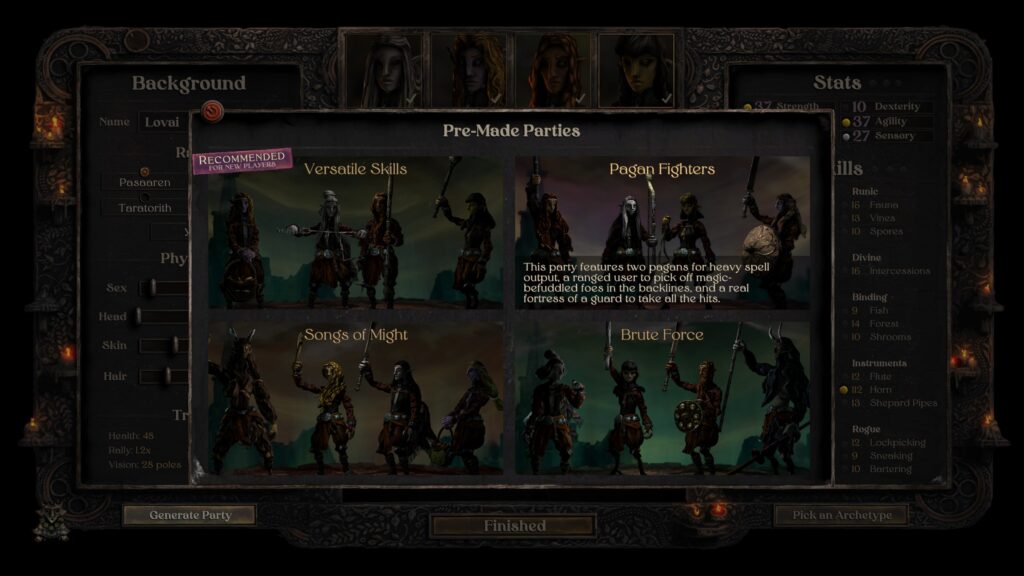
Banquet for Fools is a systems-heavy game, using an original ruleset. Character creation is a daunting task, but the devs give you the option to pick four different pre-made parties. Unlike the pre-made characters from most RPGs, these are pretty well-balanced. But you can also make your own from scratch. Customization options like race and sex can affect the six starting attributes. Similar to Fallout’s tag skills, you get to select two stats and two skills as gold and one attribute and one skill as silver. The gold stats and skills get a larger bonus, and the silver ones get a lesser bonus. This doesn’t lock you out of the other class options. These only determine your starting stats and items. Because leveling up works somewhat similarly to Morrowind. When leveling up, you get multiplier bonuses to the skills that were used the most, but points can be allotted as you wish.
As for skills, there are plenty of options at your disposal. Weapons like longswords, short swords, scepters, slings, bows, darts, etc. are available, and smaller weapons can be dual-wielded or used alongside a shield. What’s peculiar here is the magic system. S
Because the game draws deeply from pagan culture, its magic feels grounded and practical rather than overtly spectacular, as is often the case in other fantasy RPGs. This form of magic is closely tied to nature, focusing primarily on summoning and disabling abilities instead of grand, destructive displays. One particularly compelling feature is the ability to customize spells, reminiscent of the older Elder Scrolls titles.
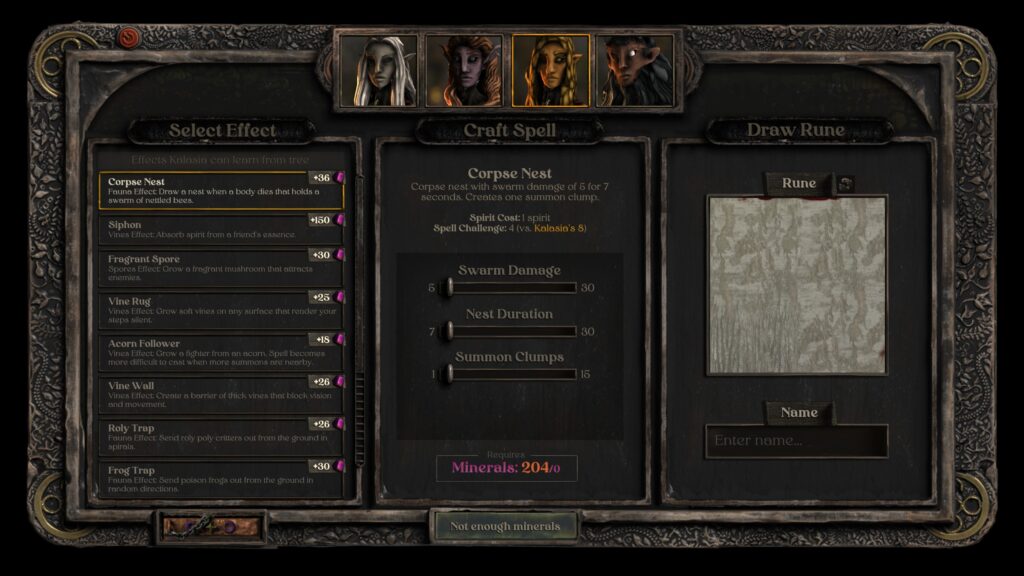
Moreover, songs are also available, separate from the magic system. They work similarly to the chants from Pillars of Eternity here; specific conditions must be fulfilled for their passive effects to activate. Beyond these systems, Intercessions allow players to craft personalized holy items for each character, requiring winning over the favor of feuding pagan gods. The abundance of tooltips certainly helps in grasping the underlying layers of the multitude of game mechanics.
Fighting the Good Fight
The combat in Banquet for Fools is real-time with pause…kind of? Unlike the combat system from Infinity Engine RPGs, this one is more similar to the hybrid combat system from Parasite Eve. The game is party-based, with the player being able to control one character at a time but free to switch as they will. This character acts as the party leader and must be micromanaged completely. Combat is centered around the pause bubble and an action bar. Every time an enemy is to be targeted, clicking the right mouse button pauses the game and pops up a bubble called the combat dome. Enemies within the dome (the size of which is determined by weapon reach) can be selected for attack. However, each character has an action bar that must fill before they can take an action (the rate of which is determined by weapon speed). Once the bar is filled, enemies can be subjected to attacks, spells, and special moves. When the bar is recharging, the party can move around freely, as well as press space to dodge or block incoming attacks. Spells, on the other hand, also need mana to be cast. Mana can be replenished using items or by killing enemies.
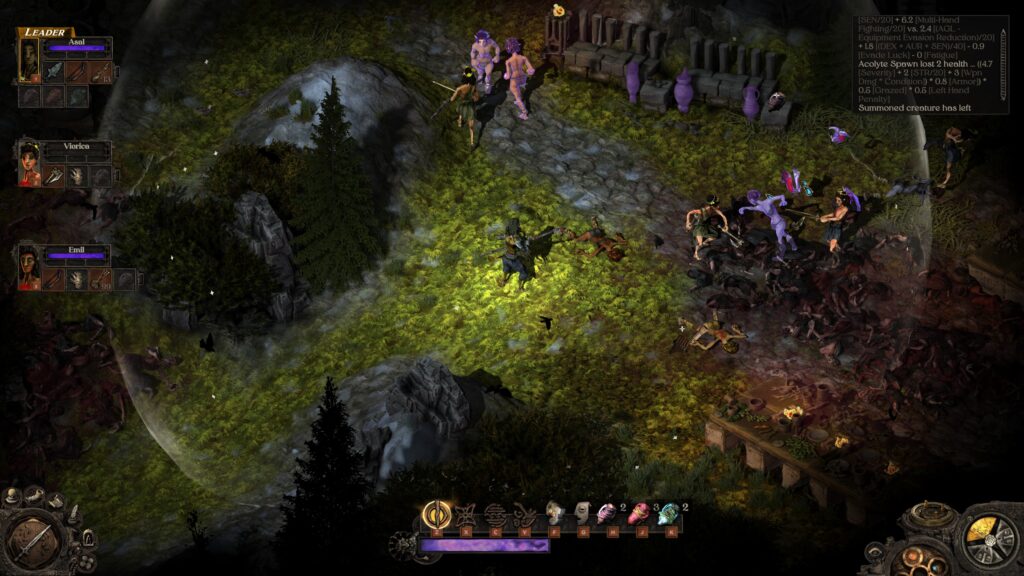
The combat system is distinctly unconventional and requires some time to fully grasp. Unlike most real-time-with-pause (RTwP) frameworks, this one feels far more dynamic and places greater emphasis on player agency. The developers aptly describe it as “a team brawler,” where combat is not about standing idle, auto-attacking, and waiting for turns to resolve. Instead, players are encouraged to stay actively engaged, coordinating synergistic abilities and adapting team tactics in the flow of battle. Status effects like fatigue, pinned, and knocked down play a significant role in battles, and you’ll always be looking to exploit the hilariously overtuned ragdoll physics.
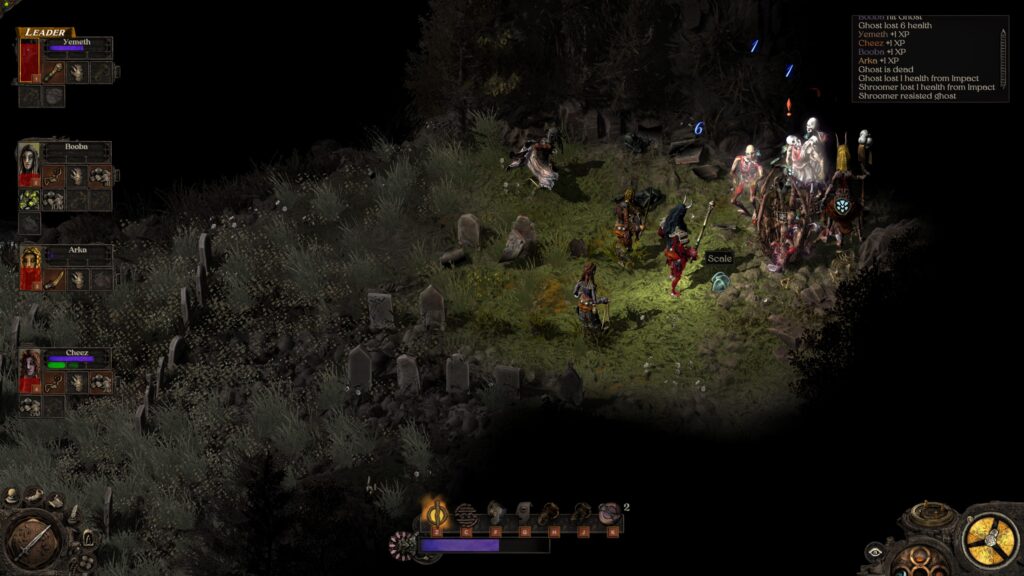
The flow of such a combat system, taking place in real time, is that everything tends to get chaotic. It’s very manageable when the enemies are few in number. But when the party is engaging a large number of foes, it’s hard to micromanage party members, especially since all have different action bars and have to actively evade attacks. I found that the best course of action is to assign unlockable formations to party members and manually control just one character. There is also a tactics menu reminiscent of Dragon Age: Origins, allowing players to predefine party behavior. However, its options are quite limited, and in my experience, the AI frequently disregarded the preferences I had set. The fighter AI is also unreliable, as I constantly found my AI companion just running around doing nothing while the rest of the party was getting wiped.
Across Land and Sea
Staying true to CRPG traditions, the exploration in Banquet for Fools is very rewarding thanks to secrets, unique loot, and even some puzzles. While the maps are separated by loading screens, it’s basically a single interconnected landmass. The result is a strong sense of continuity, as if you are traversing one cohesive world rather than moving between isolated zones. There is plenty of loot and interesting locations to discover, provided you’re ready to take on challenges. Fast travel is limited to a single method: paying boat captains to ferry you between locations. Though later on, you acquire your own boat. Sea travel enables your party to move more swiftly across the map, return to settlements with greater efficiency, and eventually portage to mid- and high-level islands. I do wish the game had the QoL option to increase game speed that’s present in both Pillars of Eternity and Swordhaven. Lightly spriting across huge maps gets irksome after a while.

The game is very challenging, especially at the early levels, and your party will be constantly running back and forth between hubs to heal and to replenish items. The starting economy is also not kind to the player, and even having 100+ Bartering skill doesn’t help. Strangely, the Bartering skill influences only purchase prices and does not affect selling value—a design choice that feels counterintuitive and perhaps worth reconsideration. For some reason, running is disabled in towns. This becomes especially tedious when traversing larger settlements like Rozafir, where the slower pace makes routine navigation feel unnecessarily drawn out. Resting outside towns also uses up blanket rolls, forcing you to either stock up on them or run back to the nearest town to heal. Curiously enough, there’s no real penalty for dying. Incapacitated characters get up once combat is over or once you get far away from enemies. There’s no difficulty setting to tweak either, something that’s very common in CRPGs. Due to its polarizing nature, I highly suggest you check out the demo before committing.
Real Talk
Banquet for Fools demands patience, attention, and a willingness to meet it on its own uncompromising terms. Its punishing difficulty, and occasionally unruly AI can frustrate, but they exist within a world brimming with a unique identity, deep systems, and genuine ambition. It won’t be for everyone, but for those willing to embrace its design philosophy, it offers something increasingly rare: a demanding and boldly distinctive adventure that holds its own alongside the genre’s most celebrated heavyweights.
FINAL SCORE: 90/100
Banquet for Fools
Banquet for FoolsThe Good
- Gorgeous art style and animations
- Truly oldschool sentiments
- A huge, handcrafted world with a unique combat system
The Bad
- The lack of QoL functionalities can be bothersome at times
- Combat can get a bit too chaotic