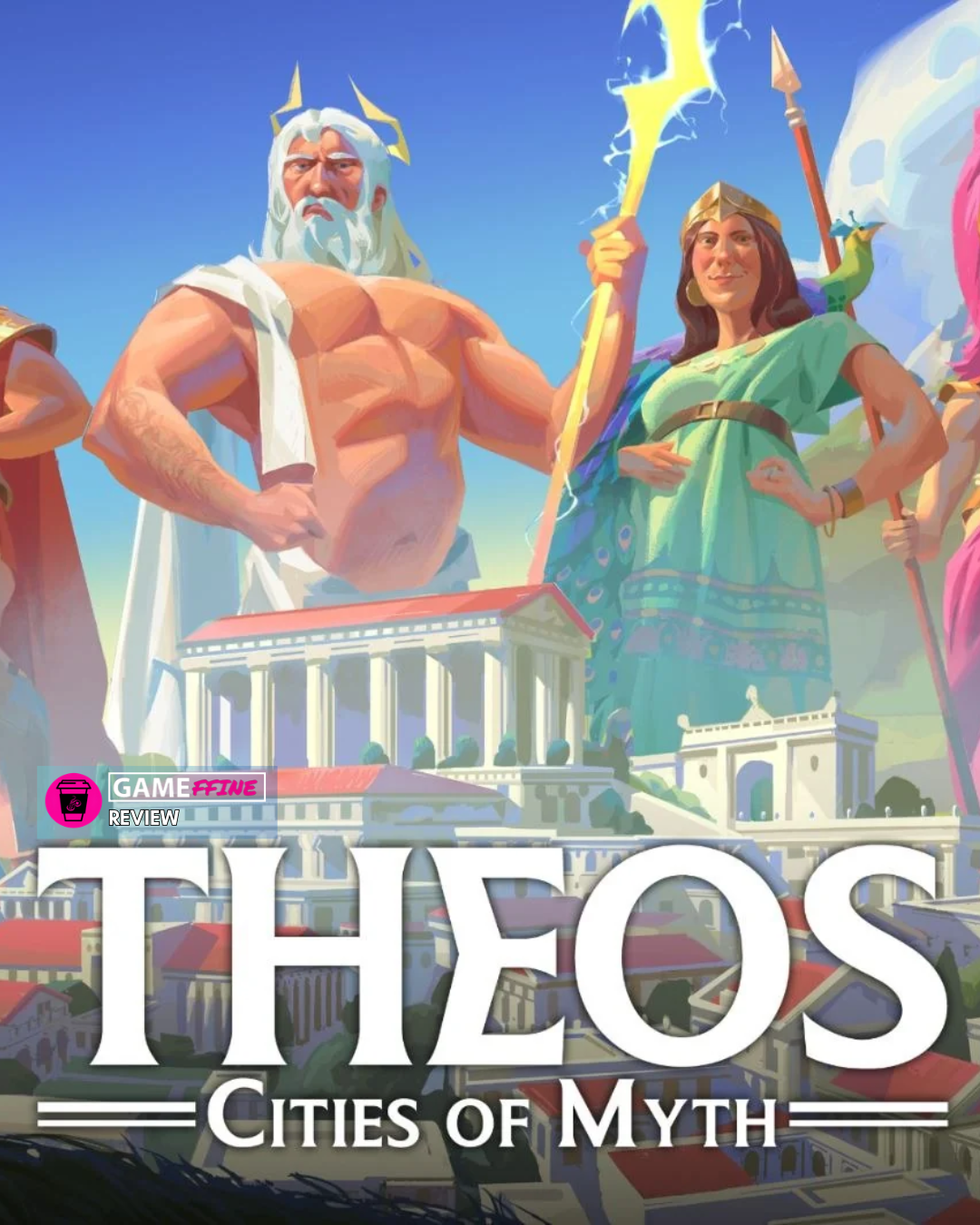



A few good games managed to come out this year. Strategy and simulation didn’t get much love and have been in steady decline for most of the year. With Dawn of War IV delayed to the trenches of December, the year had a few sparkling indie releases, but nothing has hit the wall quite as hard as Anno 117: Pax Romana. It’s fairly recent, only that a city-building game with some amount of juice came out. Theos: Cities of Myth comes from the developers of the Pharaoh franchise, and is built with a more…..global pantheon in mind.
Theos: Cities of Myth allows one to create and manage large cities in the ancient era, blessed by the Gods themselves. The game is developed by Triskell Interactive and published by Dotemu, the same publisher behind the famous Pharaoh franchise. The game came out for the PC on Nov 4, 2026.
A Delicate Balance of Mortals and Myths
Theos: Cities of Myth borrows heavily from the Pharaoh franchise. Dotemu getting involved with the publishing process did mean that some artistic notions are gonna rub off on the development team. Some of the animations, core mechanics, and everything does a lot like Pharaoh, but the game tries to modernise some of it heavily to attract a new audience. I’d say it borrows somewhat from Anno too, though it doesn’t seem to be obvious at first glance.
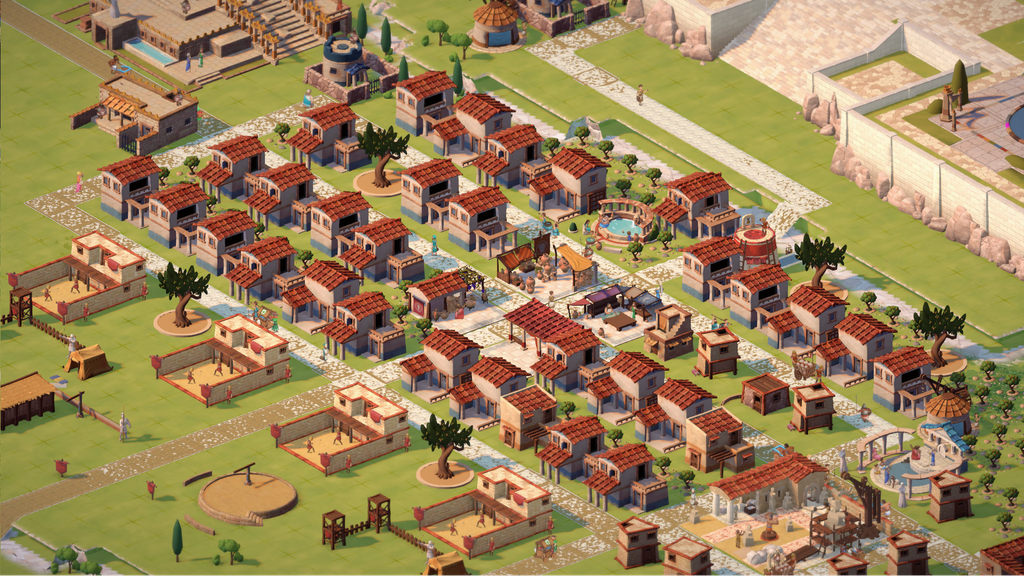
The game relies on setting up a flourishing metropolis in an otherwise derelict place. Every god has its own set of rules to build and set up its temple. Of course, this means setting up a proper settlement first – laying down some foundations for housing, some basic amenities and the like. Gradually, the ragtag band of villagers start growing into a town, and then into a city. Like most games, advancing tiers in population means their needs increase, and they need to be better taken care of. Without a properly planned arrangement, this becomes difficult as housing becomes more congested. I found myself suddenly repositioning entire blocks because I couldn’t fit public amenities within range of my new buildings.
The game also relies on production and trade of resources. This is where I feel it borrows heavily from Settlers/Anno (but more from Anno). Regions can have an abundance of a certain type of resource and a profound lack of other types of resources. Trade helps bridge this gap in resources. Prices can sometimes be an issue, and this is where skill in balancing revenue and trade gaps comes in handy. Some production chains are needed as commanded by the Gods themselves, which marks progression within a particular map and makes one move into the next. Managing production chains isn’t particularly challenging – positioning the industries well within range of a storage and the previous part of the chain is challenging. Just like Anno, positioning matters a lot – some industry buildings can starve for resources if not close to a storage, affecting the production of the resource itself.
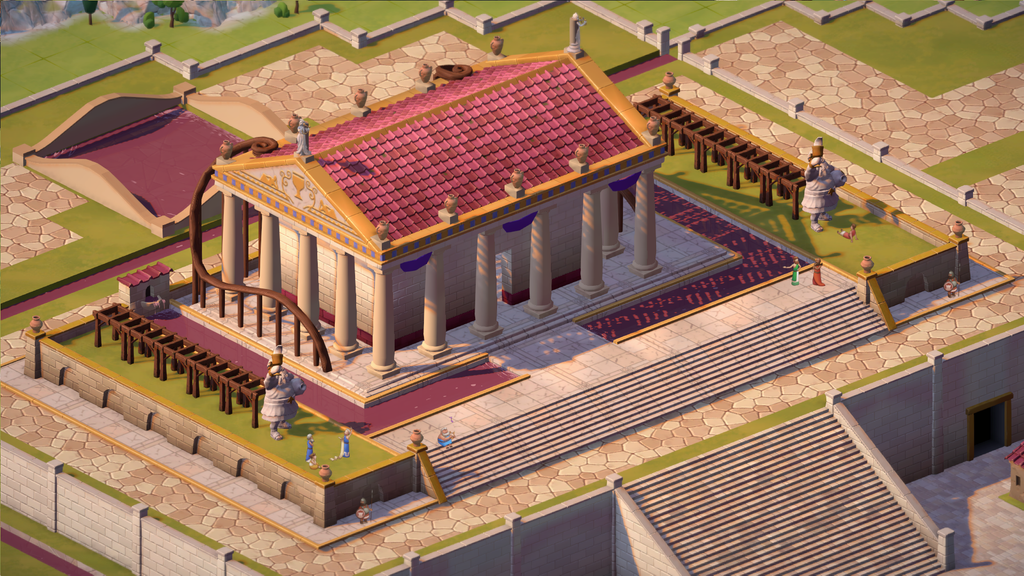
Theos: Cities of Myth won’t be so called without having some theology inside it! Most maps involve the creation of a temple where the people can pray to their deity of choice. The Gods can give further objectives before they bestow their gifts upon the citizens of the region. Different gods have different gifts – each benefitting the region differently. I found the lack of balance in the Gods’ gifts to be an issue somewhat, but it can be forgiven since it is a single-player game with a greater focus on simulation and strategy itself.
There is a small mini-game that players need to play when a battle happens. Of course, training troops is a significant part of the game itself. Troops need to be armed, fed and clothed – and sent on missions. The mini-game is similar to the war mini-game that one plays in Clash of Clans to deploy troops. Troops are deployed, and they move about defending the spot automatically. Or attack a spot. Some troops lose men when they take damage – if they take enough damage, they may flee or be taken down by the enemy.
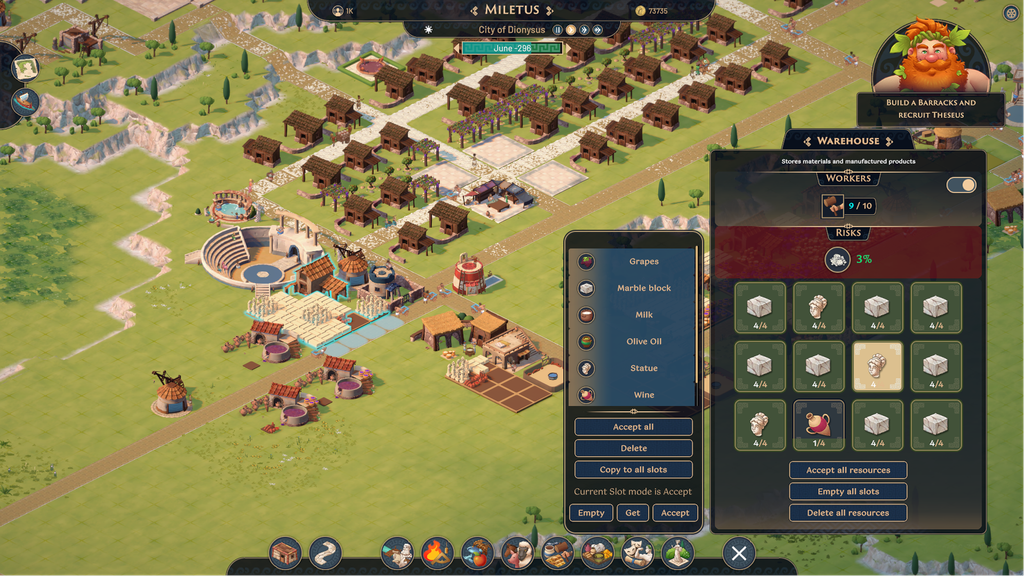
Echoes of a Mythic World
Theos: Cities of Myth isn’t built to be the most graphically challenging city-building game on the project. The artistic palette draws heavily from Pharaoh. The animations of humans moving on the streets of the region, some moving resources, others moving to render services at various places. The palette isn’t exactly intended for someone used to the three-dimensional depth processing available in most modern city-building games. However, it does a fairly good job with the 2.5D art style chosen for the project – makes it look and stand out in an otherwise congested genre.
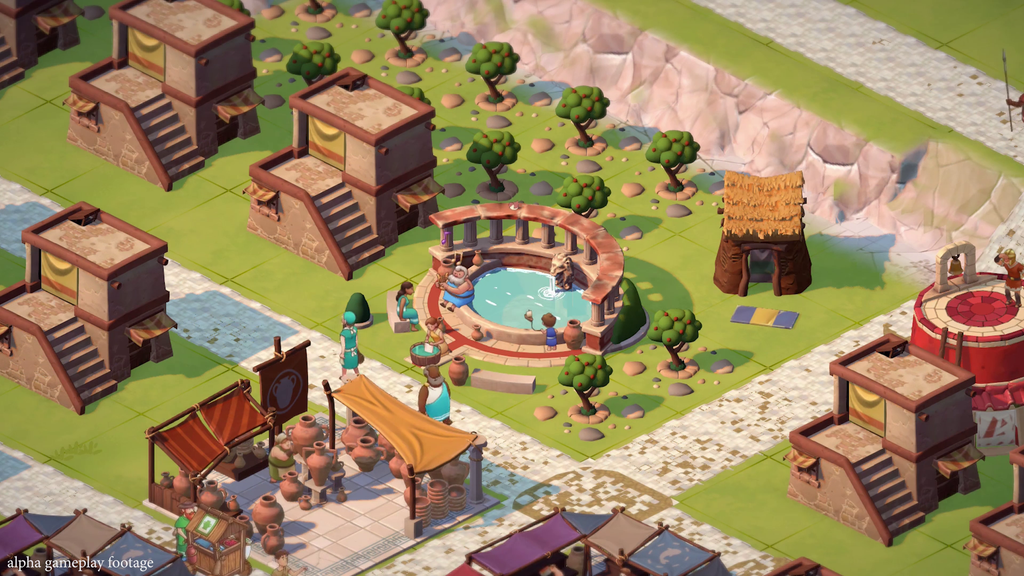
There’s a lot of stock sounds being used for the everyday sounds by the villagers and elsewhere. I feel this is one part of the game which really didn’t get enough love. There’s very little background music for me to comment on, so there’s that.
Real Talk
Theos: Cities of Myth is a love story written for the lovers of the city-building games of old. The game has a fair amount of depth, which many modern city-building games lack. I loved the strategic depth it offered – it is surprisingly deep for a modern city-building game. The choices to make as the city expands constantly need attention from the player – one small mistake and there is a need to redesign the entire city. The complexity does mean it might not be good for a newcomer to pick up – mostly someone who definitely has played a few strategy/simulation games before.
FINAL SCORE: 70/100
Theos: Cities Of Myth
Theos: Cities Of MythThe Good
- High strategic depth
- Respects player agency in city designing
- Balances strategy and simulation well
The Bad
- Not very aesthetically pleasing
- Mechanics too complex for beginners

