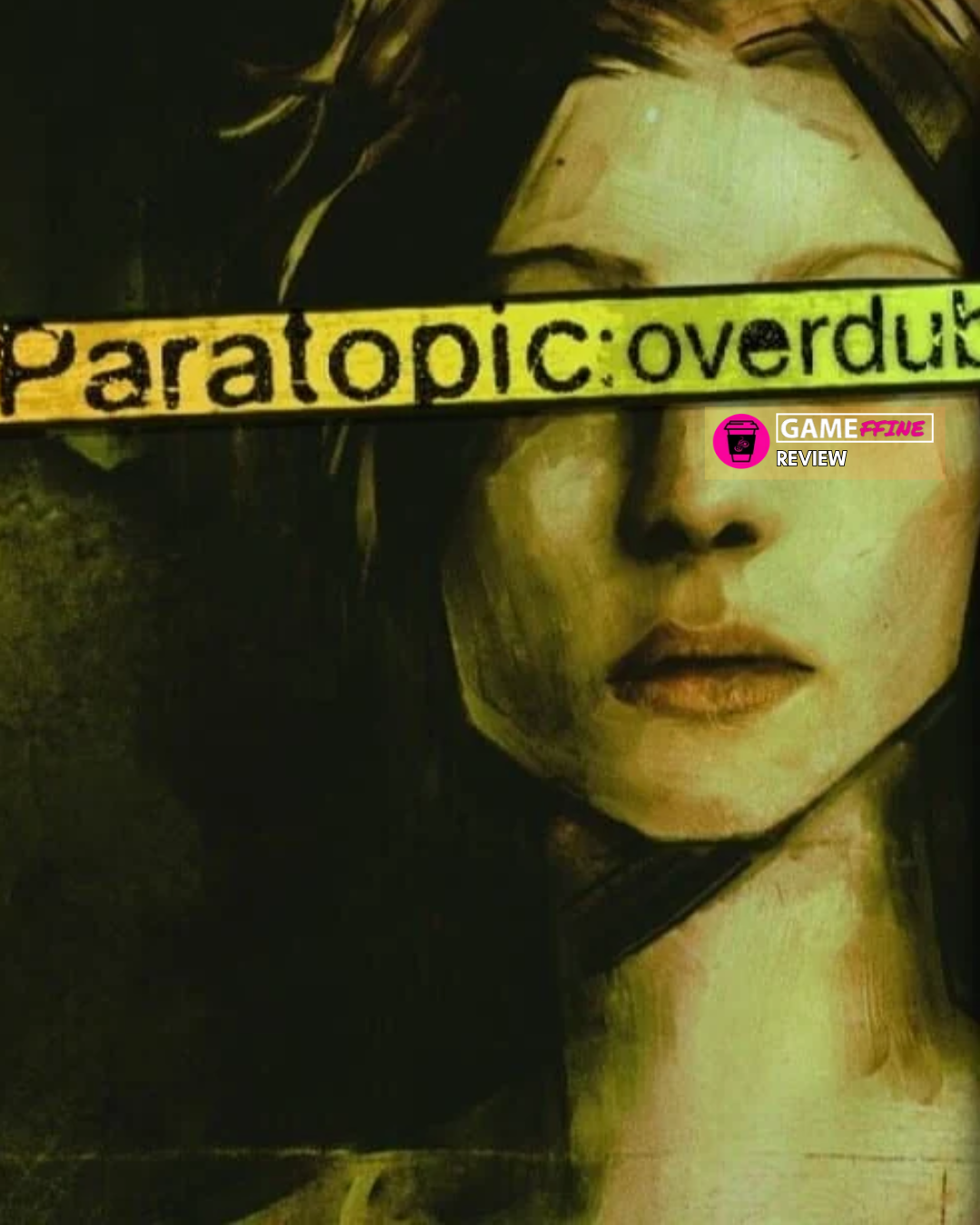



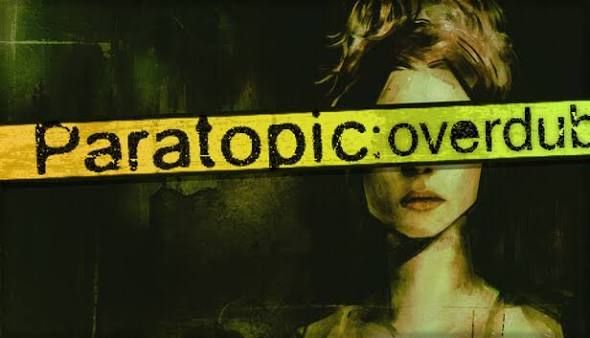
Paratopic: Overdub is a remaster, remix, and partial sequel to Arbitrary Metric’s 2018 cult classic Paratopic. Published by Serenity Forge. It expands the original’s short, surreal liminal-horror experience, which was centred on intersecting stories involving illicit VHS tapes, an assassin, a birdwatcher, and a decaying slice of Americana, while refining its low-poly aesthetic and extending the runtime. The result is atmospheric and very divisive. You are left with a fever-dream travelogue through motels, gas stations, diners, empty highways, and haunted industrial ruins that doubles the original’s length (roughly 1.5–3 hours compared to the previous 30- 45 minutes) and supplies more explicit connective tissue, at the cost of some of the first game’s pure, unresolved ambiguity. One could say it’s quite the acid trip.
The Radio of the Cassettes
The core structure still intercuts between the smuggler’s deliveries and border encounters, the assassin’s grim professional tasks, and the Birdwatcher’s fatal excursion. Events are non-linear and deliberately misleading about the sequence and identity of what you experience. Overdub expands this with new prologue material, altered scene orderings and additional driving or roadside encounters, and a substantial epilogue that tracks the assassin after the original’s climax. The neighbour becomes a recurring or transformative presence; the game leans harder into themes of contamination, poverty, and how forbidden knowledge or media can rewrite people and places. Yes, it is very eerily put together.
Every time a tape is duplicated or remade, it drifts further from whatever original signal existed. This functions both as lore and as self-commentary on the project itself. It took quite a bit of my brainpower to understand what was happening, but the result is more explanatory than the 2018 original without ever becoming fully coherent. Players who wanted answers or expanded lore from the original will find satisfaction in what it delivers.
Themes of surveillance, illicit industry, rural decay and the addiction-like relationships to the tapes remain intact. The game still feels like a Lynchian road trip through a cursed backroad America, now with more explicit cosmic/angelic undertones in places.
Through the VHS Filter
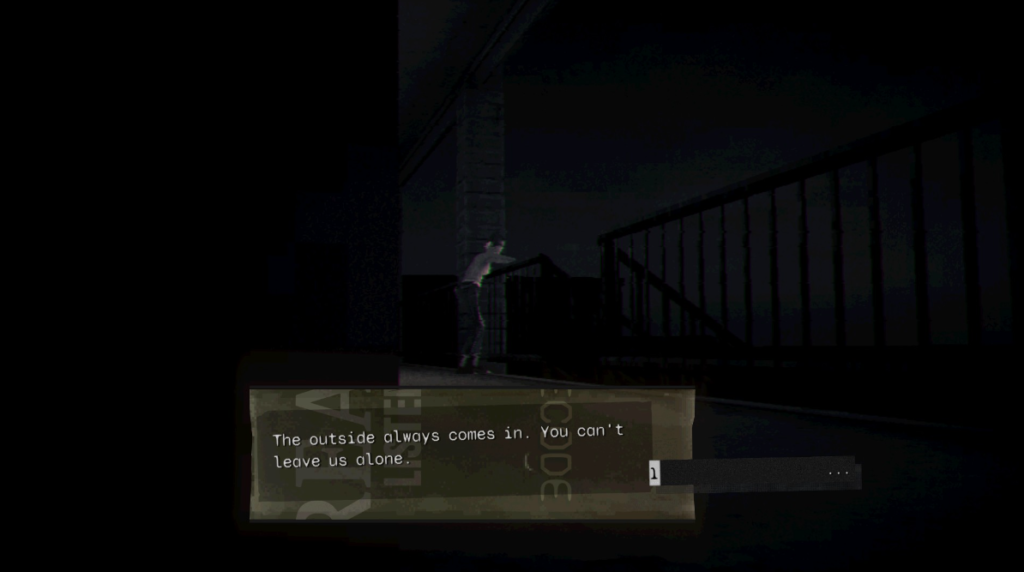
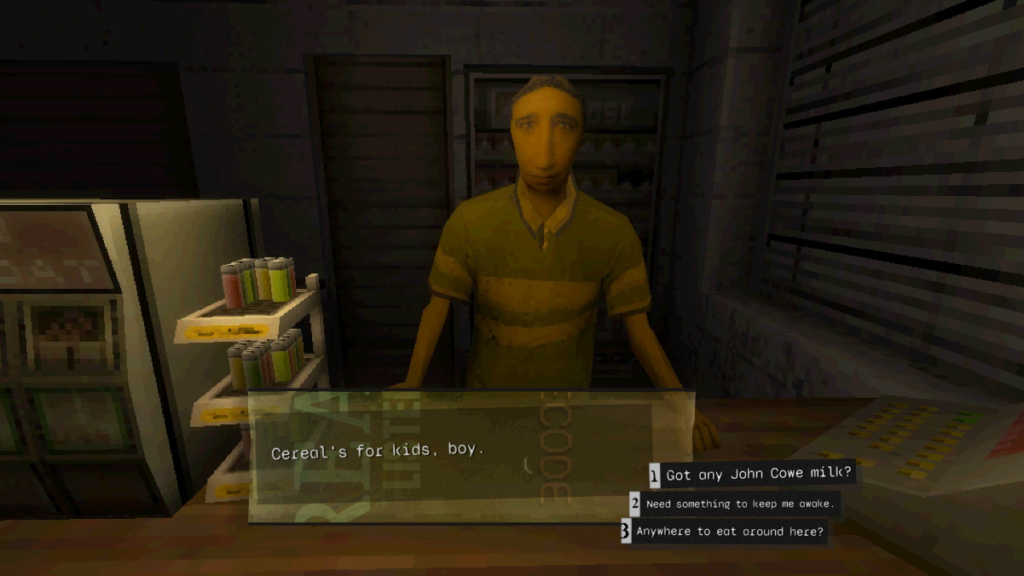
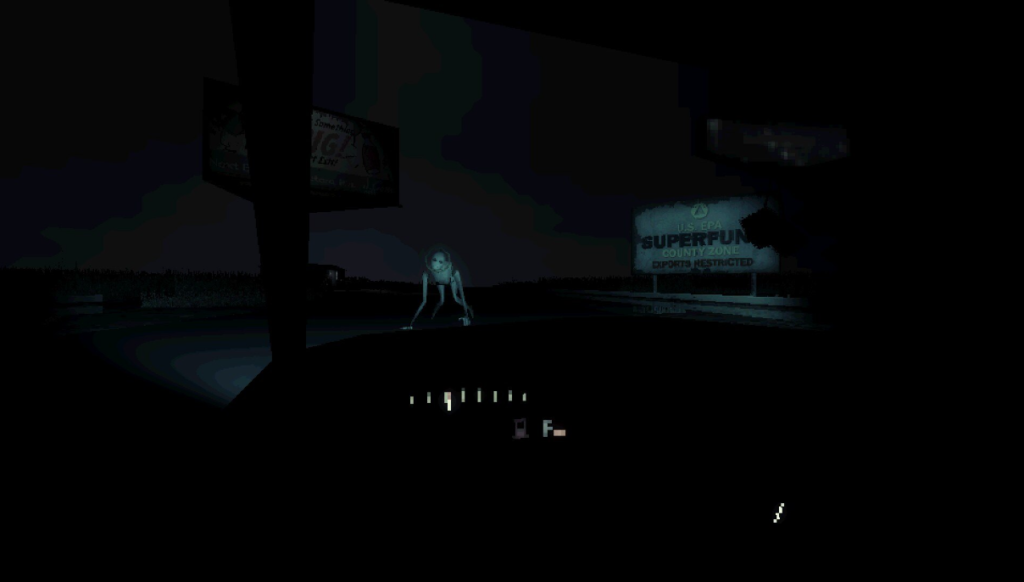
Atmosphere remains the game’s strongest asset. Eerie like the first, the world still feels like a nicotine-stained, post-industrial American skeleton with empty highways at night, fluorescent diners staffed by off-kilter clerks, motels with static-filled televisions, gas stations in the middle of nowhere, and forests that hide forbidden industrial ruins. Something is wrong with the land itself. Characters allude to sickness, poverty, and a Superfund-like contamination tied to a power company.
The low-poly style is kept but definitely updated. Textures are sharper, models are more complex, animations are improved, and lighting feels more deliberate. The result is still deliberately polygonal and dreamlike rather than conventionally pretty, though sometimes the cleaner presentation softens the original’s oppressive “contaminated” feel.
Overdubbed Nightmares
Sound design and music continue to carry enormous weight. Lazzie Brown’s score is glitchy, textural, anachronistic pads and synthesis that evoke a haunted recollection of 1990s game soundtracks. It creates a subtly dynamic soundscape that does much of the heavy lifting for uneasiness. Conversations remain a highlight and a point of contention. The original’s awkward, funny, or nonsensical exchanges could leave players unsure whether a character was joking, threatening, or simply broken. Overdub often makes those distinctions clearer and more direct, which some may find more visceral and others subtly unsettling.
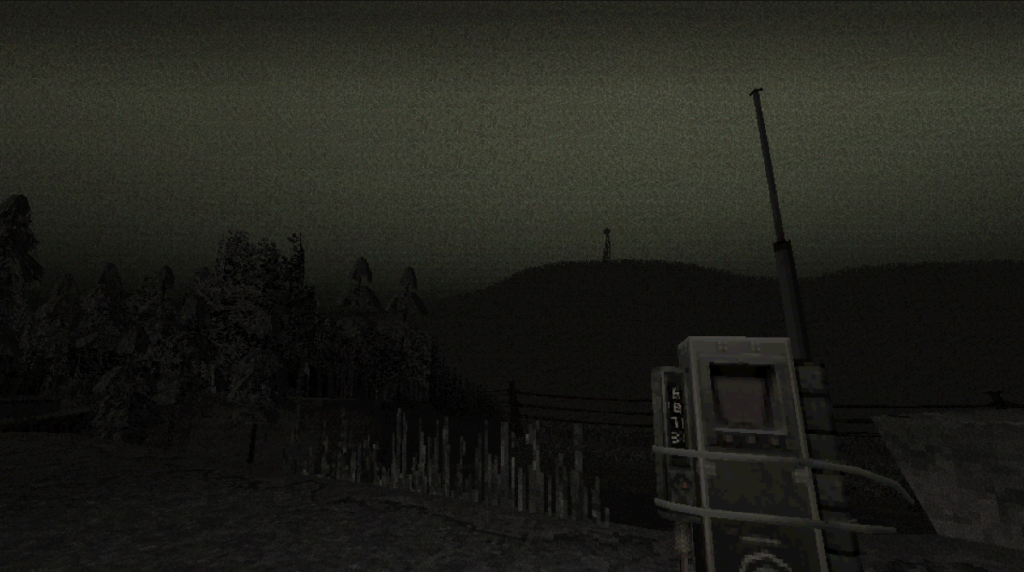
There are few conventional jump scares. The horror is environmental, psychological, and occasionally body-horror-oriented. Tapes that mutate watchers, entities that warp technology and flesh, the slow realisation that ordinary places are porous to something outside. The extended runtime allows more lingering in these spaces, which can deepen immersion for fans of the tone but risks diluting the original’s concentrated, feverish intensity.
The Cut-Up Travelogue
This is still primarily an environmental narrative/walking-simulator experience with light interaction, driving, and one or two moments of more direct action. There is little traditional challenge or puzzle-solving. The “gameplay” here is the act of moving through the vignettes and assembling meaning. The lack of a traditional save system in the initial release reinforced the one-sit, dream-like flow; though this was annoying at first, the devs finally added checkpoints to make it less time-constraining.
Pacing is the most frequently cited weakness. The original’s way of the tape made its opacity and occasional tedium easier to accept. The longer sequel contains stretches that I describe as padded or unnecessarily prolonged, particularly in the new material. What once felt like a concentrated bad trip can occasionally feel like a longer, more deliberate one that tests patience before the next uncanny image or revelation arrives.
Clearer Picture but Further from the Original
The strengths of this much-loved sequel include an unmistakable, lingering atmosphere that few short-form horror games match, a coherent expansion of a distinctive world. There is strong audio that elevates every scene and the willingness to treat the original material as living, mutable text rather than sacred and frozen. The new epilogue gives the assassin a fuller arc and lets the game explore consequences and further intrusion by the tape-related forces. For players who already loved the first game and wanted more of its specific flavour of unease, Overdub delivers quantity and variation.
As for the weakness, it centres on the tension between expansion and dilution. Greater clarity reduces the generative power of unanswered questions. Some dialogue and characterisations feel broader or more overtly hostile or jerkish in many ways. The visual polish, while objectively higher-fidelity, can undercut the original’s intentional ugliness and dream-logic degradation. Pacing unevenness in the longer runtime makes the experience more vulnerable to moments of disengagement. It is not a strict replacement for the 2018 game, but more so much as a parallel-universe reading of the same nightmare.
Real Talk
Paratopic: Overdub succeeds as an atmospheric continuation and variation more than as a pure improvement. It rewinds the tapes, looks closer, and keeps watching, discovering both richer detail and the inevitable loss that comes with every generation of its copy. The original’s concentrated weirdness remains special, but this longer, more explicit, more polished version offers a different, still compelling way to inhabit the same cursed landscape of motels, tapes, and things that should not be. It is not essential for every fan of the first game, but it is a fascinating and often effective act of self-remixing, an overdub that both clarifies and further distorts the original signal. For the right player on the right night, it remains a memorable journey to the end of the road.
FINAL SCORE: 72/100
Paratopic: Overdub
Paratopic: OverdubThe Good
- Atmosphere
- PS1 Aesthetics
- Surreal Vibes
- Soundtrack
The Bad
- Very Short
- Minimal Gameplay
- Confusing Narrative