


Fading Fantasy Brought To Life
There is no denying Final Fantasy has had some growing pains over the past 10 years. Mainline Final Fantasy games moved away from turn-based (or turn-based-adjacent) combat, relegating that style to spin-offs. But outside of Final Fantasy XIV and FF7 Remakes, they never broke out of being a shell of their former glory. The development team under Tomoya Asano, who worked on handheld FF ports, took those classic FF ideas and turned them into the Bravely Default and, later, the Octopath Traveler series. Both series gained immense popularity and a loyal following in the 2010s. The HD-2D art style (popularized by Octopath Traveler) has become synonymous with high-budget console JRPG aesthetics. Now Square Enix is bringing Final Fantasy into this approach.
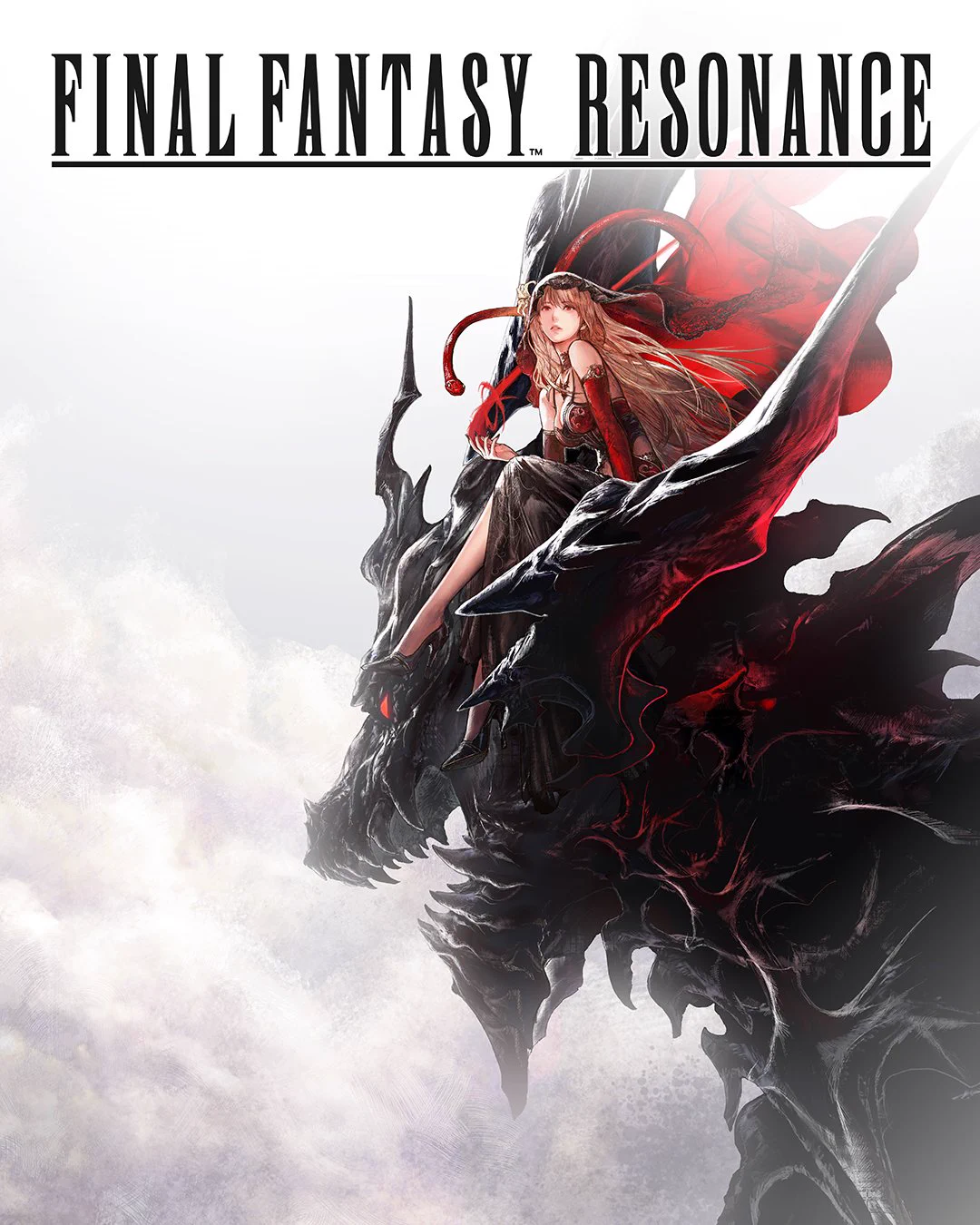
FF Resonance is a retelling of the 2015 gacha game FF Brave Exvius as a full premium title in the HD-2D art style. Not only that, it moves from a tapping-based fast-turn-based system to a fully button-driven turn-based one. Brave Exvius had a good run as a live-service gacha and, as such, saw a good deal of development in terms of story and world-building. The skepticism, however, was how they would translate a gacha into a traditional JRPG.
The FF Resonance demo squashed those doubts.
Like We Never Left
Everything, from the overworld traversal and the simple yet engaging traditional turn-based combat to the beautiful soundtrack, made me feel like we never left the classic FF era. Set in the world of Lapis, the story follows two knights of Grandshelt, Rain and Lasswell, as they pursue a powerful group known as the Sworn Six to stop them from destroying the Magic Crystals, which keep this world in balance. During the intro, which takes place many years before the main game’s events, we see a powerful mage fighting the Sworn Six and ending up becoming a Crystal herself, along with a hint of mystery that the Sworn Six may have a legitimate reason to go after the Crystals.
With that intrigue set up, we’re introduced to Rain and Lasswell, who are sent to check on a nearby Crystal, where they encounter one of the Sworn Six, who easily defeats them. This sets them on a journey across the entire continent to find companions, save the Crystals, and find some answers. The writing is reminiscent of other JRPGs that lean on shounen anime tropes: a duo of an idealist and his calm childhood adoptive brother on a journey to save the world. Somehow, though, they make it work here, and it never feels grating, since the exposition doesn’t take up too much time.
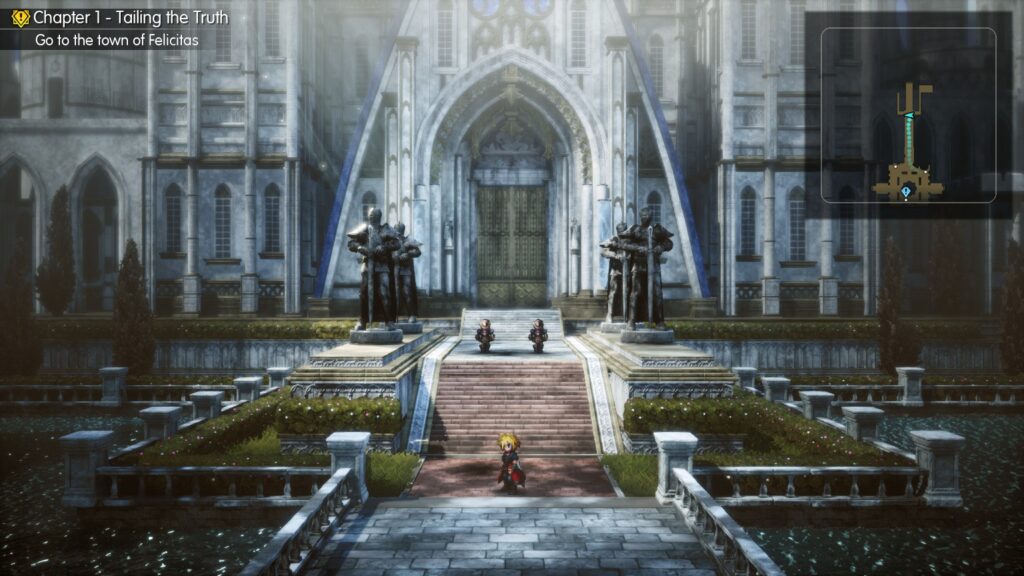
The setup feels very much in the vein of FF 4 and FF 5, where a straightforward premise is a vehicle for adventuring through the land, finding secrets, and doing side quests. During your travels in the overworld, you will come across visions, spirits from other dimensions, who can be slotted onto a character to grant new in-battle attacks, abilities, and passives (with more unlocking as you level them up). When you replace one Vision with another, you can keep some of the old Vision’s newly learned abilities on that character, similar to the slottable abilities of FF 9. Visions include characters from across the FF series, like the Warrior of Light (FF 1), Terra (FF 6), and Cloud (FF 7 Remake), which makes seeking them out addictive.
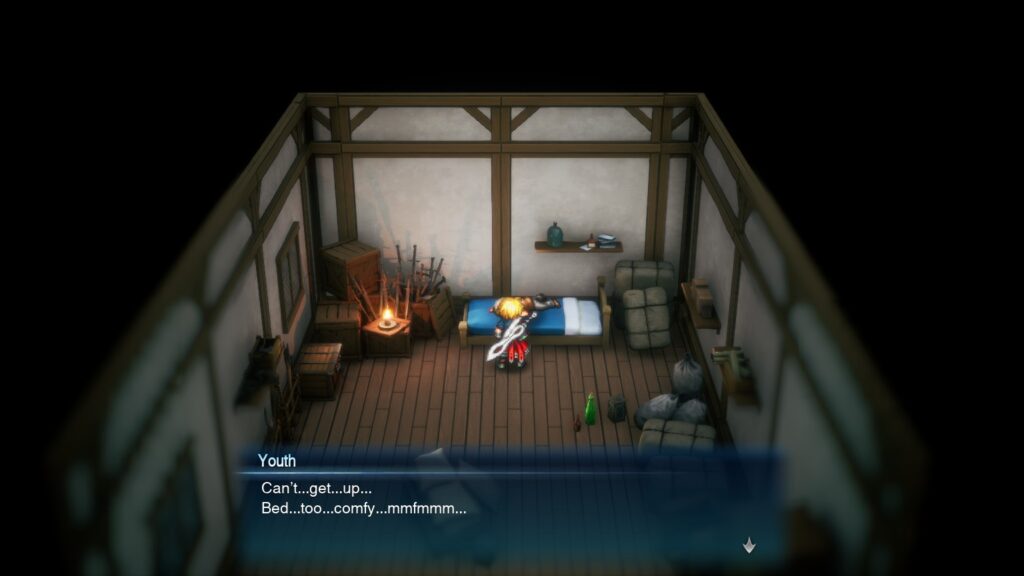
The game has a few side quests that get marked as you enter towns**; they** flesh out the world and the characters and reward some really good items and gear. Not everything is marked, so you are encouraged to talk to everyone**, as NPCs** may drop hints about new locations or about defeating certain tough enemies. There are hidden collectibles in towns and dungeons, which, once you collect a certain number, grant you powerful items as meta-progression. Speaking of which, every town has small pockets of space or hidden areas that hold those meta items, gear, or related items. They even incorporated Tales of-style skits**: bits of** light banter that occur at certain points in the story. All of this culminates in non-battle play that feels just as fun as the battles.
Fight and Break
The battle system is similar to Octopath Traveler’s. Most fights come through random encounters (your map blinks red just before you enter one). Enemies’ and party members’ actions are arranged in a timeline at the top of the screen, so you can see who acts when in each turn. You have regular attacks, classic FF magic and abilities, each with its own properties (fire, water, ice, dark, etc.). The break system from Octopath games is retooled into enemy stagger meter, which fills with every attack performed.
Where it gets interesting is that enemies have weaknesses to certain properties, and attacking with those properties deals a huge blow to both the enemy’s HP and Stagger meter. When you stagger an enemy, a flashy blast shows it has been weakened for that turn, and the party member who caused the stagger gains an additional turn. If every party member lands a Stagger in that turn, all three can attack with their extra turns, plus a bonus action from one of your Visions (such as healing everyone, an AOE attack, or an AOE status-effect attack). So fights become about “solving” how to stagger enemies and line up your vision’s attack. It is immensely satisfying to pull off in challenging fights like bosses. It will be interesting to see how they expand on this in the full game.
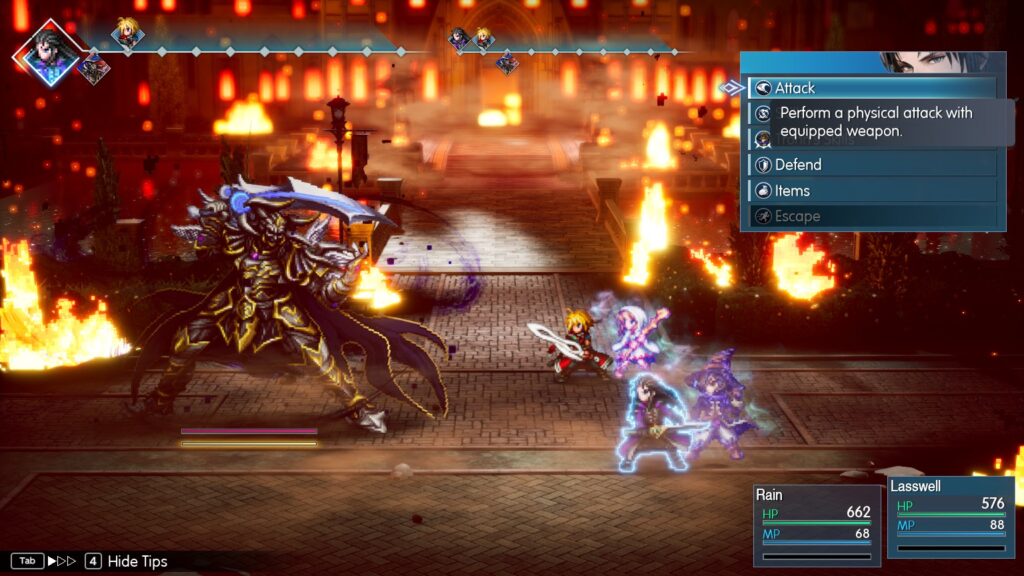
You fight in the overworld and in dungeons, which**,** in classic JRPG fashion**,** get progressively more difficult and tricky the further your adventure takes you. Dungeons feel very much like those of an SNES/PS1 JRPG**: twisting** paths full of secrets, with sub-bosses and bosses.
While this preview has heaped praise on the game for being like the FF classics, it also has many quality-of-life features that are welcome in the modern age. There’s up to 3x fast-forward in battle, quest trackers, a detailed overworld map, teleport portals in dungeons right before boss fights, and markers on NPCs with important things to say. The game never feels overwhelming, and busy gamers will feel at ease playing it.
Like a Diorama
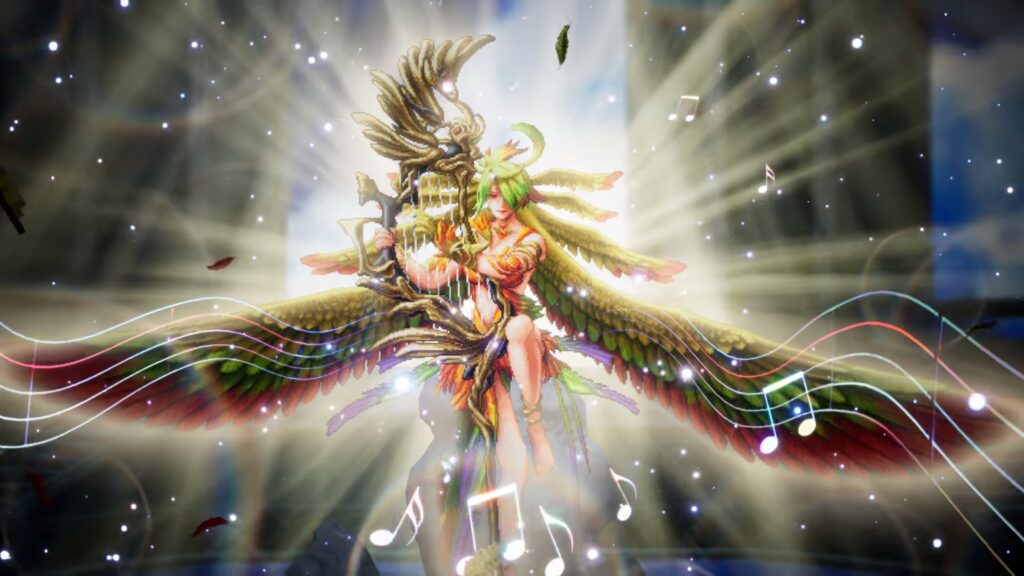
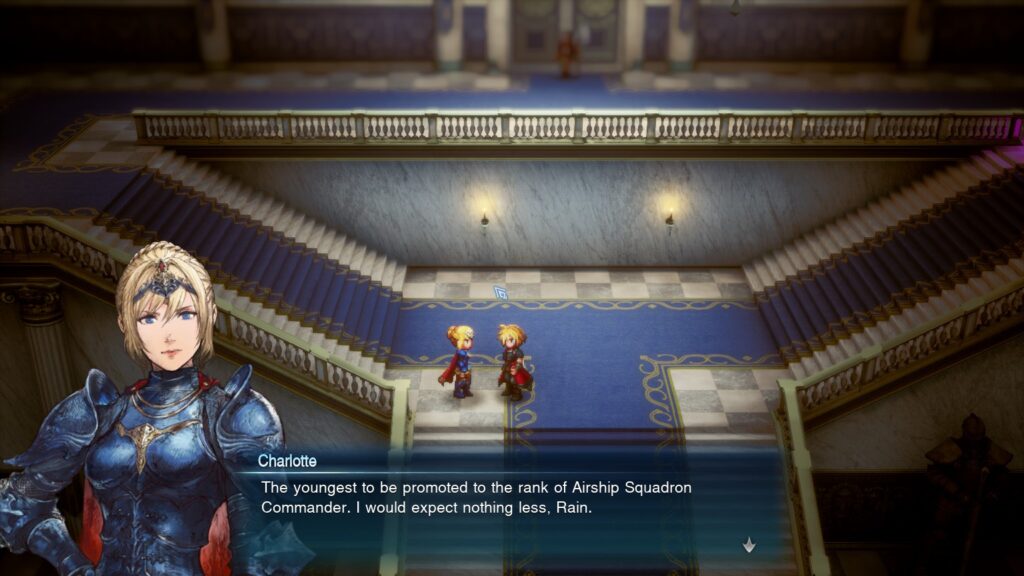
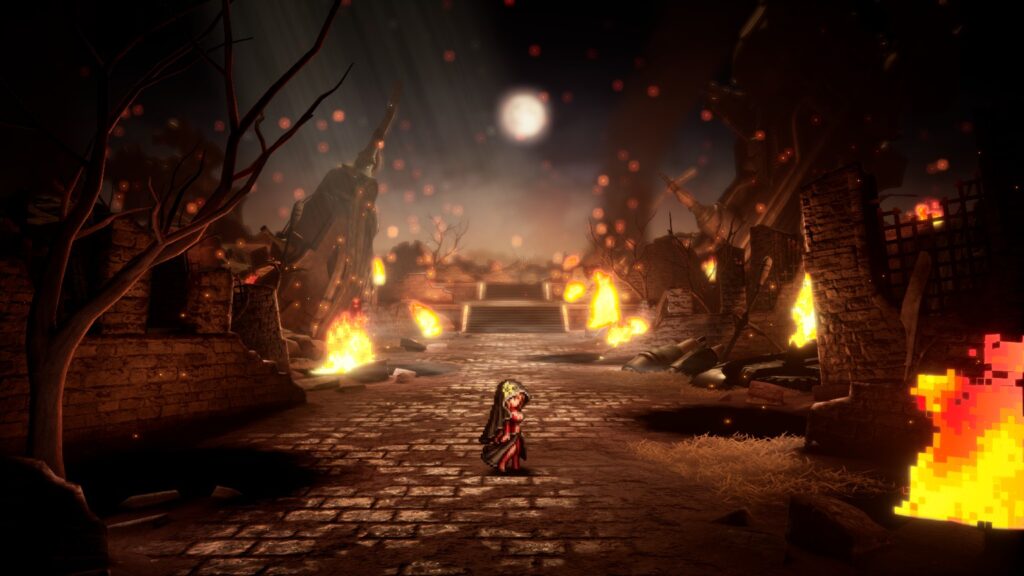
Just from the screenshots, it looks gorgeous. It feels like some subtle improvements were made over Octopath’s visuals, as I found FF Resonance’s visuals to have better clarity. I love how every enemy and boss is animated during battles. The fight with Siren is a sight to behold. Another highlight is the flashy effects and sounds of all your attacks. I was actively seeking out battles after learning a new attack, just so I could see how it looked.
The soundtrack is incredible, as is Final Fantasy tradition; the tracks feel more Tales of than classic Final Fantasy, with exciting battle themes and charming overworld/town themes, though they still fit the tone of Resonance well. Shout-out to its version of “Prelude,” the classic Final Fantasy piece.
Initial Impression
Final Fantasy Resonance is shaping up to be a must-play for classic FF fans or newcomers interested in trying that style. A fun battle system, satisfying meta-progression, and a good story, all wrapped in a gorgeous presentation. You have to commend the team for pulling off such a feat: converting a live-service gacha into one of the most promising entries in the franchise.
The Final Fantasy Resonance demo is now available on PC and consoles.