




There’s something immediately unusual about Pax Autocratica. At first glance, it looks like another colony-management game set in a grim science-fiction world, but it doesn’t take long to reveal a much more ambitious idea. Instead of simply managing your settlement from above, you can step directly onto the battlefield, fight alongside your troops, and personally take part in the conflicts that shape your growing regime. That combination of colony simulation, strategy, first-person combat, and roguelite mechanics is what makes Pax Autocratica stand out.
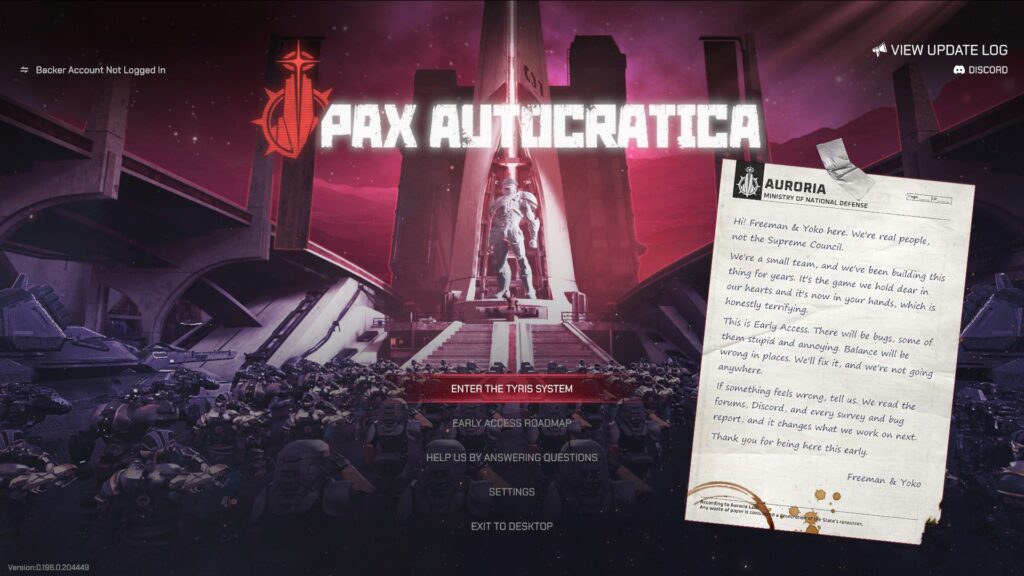
After spending some time with the game, my first impression is that its biggest strength is the way it tries to connect these very different systems. Building up your colony isn’t just about watching numbers increase or assigning workers to jobs. You’re establishing the foundation for everything that happens outside its walls. Resources need to be gathered, production needs to be maintained, research needs to progress, and your population needs to be managed as your ambitions grow. The game’s darker approach to colony management also gives it a distinct personality. You’re not building a peaceful settlement where everyone simply works together toward a common goal. Pax Autocratica puts you in control of an authoritarian regime, giving you tools to influence, control, and manipulate the population. Loyalty, propaganda, surveillance, and rebellion become part of the equation, creating situations where maintaining order can be just as important as gathering resources. Then the perspective changes.
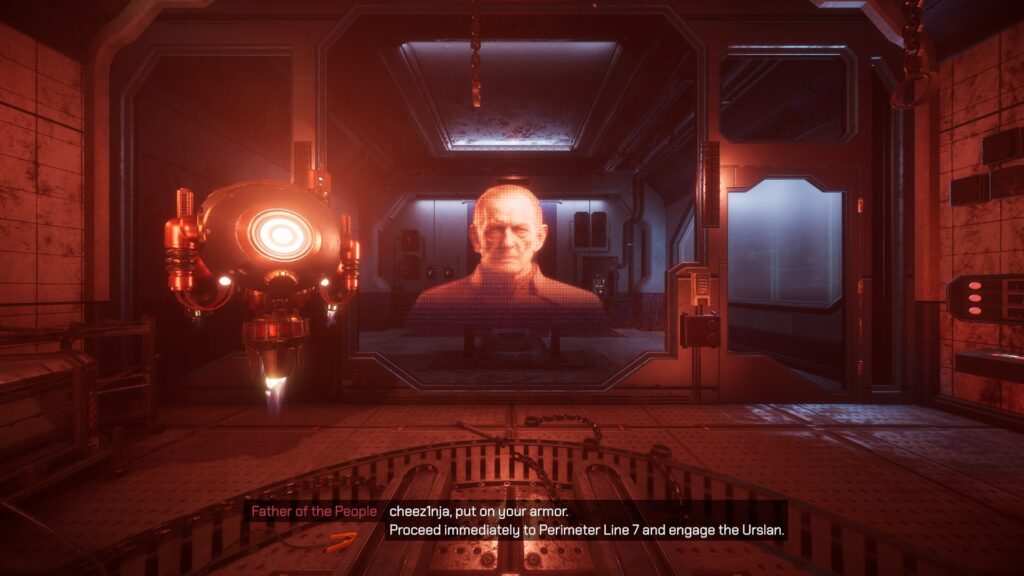
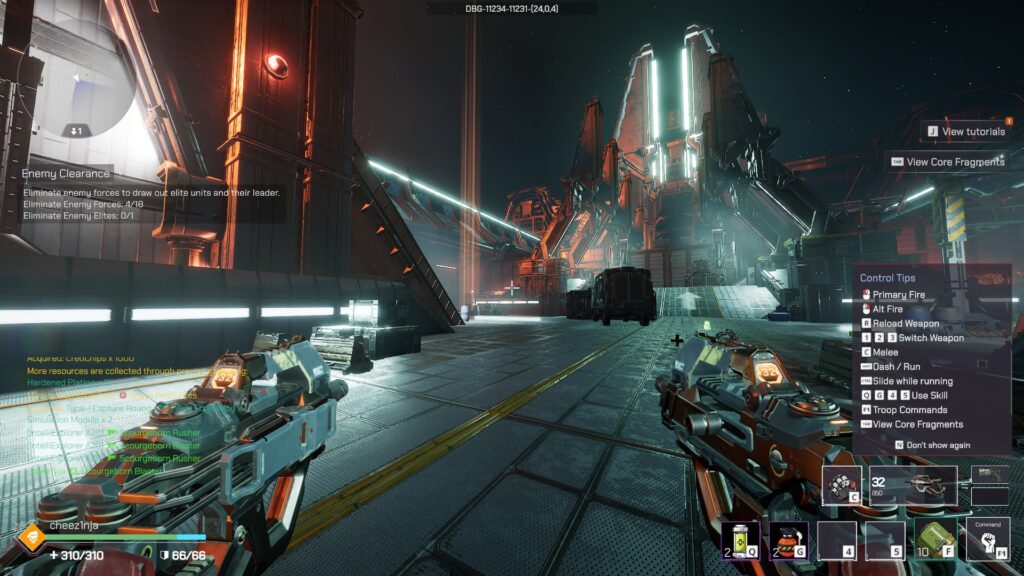
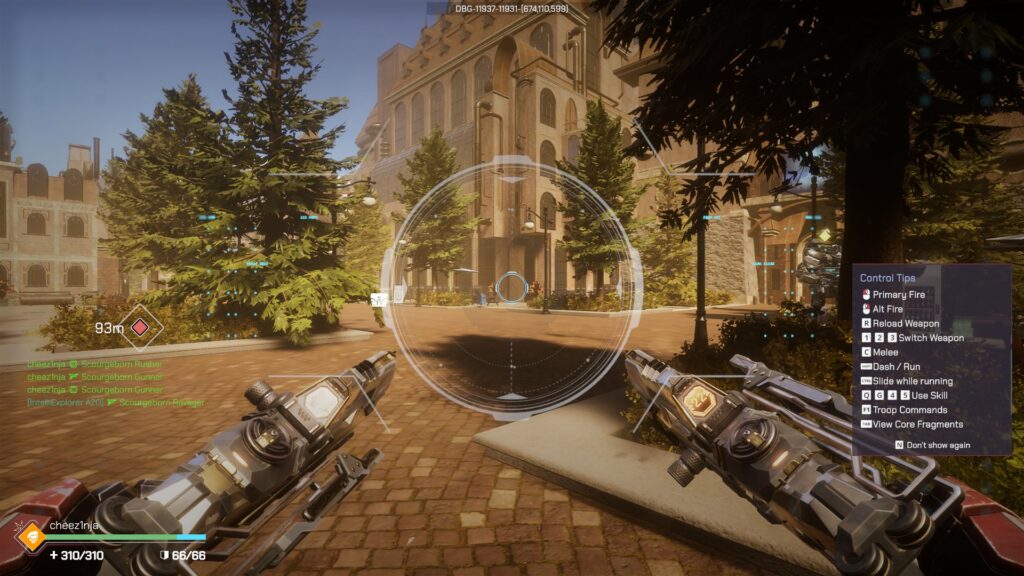
When your regime needs to expand or defend itself, you can leave the colony behind and enter combat yourself. The first-person battles are considerably more chaotic than the slower management gameplay, with infantry, vehicles, drones, artillery, and other threats filling the battlefield. Rather than commanding everything from a distant strategic view, you’re physically involved in the fighting, which gives your military decisions a much more immediate feeling. The roguelite elements add another interesting layer. During expeditions, you can collect upgrades that change your weapons and abilities, creating different possibilities from one run to another. There’s a sense that each trip outside the colony is both a military operation and an opportunity to bring something valuable back home.
One of the game’s stranger ideas is what you can do with defeated enemies. Rather than simply eliminating every opponent, you can capture some of them and bring them back to your colony. From there, they can become prisoners, be subjected to indoctrination, or potentially be integrated into your society and military. It’s an intentionally uncomfortable mechanic, but it fits the game’s larger theme of treating people, resources, and territory as pieces of a much bigger machine.
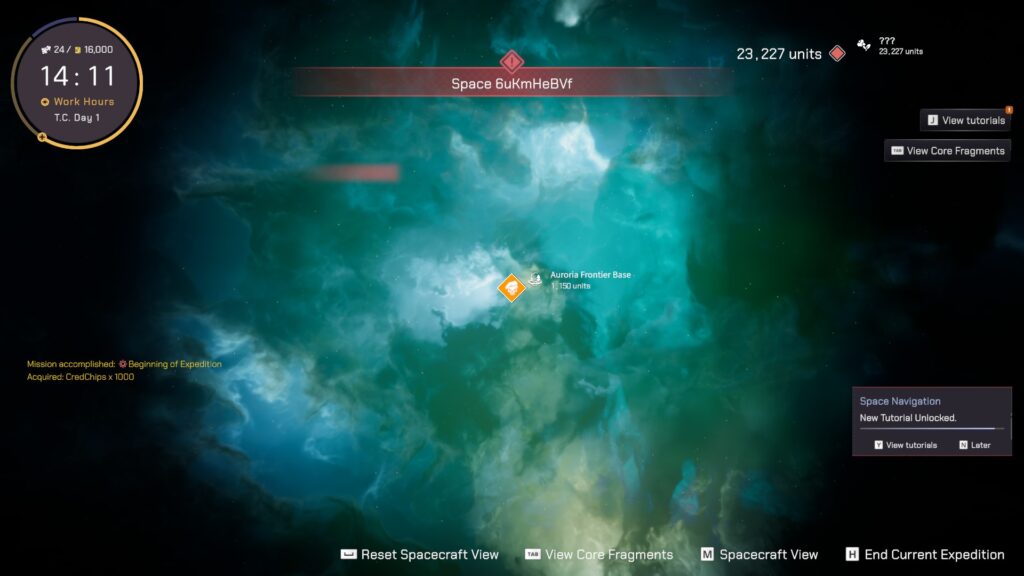
What impressed me most during these early encounters is the potential of the overall gameplay loop. You build your colony so it can support your military, take your military into the field to acquire new resources and opportunities, and then return to use those gains to expand your regime even further. Each side of the game has a reason to exist because it feeds directly into the other.
Initial Impression
For now, Pax Autocratica feels like an ambitious experiment that isn’t afraid to throw several genres into the same sandbox. Its rough edges are part of the Early Access package, but underneath them is a genuinely interesting concept. The idea of building an authoritarian sci-fi state and then personally stepping onto the battlefield to defend and expand it gives the game an identity of its own. My initial impression is that Pax Autocratica is a game worth keeping an eye on. Whether its many moving parts eventually come together as smoothly as intended will depend on how development progresses, but the foundation is certainly intriguing. It has a strange premise, an even stranger collection of mechanics, and enough ambition to make you curious about where it goes next.