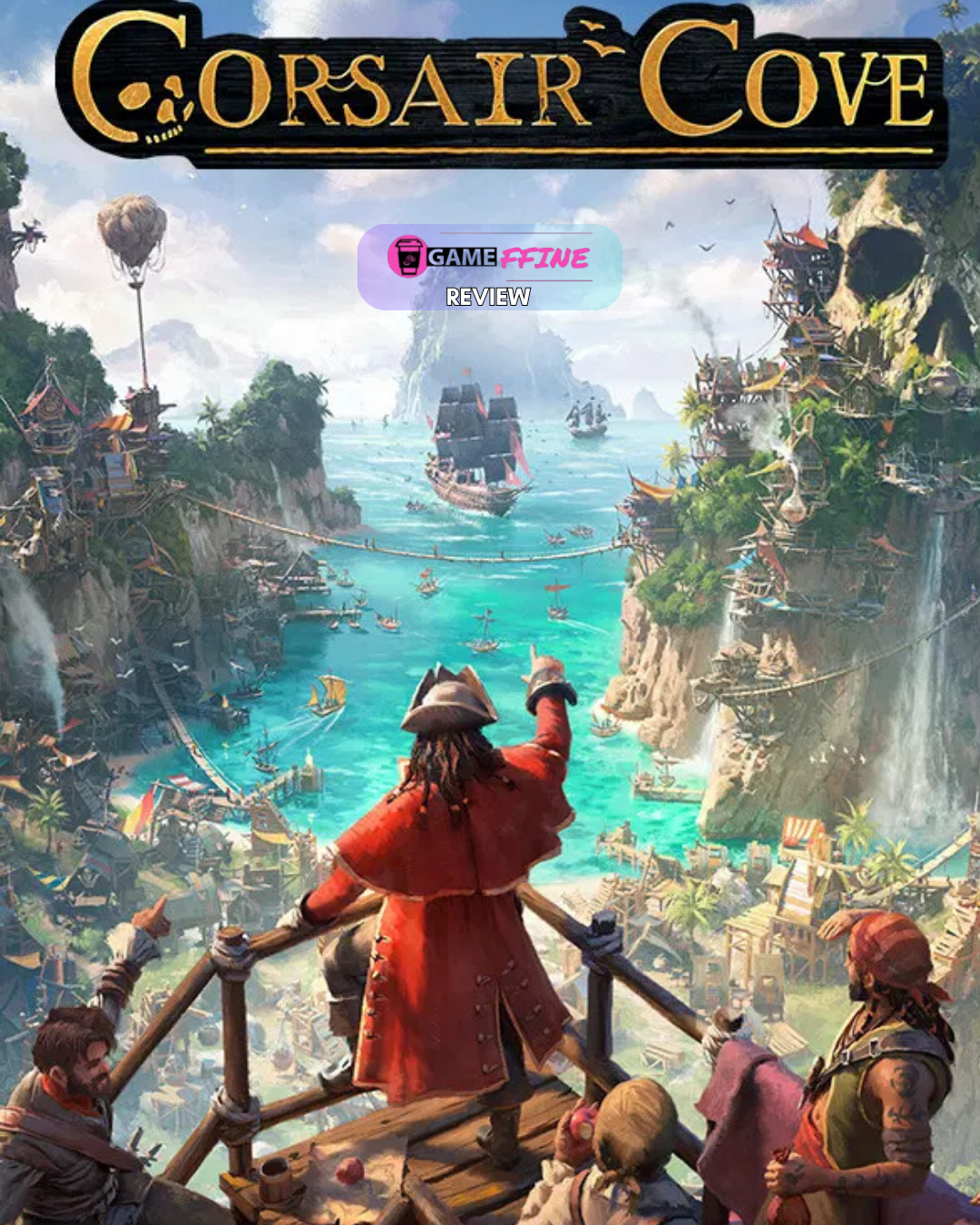





Forget the Treasure. Watch the Supply Lines. Pirate games usually give you the fun stuff first. A ship. A sword. A cannon. A treasure map. Then you’re off into the sunset looking for trouble. Corsair Cove takes a different route. Instead of putting you in the boots of a pirate captain, it asks you to build the place where those pirates live, work, drink and, hopefully, don’t cause too much trouble.
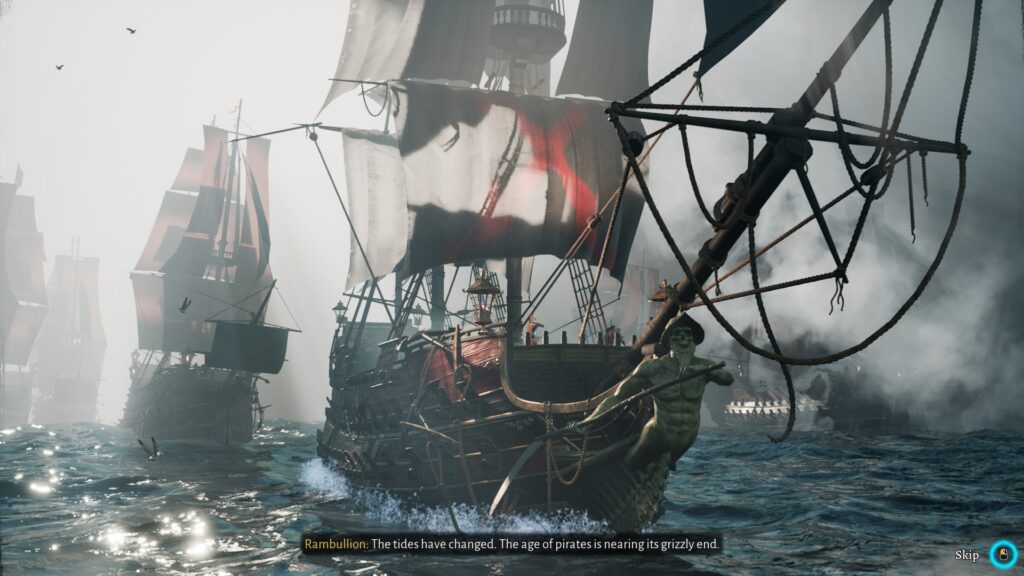
Developed by Limbic Entertainment and published by Hooded Horse, Corsair Cove mixes city building, resource management, logistics, exploration and pirate adventures. It looks colorful and approachable, but there is a surprisingly detailed management game underneath. And honestly, I didn’t expect the logistics to be one of the most enjoyable parts.
A Pirate City With Almost No Flat Ground
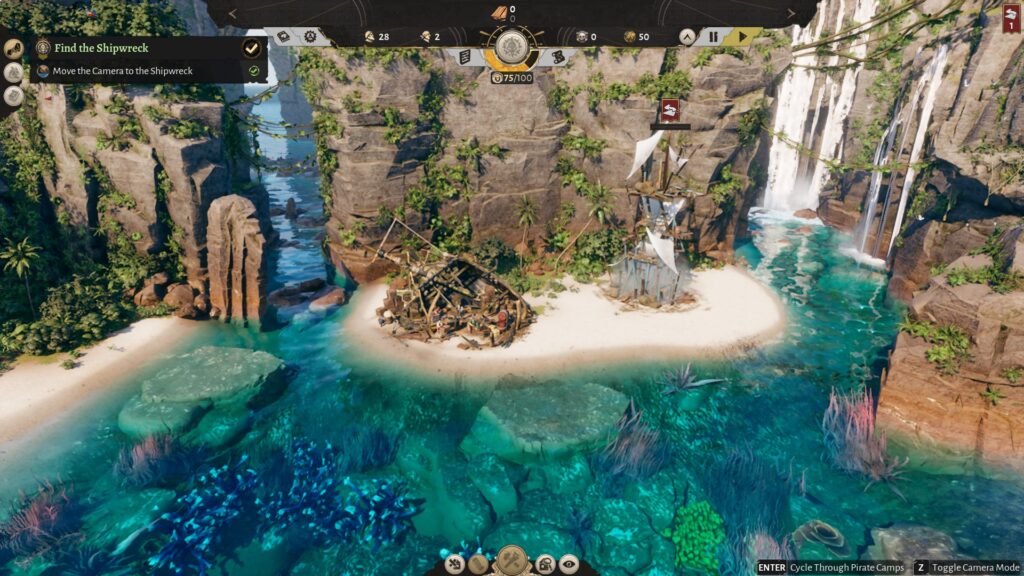
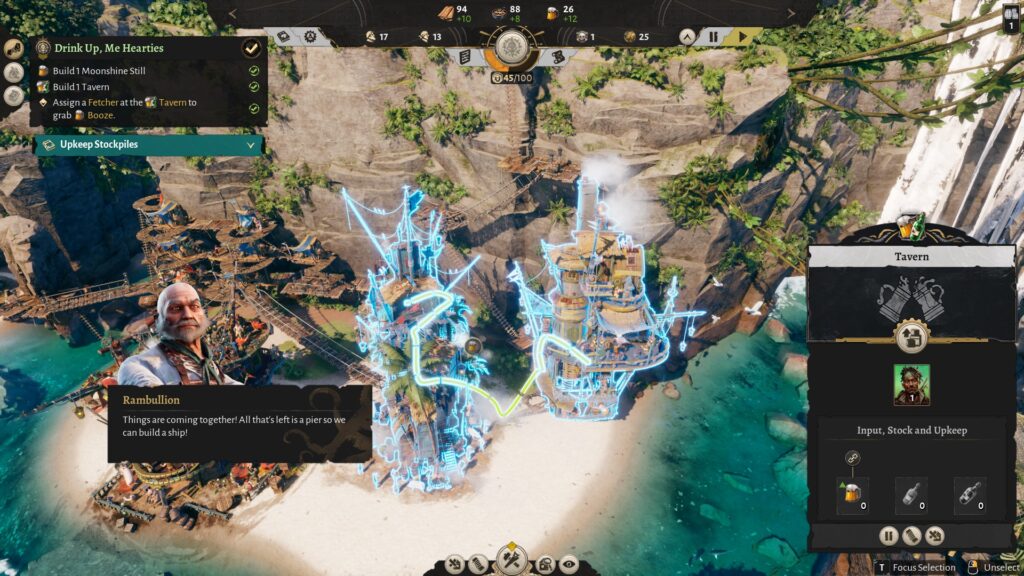
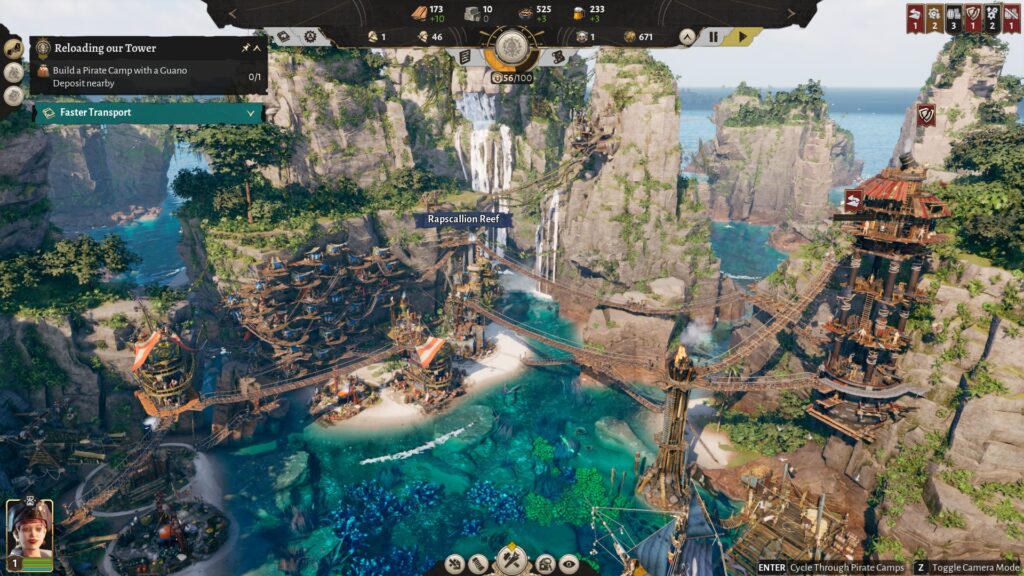
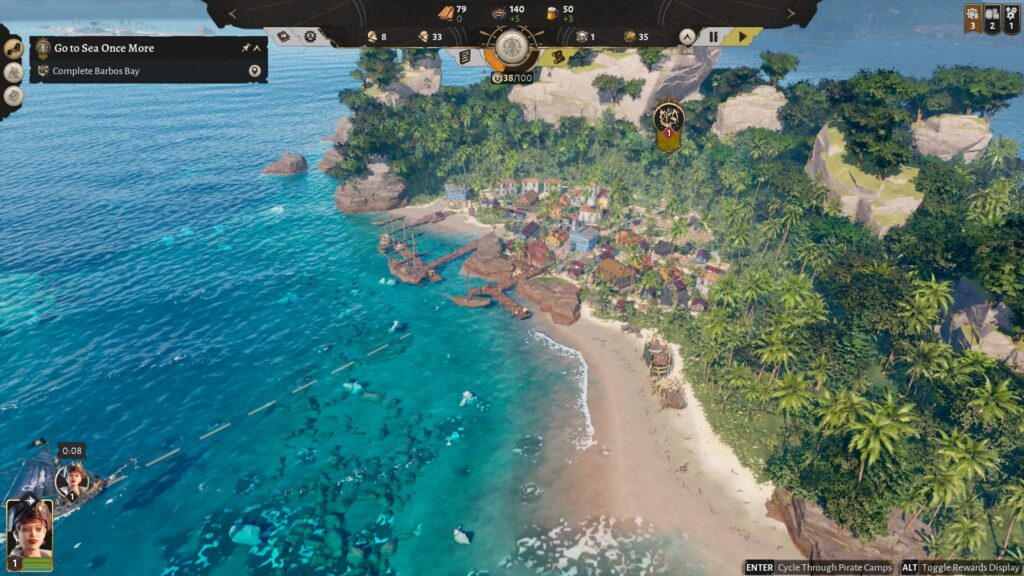
The terrain is one of Corsair Cove’s best ideas. You’re not given a giant piece of flat land and told to start placing buildings wherever you like. Your settlement spreads across cliffs, slopes and uneven ground, which makes every construction decision a little more important. Roads matter. Warehouses matter. Even the distance between two buildings can become a problem. You might place a production building somewhere that looks perfect, only to discover that workers now have to travel halfway across the island to deliver materials. Suddenly, your beautiful pirate town isn’t looking quite so clever. The vertical design works because the terrain isn’t just decoration. It becomes part of the puzzle. You’re not simply building a city. You’re figuring out how to make the island work for you.
Your Biggest Enemy Might Be a Warehouse
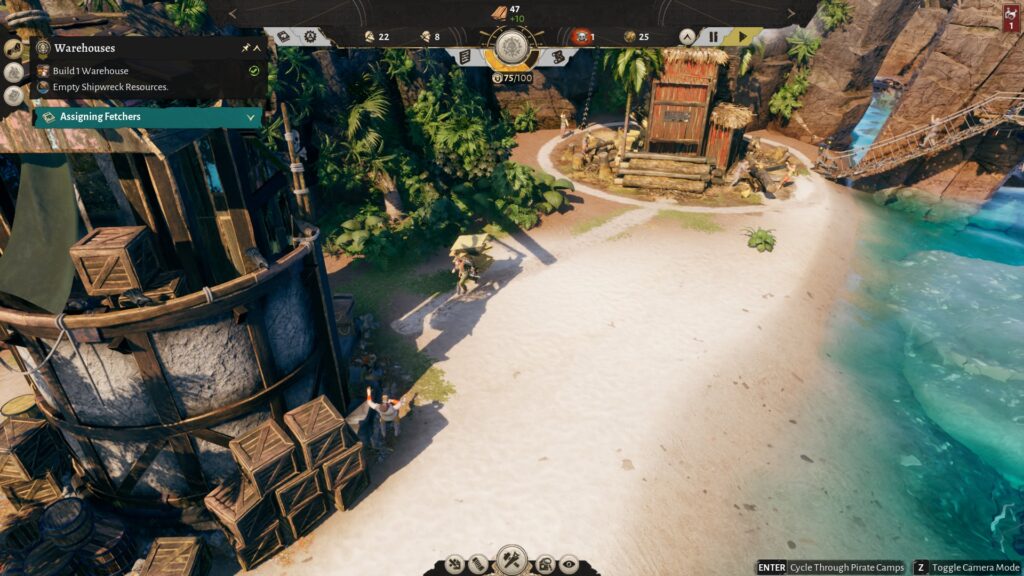
The production system is where Corsair Cove starts showing its depth. Your settlement needs food, drinks, construction materials and more advanced goods as you progress. Those resources have to be produced, transported and delivered where they’re needed. When one part of that system goes wrong, everything can start falling apart. A shortage slows production. Workers spend too much time travelling. Supplies arrive late. Your crew becomes unhappy. And suddenly you’re staring at your settlement wondering where everything went wrong. Thankfully, the game gives you plenty of ways to fix it. Better roads, smarter building placement and transportation options such as ziplines and elevators can make a huge difference. There is a surprisingly satisfying feeling that comes from finally fixing a production problem you’ve been staring at for the last half hour.
Keeping Pirates Happy Is Its Own Kind of Warfare
Building a functioning economy isn’t enough. You’re running a pirate settlement, and pirates aren’t exactly famous for being easy to manage. Corsair Cove uses a cohesion system to represent the condition of your crew. Their needs have to be looked after, with essentials such as food and drink playing an important role. It fits the setting nicely. This doesn’t feel like a perfectly organized kingdom where everyone quietly goes to work and comes home. It’s a pirate town, and the game allows a little chaos into the formula. The colorful presentation and humor also keep the management systems from becoming too dry. Even when you’re buried in production menus, it still feels like you’re running a pirate settlement rather than managing a spreadsheet with skulls on it.
This Isn’t Trying to Be Black Flag
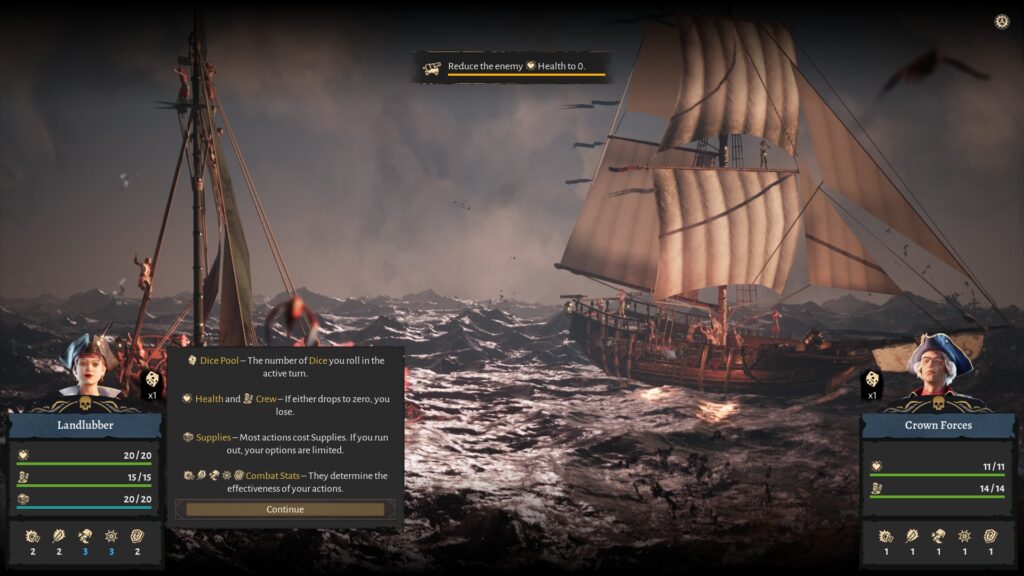
It’s almost impossible to talk about a new pirate game without someone mentioning Assassin’s Creed IV: Black Flag. Corsair Cove isn’t trying to compete with it. This is a city builder first. You still get ships, treasure, expeditions, naval encounters and conflicts with the Crown, but those elements exist alongside the management systems rather than replacing them. Naval encounters use a tactical, turn-based approach with card and dice elements. They provide a welcome change of pace when you’ve spent too long worrying about your production chains. The naval side isn’t as deep as the city building, though. That’s important to understand before jumping in. If you want a pirate city builder, Corsair Cove delivers. If you’re expecting a full-blown pirate action game, this probably isn’t your destination.
Three Islands, Plenty of Reasons to Start Again
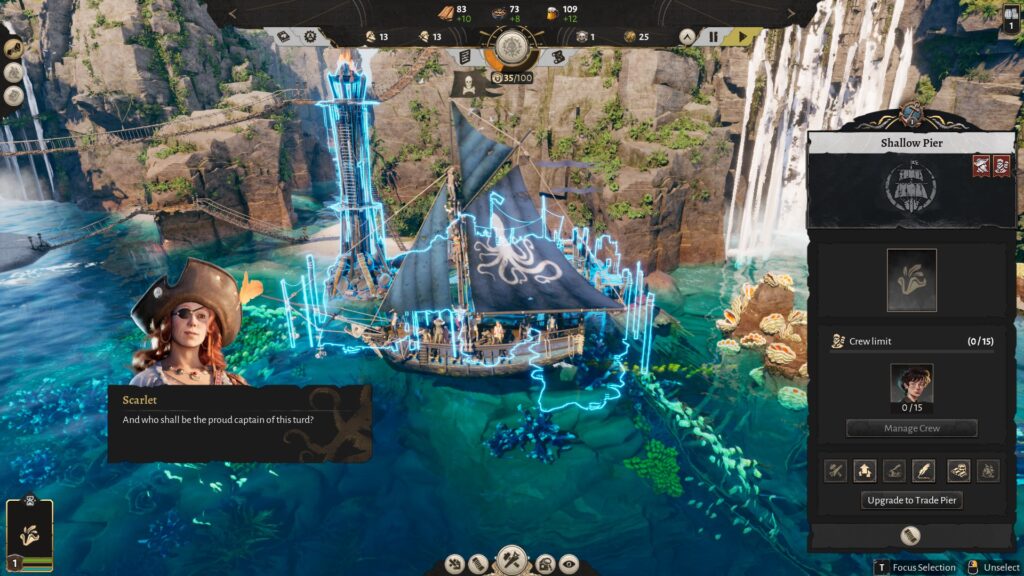
Replayability is another strong point. Corsair Cove includes a Story Mode and an Uncharted Mode, while its islands offer different challenges rather than simply giving you another randomly generated map. That’s a good fit for the genre. Once you’ve finished a settlement, you naturally start thinking about everything you could have done differently. I should have put that warehouse there. Why did I build that road? Why is everything so far away? Then you start another game convinced you’ll do better. You probably will. And that’s where the replayability comes from.
Charming Enough to Hide the Spreadsheet
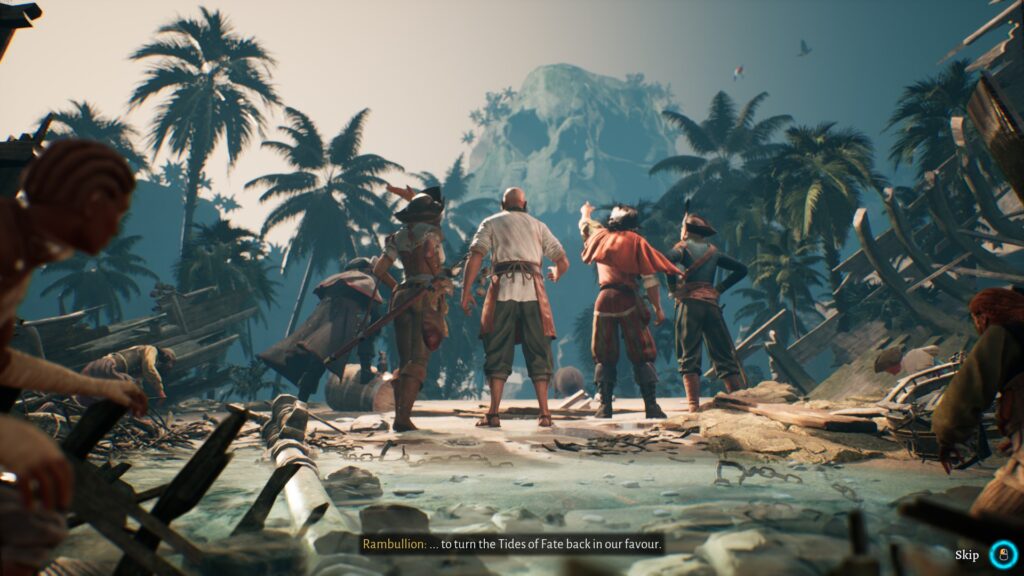
Visually, Corsair Cove doesn’t take itself too seriously. The colorful art style fits the pirate theme well, and watching your settlement grow from a tiny camp into a busy town is genuinely satisfying. Pirates move around. Buildings operate. Resources are transported. Ships come and go. The island gradually feels less like a collection of buildings and more like a functioning settlement. That’s important because management games can become visually dry once you’re buried in menus and resource numbers. Corsair Cove keeps enough personality in the world to make you want to look at what you’ve built. And yes, you’ll probably still find yourself wondering why you don’t have enough beer.
Where the Wind Dies Down
Corsair Cove isn’t perfect. The naval side is probably its weakest area. Expeditions and encounters add variety, but they don’t have the same depth as the city-building mechanics, and some encounters can start feeling repetitive. The management systems can also become complicated once your settlement grows. That’s part of the appeal for experienced city-builder players, but newcomers may occasionally wonder why a production chain has suddenly stopped working. Late-game progression can also become somewhat grindy. None of these problems ruin the experience, but they stop Corsair Cove from reaching the highest level of the genre.
Real Talk
Corsair Cove isn’t really about being a pirate. No sir. It’s about running the place where pirates live. And surprisingly, that’s what makes it work. The pirate setting gets your attention, but the city-building systems are what keep you playing. Once your settlement starts spreading across cliffs and your production chains become more complicated, the game turns into a constant balancing act between resources, transportation, and the needs of your crew. The vertical construction is especially good because the terrain actually matters. Where you build something can be just as important as what you build. It doesn’t need to put a sword in your hand to make you feel like a pirate. It gives you an island, a growing settlement, a crew with questionable priorities, and a ridiculous number of things that need to be moved from one building to another. And somehow, that turns out to be a pretty great pirate adventure.
FINAL SCORE: 83/100
Corsair Cove
Corsair CoveThe Good
- Excellent vertical city-building
- Deep and satisfying production chains
- Terrain genuinely affects your decisions
- Strong pirate atmosphere
- Handcrafted islands with different challenges
The Bad
- Naval encounters can become repetitive
- Adventure mechanics aren't as deep as city building
- Logistics can be confusing at first
- Some late-game progression feels grindy