



To say that the concept of the purist stealth games is a dying breed would be an understatement. No, I’m not talking about the dozens of Far Cries or Assassin’s Creeds that feature stealth as a “playstyle.” I’m not even talking about the unique stealth gameplay of Hitman and the older Metal Gear Solid series.
Pure puritan stealth peaked and died with games like Thief, Tenchu, and Splinter Cell, where going loud was never the way. They required you to be patient, smart, and tactical. Of course, going in guns blazing was never really an option. Of course, this does not meet market demands, and thus publishers tend to stay away. I’ve heard from developers firsthand that your project is basically DOA if you ever reach out to a publisher, pitch it as a hardcore stealth game. That’s why you often see stealth game franchises get bastardized to enter the mainstream, turning into games with “stealth mechanics” rather than pure stealth games.
These days, very few puritan stealth games exist. Gems like Ereban: Shadow Legacy, Mark of the Ninja, Intravenous, and Aragami come to mind, but they’re mostly independent games with modest budgets. This is where Styx comes into question. The Styx series is the baby of Cyanide Studios, the French developer who made like 5 dozen cycling management games. Styx stands out as their most unique IP. I have a soft spot for Cyanide, but even I admit that most of their games never escape the “middle of the road stuff” when it comes to critical reception. Styx is an exception.
I Am the Shadows
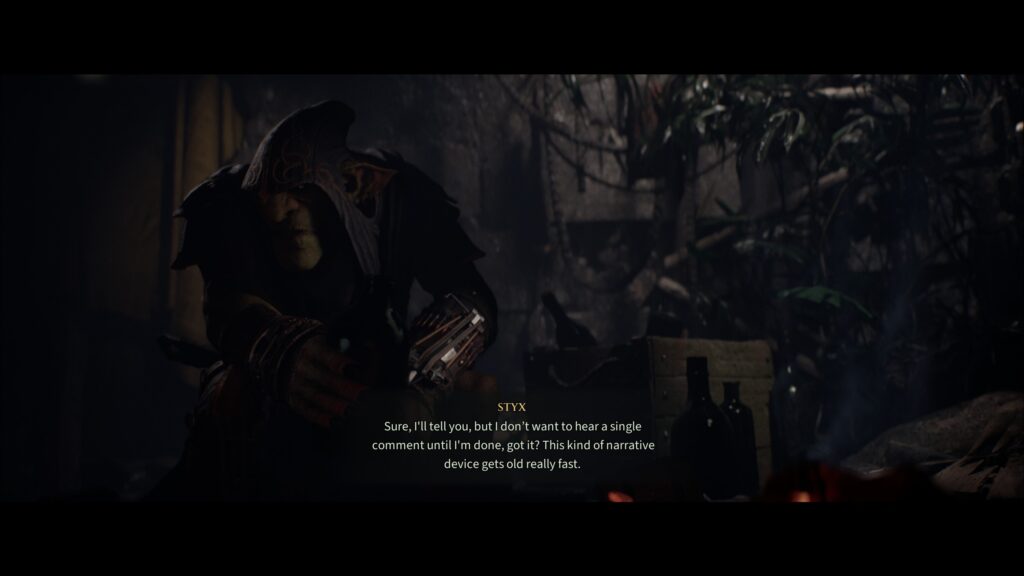
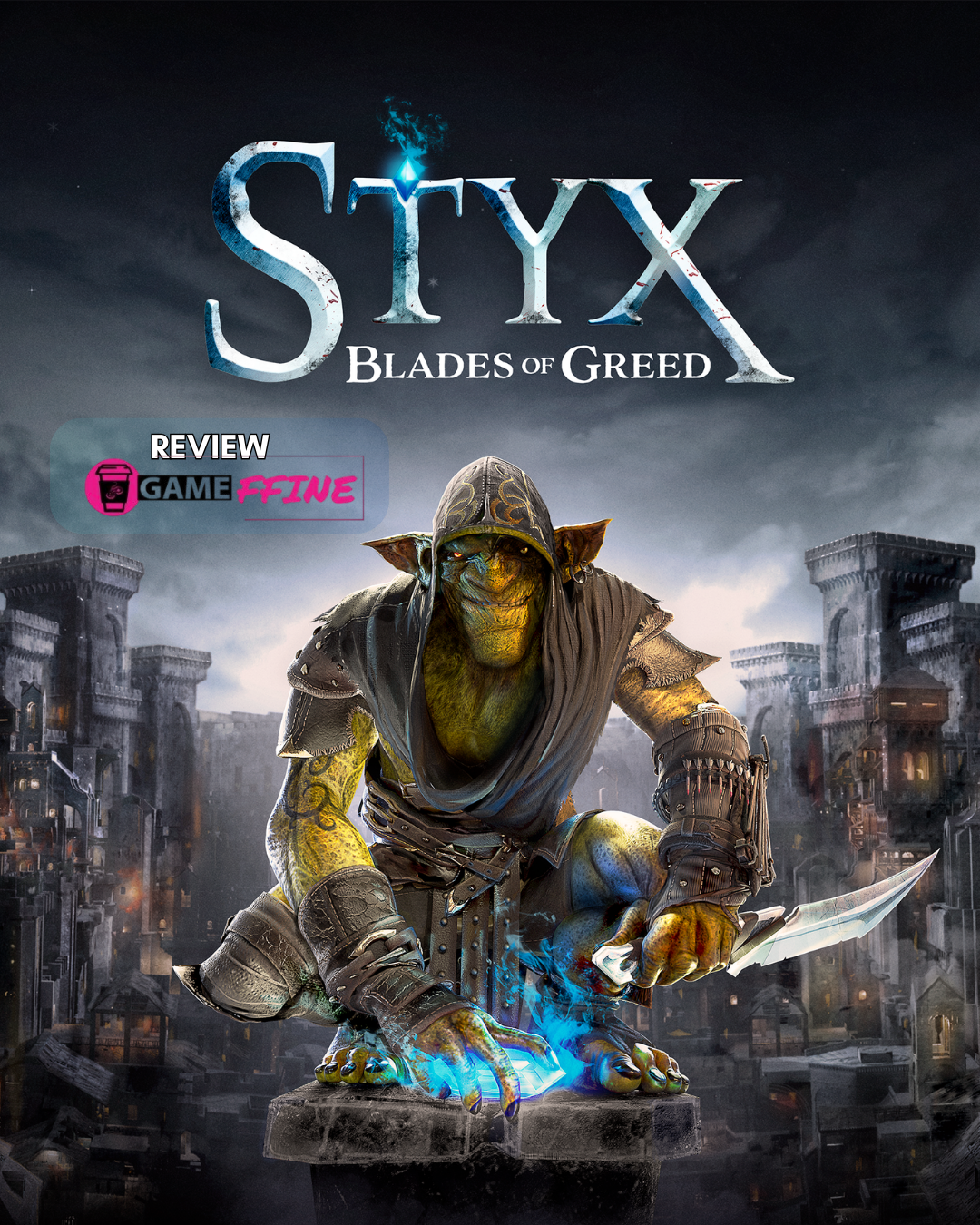
Starring the titular wisecracking, fourth-wall-breaking Goblin, the Styx series is a bunch of wonderful stealth games. Styx: Master of Shadows and Styx: Shards of Darkness are beloved “AA” products that are shining examples of what Cyanide is capable of when they’re not stuck working on sports management sims. The Styx series has less-than-stellar production values but makes up for it with solid, sneaky gameplay, well-thought-out level design, and witty writing. Publisher Nacon took a big risk with Styx, and it actually paid off. They may lack polish, but their heart is in the right place.
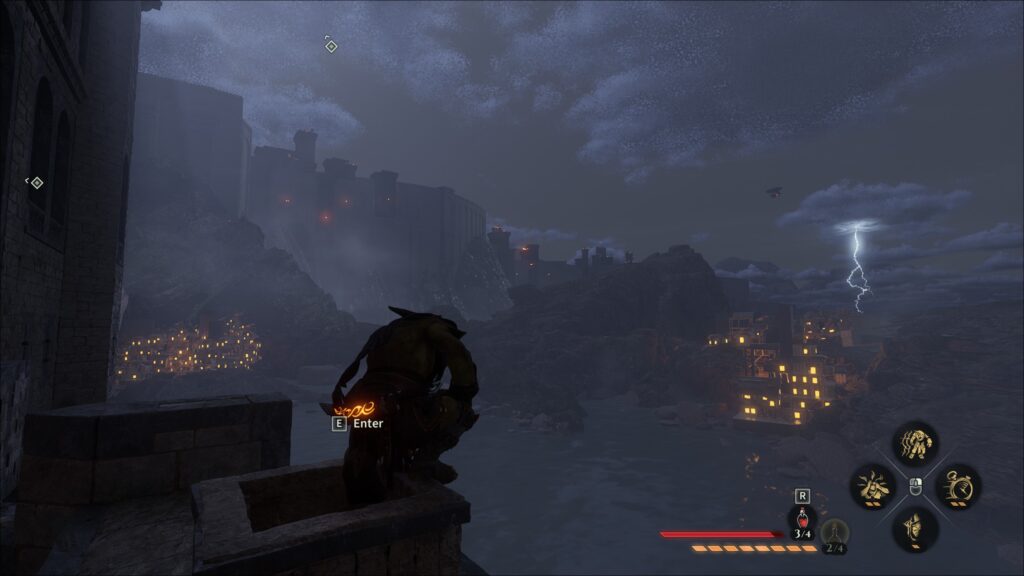
9 years after the last game in the series, Cyanide and Nacon are back with the third entry, Styx: Blades of Greed. Cyanide seems eager to build on the first two games’ personalities, particularly with it foregoing the linear level design– based structure in favor of an open-ended, multi-zone metroidvania-esque level. The budget is bigger, and so are the levels. But is the game actually better? That requires some exploration.
Upping the Ante
Styx: Blades of Greed is not a radical shake-up to the established formula. Instead, it takes the gameplay mechanics and additions established in the previous games and reworks them, some for the better, and some not so much.
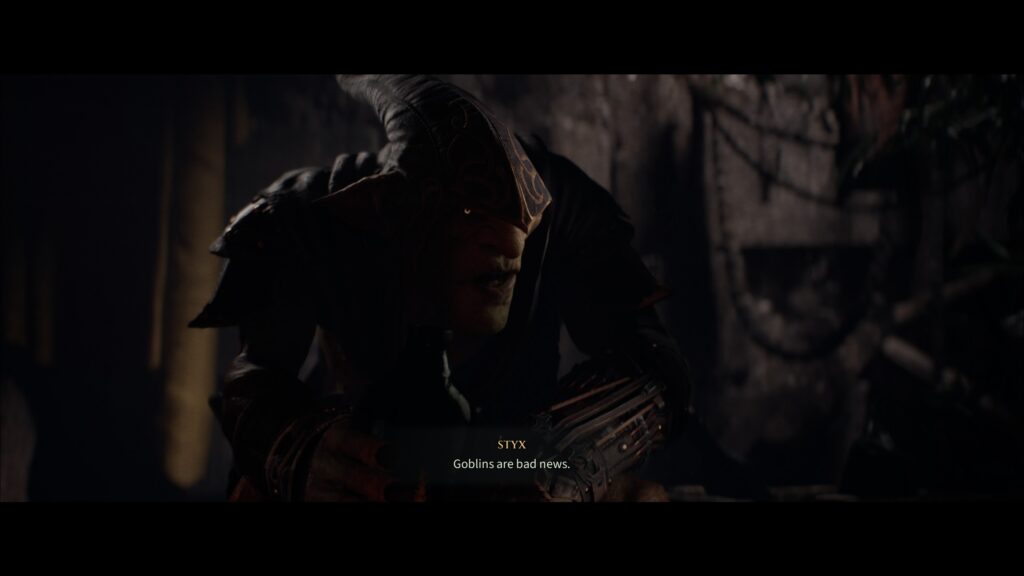
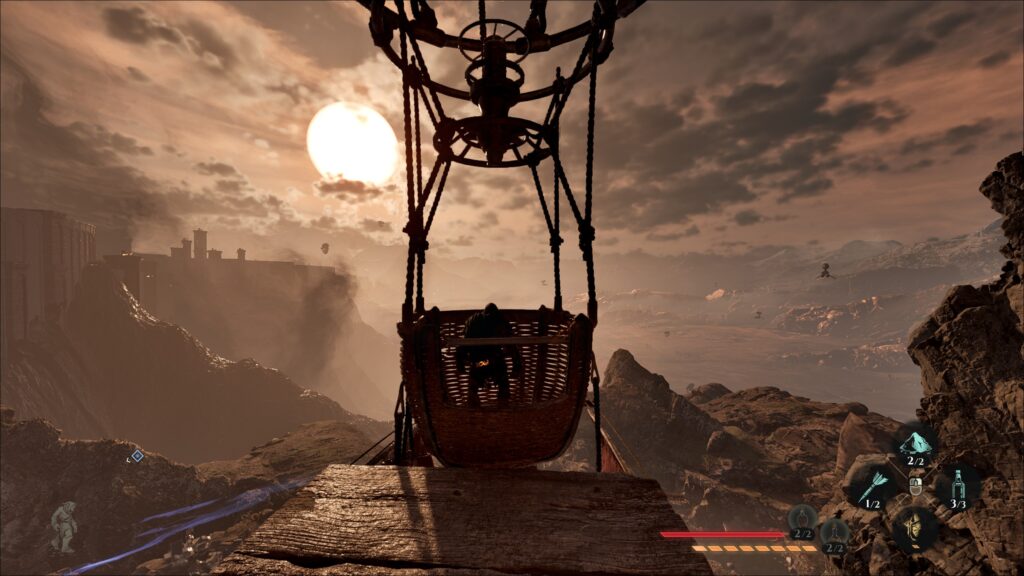
The first thing you’ll notice is the increased production quality, first evident from its cinematic storytelling. Styx games always had an emphasis on the narrative and had decent-looking cutscenes. Styx: Blades of Greed doubles down on this front. The in-engine cutscenes look pretty sweet and have good framing and duration. The voice acting, on the other hand, is not good and is a clear case of miscasting. They always remind you that you’re still playing a Cyanide game. However, Saul Jephcott absolutely steals the show as Styx. His sarcastic delivery and unique “Goblin” voice carry the cutscenes hard. I did notice that Styx is a bit more serious than silly this time around, but I suppose that’s in line with the stakes they’ve landed themselves in.
Speaking of sticky mess, Blades of Greed’s story is predictable and a bit generic. It tells the tried and true trope of craving for power and the price of greed. It’s a straightforward adventure presented in the manner of a heist movie. It picks up right where the last one left off, and thus, I advise newcomers to watch the story recap from the first two games. Blades of Greed follows Styx and his (not-so) merry band of mercenaries and ex-soldiers on their nefarious venture to acquire Quartz, the MacGuffin of this game, while being hunted by the Inquisition. The story of Master of Shadows still ranks as the best one in the trilogy, but Blades of Greed’s story is not far behind and is better than its predecessor. The humor, the self-awareness of its predecessor, the Industrial Revolution, meets a fantasy setting, and well-directed cutscenes give the game some flourish. It’s not going to make it to any “best of” lists, but it gets the job done.
Something Old, Something Novel
The gameplay is what truly matters. Blades of Greed takes a hybrid approach when it comes to innovating vs. streamlining. Pretty much all the signs of Styx’s signature moves make a return. It’s still a hardcore stealth game that favors the shadows. Styx: Blades of Greed is unapologetic in what it wants to be. It may not afford to punch players who go loud and clumsy. Armed with his signature knife and plenty of supernatural abilities like turning invisible, mind control, slowing down time, creating clones of himself, etc. Styx is forced to be reckoned with — as long as he sticks to the shadows, that is.
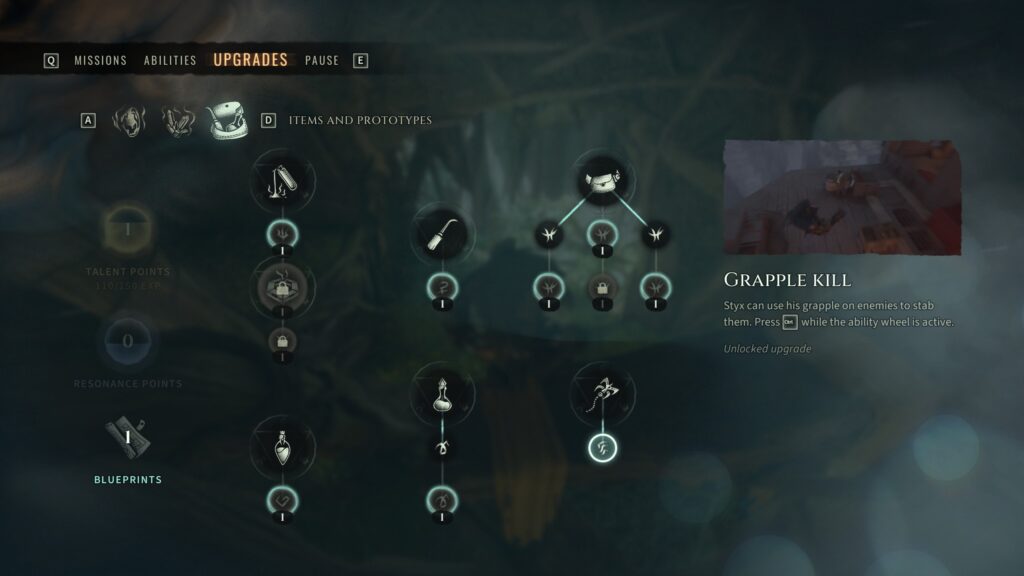
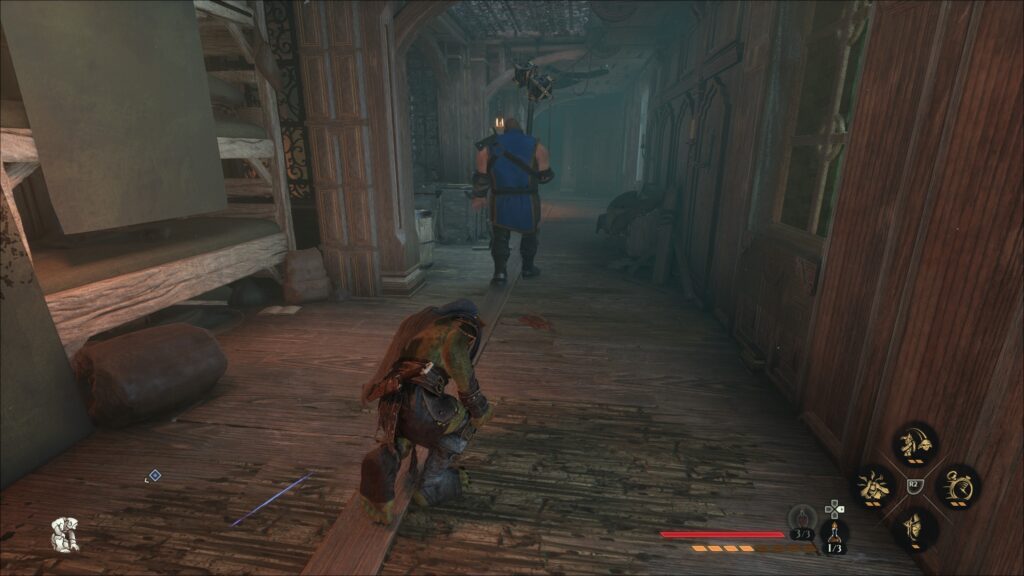
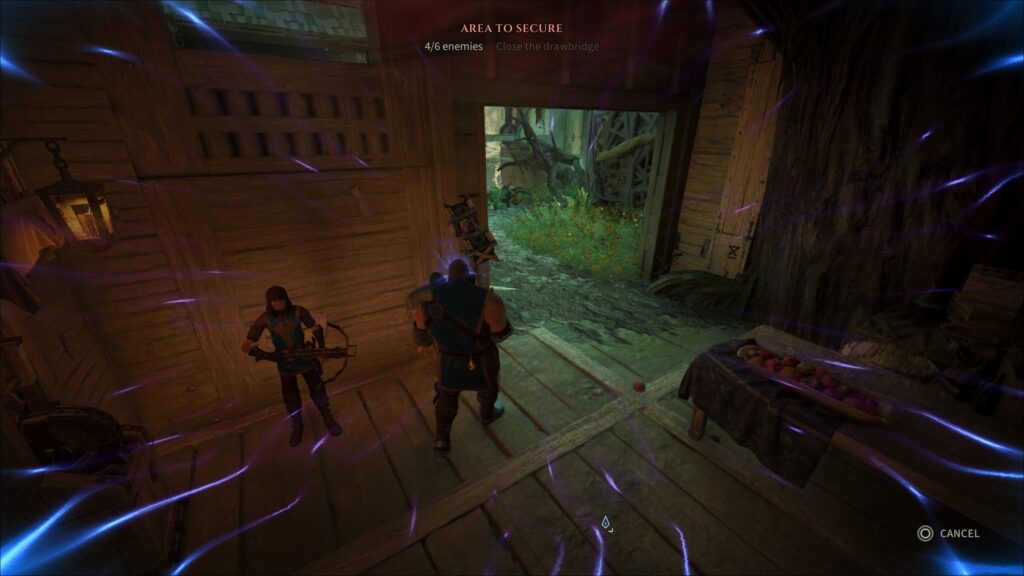
Even though you’ve got more aggressive abilities this time around, Styx: Blades of Greed actively discourages combat. Setting down acid traps, throwing clones at enemies (you won’t be able to control them, though), and forcing a mind-controlled enemy to jump to their deaths play a crucial role in Styx’s adventure. If you still choose to engage in a head-on fight, you’ll notice that it just sucks. On the other hand, the stealth gameplay is excellent, and that is what matters. Almost all of the basic stealth movies you had to unlock in the first game are available from the start. You can play the game as a pacifist, but I found it more fulfilling to turn my Styx into a bloodthirsty assassin. Still, I wish the game supported non-lethal takedowns.
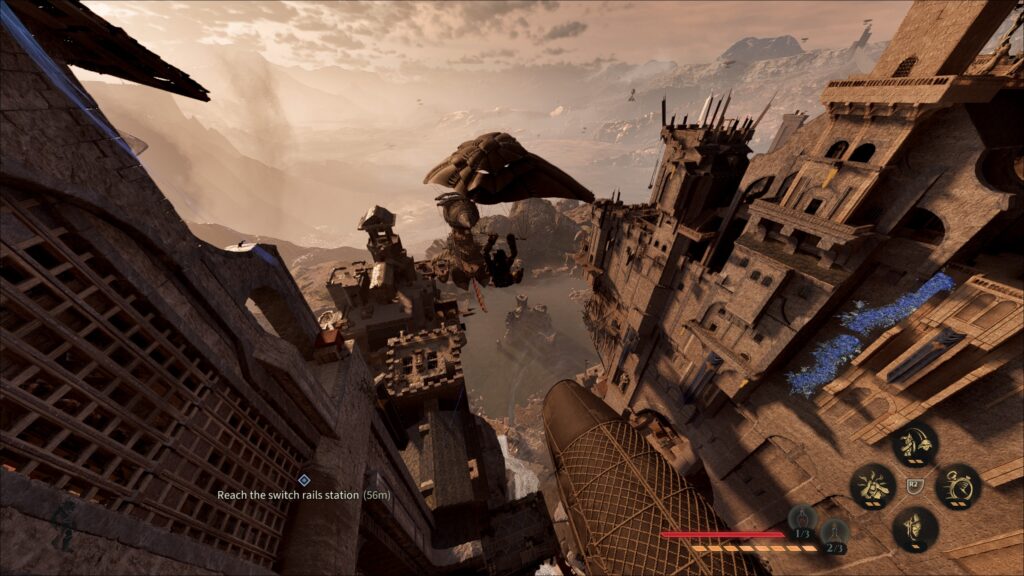
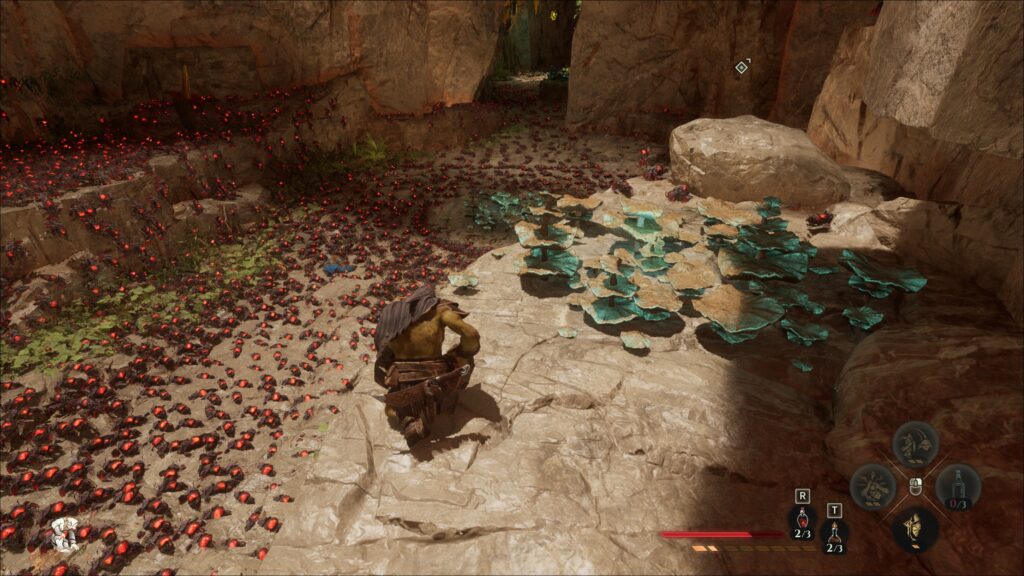
By ditching the previous games’ linear structure in favor of sprawling levels, parkour plays a huge role in the gameplay. The game is divided into 4 acts, and each act tasks Styx with stealing a required amount of Quartz from the game’s three big maps. Each map is huge and is level-gated through some light Metroidvania elements. After the prologue, players can choose to play objectives in any order from their zeppelin. By acquiring a set number of Quartz, players unlock new powers and trigger a scripted mission/set piece that functions as the act finale. Then the next one begins, and it’s rinse and repeat. This sounds very repetitive, but only for those without a penchant for creativity and thinking outside the box.
Points of Frustration
I must admit, Blades of Greed didn’t leave a good first impression on me. It was primarily due to the size of the map vs how limited Styx’s moveset felt. Slowly creeping through ginormous alleyways and rooftops while avoiding twitchy guards felt too slow and cumbersome. To make Styx more agile and fast, Cyanide has changed the character physics, and it’s a huge step down. Controlling Styx felt awful as the movement felt too twitchy and floaty, and precision platforming took a lot of time to get used to. There’s little to no magnetism to the parkour, and I often landed myself in hot water trying to navigate the many grab points in the map. Playing the game on a controller was also not a great experience. The game doesn’t react well to controllers with even a tiny amount of stick drift. I tried playing with two DualSense controllers, and both felt very inaccurate.
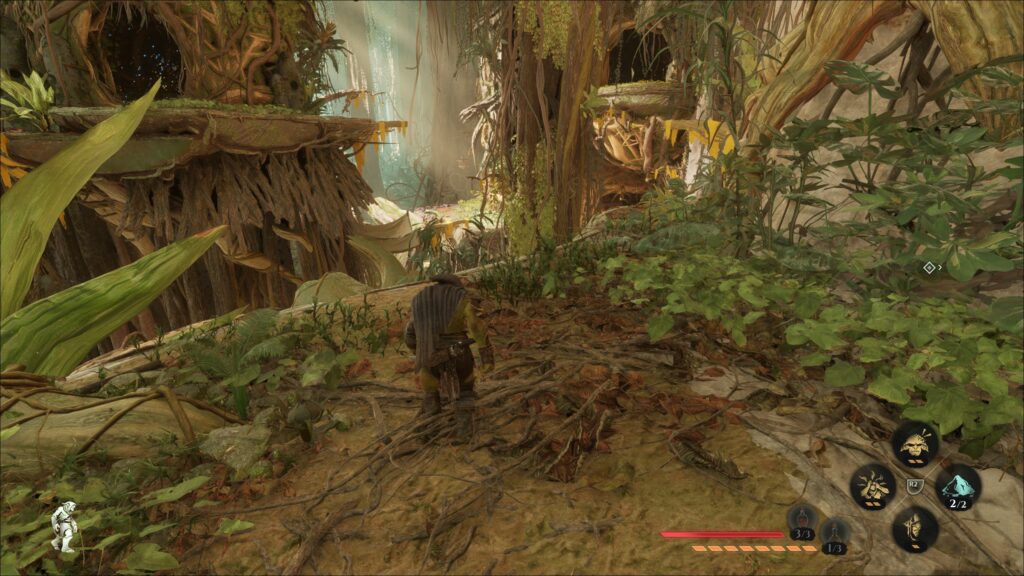
Another point of frustration is the lack of an in-game map. You can view the general outline of each zone while selecting the mission, and that’s it. The lack of signposting (which is typically a good sign) on a map this big without a map doesn’t bode well together. I got stuck trying to find a way to the objective in the third map for well over an hour. Thanks to my “expert” parkour skills, I was able to go outside the game boundaries and find another way in. There are several locations in the map with confusing layouts.
However, once Styx starts acquiring new tools and skills like a grappling hook, a glider, claws to scale walls, and the ability to phase through gates, the game becomes much, much better. You’ll be able to complete objectives using a myriad of tactics once you acquire these items. The game would have flowed better if these abilities were unlocked sooner.
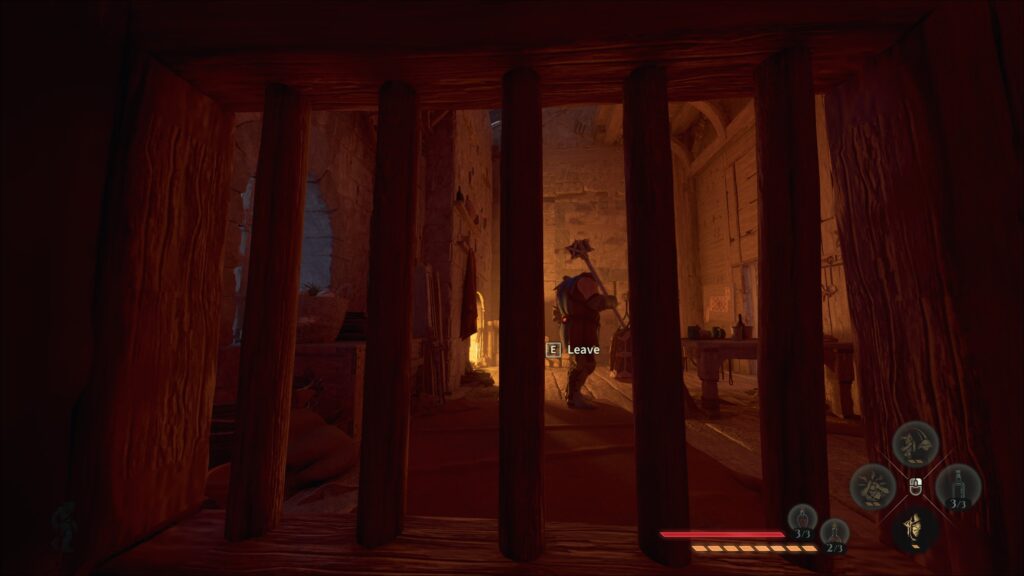
The same can be said for the enemy AI. The AI is clearly superior to the ones from the first two games. They’re super aggressive and at the same time, not too realistic to ruin the fun. Yes, they do exhibit some odd behavior from time to time, but hey, I have yet to play a stealth game where the AI decides to stop what they’re doing and start doing the most random shit ever. As I mentioned above, once Styx gains more abilities, the AI becomes more manageable. By the time you’re in Act 3, the game truly becomes the stealth sandbox of your dreams, and I had a blast utilizing everything at my disposal to get what Styx has eye set on.
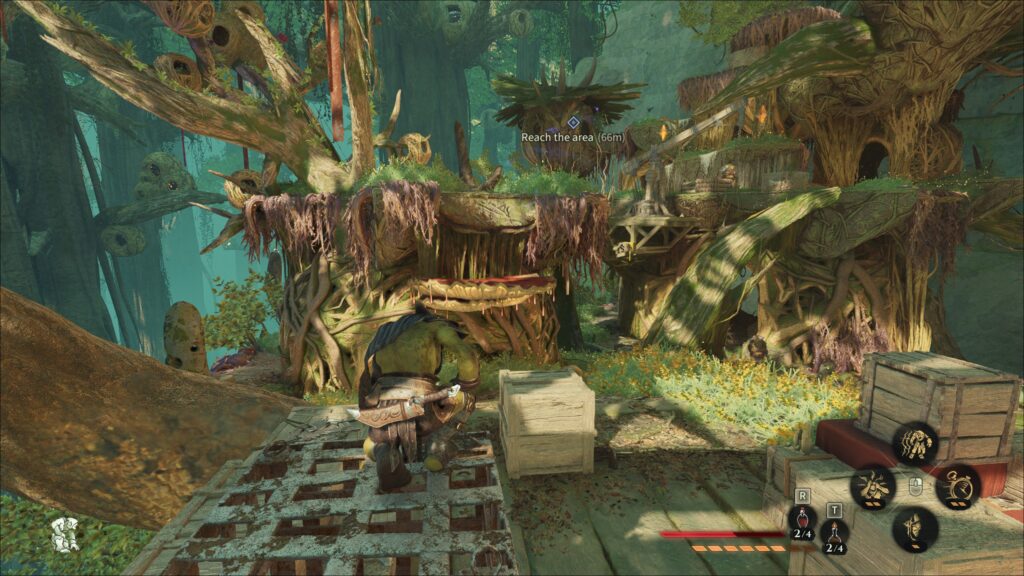
So far, Styx: Blades of Gred has balanced itself with features good and odd. But the one aspect where it falters completely is the technical side. Ditching Unreal Engine 4 in favor of UE5 was a mistake. There are times when the game looks decent, but there are also plenty of times when it looks like a blurry, washed-out PS3 game. The daytime is cruel to Stxy’s aesthetics. I honestly prefer the aesthetics of Shards of Darkness to this one, as it was more consistent in its visual design. It ran a lot better, too. If it wasn’t for Lossless Scaling, my aging RTX 3070 would have had a hard time running Blades of Greed. That kind of performance is understandable when the game looks good, but this one shouldn’t even remotely be this demanding. I also ran into a few crashes during my 15+ hour playthrough. Each time I completed a mission and tried to go back to the zeppelin, the game would crash. Thankfully, the game supports quicksaves, and I relied a bit too much on the fear of losing progress.
Real Talk
Styx: Blades of Greed has everything going for it- bigger levels, better abilities, and an increased budget. What’s stopping it from being far better than it is right now are the engine-related issues and the floaty controls. If Cyanide can get some of these things fixed in time, then I’ll have no qualm in declaring it as the best Styx adventure yet. There’s nothing like Styx out there, at least, not anymore. Cyanide, hold onto it.
FINAL SCORE: 75/100
Styx: Blades of Greed
Styx: Blades of GreedThe Good
- Vast, open levels
- Refined gameplay
- A stealth purist's wet dream
The Bad
- Floaty controls
- Middling visuals
- Performance issues